Advertisement
Insights
Share
Pakistan's PVARA chairman disclosed 40 million crypto accounts and a $250 billion virtual-asset market, as the regulator moves to formalize the sector with a licensing deadline of September 5 for international firms.
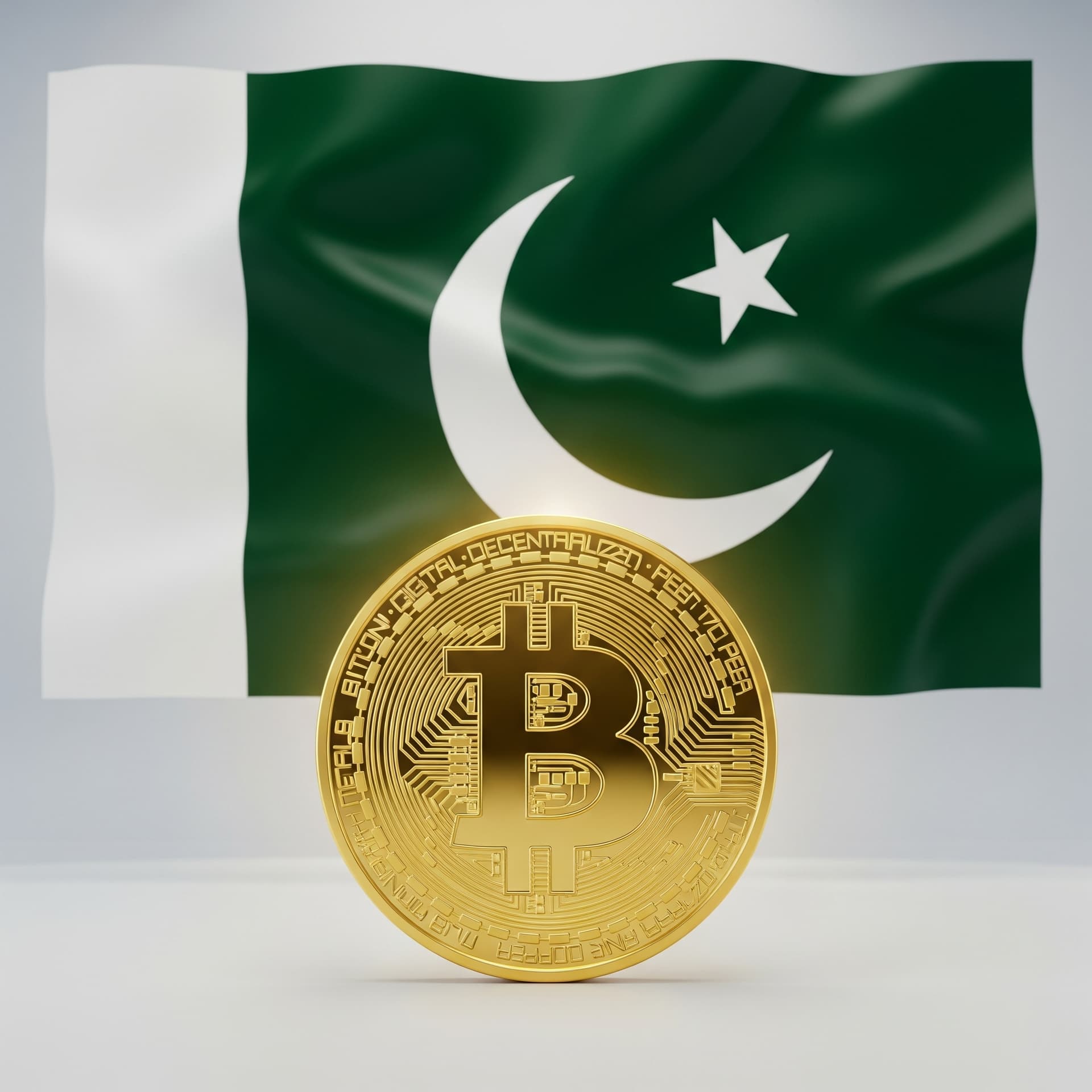
Pakistan has emerged as one of the world’s largest cryptocurrency markets, with roughly 40 million crypto-related accounts in the country, as authorities move to bring a rapidly expanding digital-asset economy under formal regulation.
Bilal Bin Saqib, chairman of the Pakistan Virtual Assets Regulatory Authority (PVARA), disclosed the figures during a briefing to the Senate Standing Committee on Cabinet Secretariat. He said the country’s virtual-asset market could be worth around $250 billion, with an estimated $10 billion to $20 billion of Pakistani capital invested in crypto assets.
The scale of adoption is particularly notable among younger Pakistanis. Saqib said the majority of crypto users are under 40, highlighting the growing role of digital assets among a generation seeking alternative financial and investment opportunities.
Saqib stressed that Pakistan’s objective is not to promote cryptocurrency but to establish rules for an activity that has already gained significant traction.
For years, regulatory restrictions surrounding digital assets limited the development of the sector. PVARA is now attempting to shift much of that activity from the informal or “grey” market into the regulated financial system.
The authority says it has developed its virtual-asset regulatory framework within five months, positioning Pakistan among a growing group of jurisdictions seeking to establish formal rules for the industry. Saqib pointed to developments in markets including the UAE, Hong Kong, Thailand and Singapore as examples of governments adapting to the expanding role of blockchain and digital assets.
The government has also signaled that cryptocurrency businesses will not be allowed to operate without the appropriate licences.
PVARA has already issued no-objection certificates to several international virtual-asset companies. Those firms have been given until September 5 to complete their registration, after which the regulator is expected to begin enforcement measures against unregistered operators.
Beyond regulating domestic trading and investment, Pakistani authorities see digital assets as a potential tool for improving cross-border payments.
Pakistan receives approximately $41 billion in remittances annually, and Saqib argued that blockchain-based infrastructure and lower transaction costs could help increase foreign-exchange inflows. He estimated that reducing remittance costs could potentially generate an additional $2 billion in foreign exchange for the country.
PVARA is working with the State Bank of Pakistan (SBP) to explore cheaper and more efficient channels for international remittances while bringing crypto-related financial activity into the formal banking and financial system.
The rapid growth of cryptocurrency ownership also presents a significant taxation challenge. Saqib highlighted the disparity between the estimated 40 million crypto accounts and Pakistan’s roughly six million active taxpayers.
He said the regulator is working to bring digital-asset activity into the formal tax framework but cautioned that excessively high taxes could drive investors and businesses toward offshore markets.
India, he noted, has imposed a 30% tax on virtual-asset gains, while Pakistan has yet to settle on a comparable taxation model.
PVARA is also building its institutional capacity. Saqib said the authority is recruiting permanent staff and has so far used only a small portion of the government funding allocated to it.
The expansion of cryptocurrency regulation has also brought questions over the Islamic permissibility of digital assets into the policy debate.
During the Senate committee discussion, Senator Saadia Abbasi raised concerns over religious rulings concerning cryptocurrency and referred to comments by prominent Islamic scholar Mufti Muhammad Taqi Usmani, who has previously declared cryptocurrency impermissible.
Saqib said he had discussed the issue with Mufti Usmani and indicated that a joint statement addressing the matter is expected.
For Pakistan, the challenge now extends beyond determining whether people can use cryptocurrencies. Authorities are attempting to establish a framework that can regulate a market already used by millions, capture economic activity that has largely operated outside the formal system, and potentially harness blockchain technology for payments and remittances.
With an estimated 40 million crypto accounts and billions of dollars reportedly invested in digital assets, Pakistan’s regulatory shift could have significant implications for the country’s financial system and its position in the rapidly evolving global digital-asset economy.

Disclaimer of Warranty
The information provided in this article is for general informational purposes only. We make no warranties about the completeness, reliability, and accuracy of this information. Read full disclaimer

Editor's Picks
In the Same Space

Sberbank Wins Russia Approval to Trade Bitcoin and Crypto

News Desk

Oct 15, 2026

4 min
EBA Names USDC EU’s First Significant E-Money Token
Salma Naueihed
Oct 15, 2026
3 min

Qivalis Secures Dutch Approval for Euro Stablecoin
News Desk
Oct 15, 2026
3 min

Perpetuals Targets Tokenized US Stocks Under SEC’s New Trading Framework
News Desk
Oct 15, 2026
3 min