Advertisement
Insights
Share
SWI has raised €800 million to expand its data center business by acquiring a majority stake in Genesis Digital Assets, a Bitcoin mining operator whose FTX-entangled infrastructure the company is repositioning to serve AI and cloud computing customers.
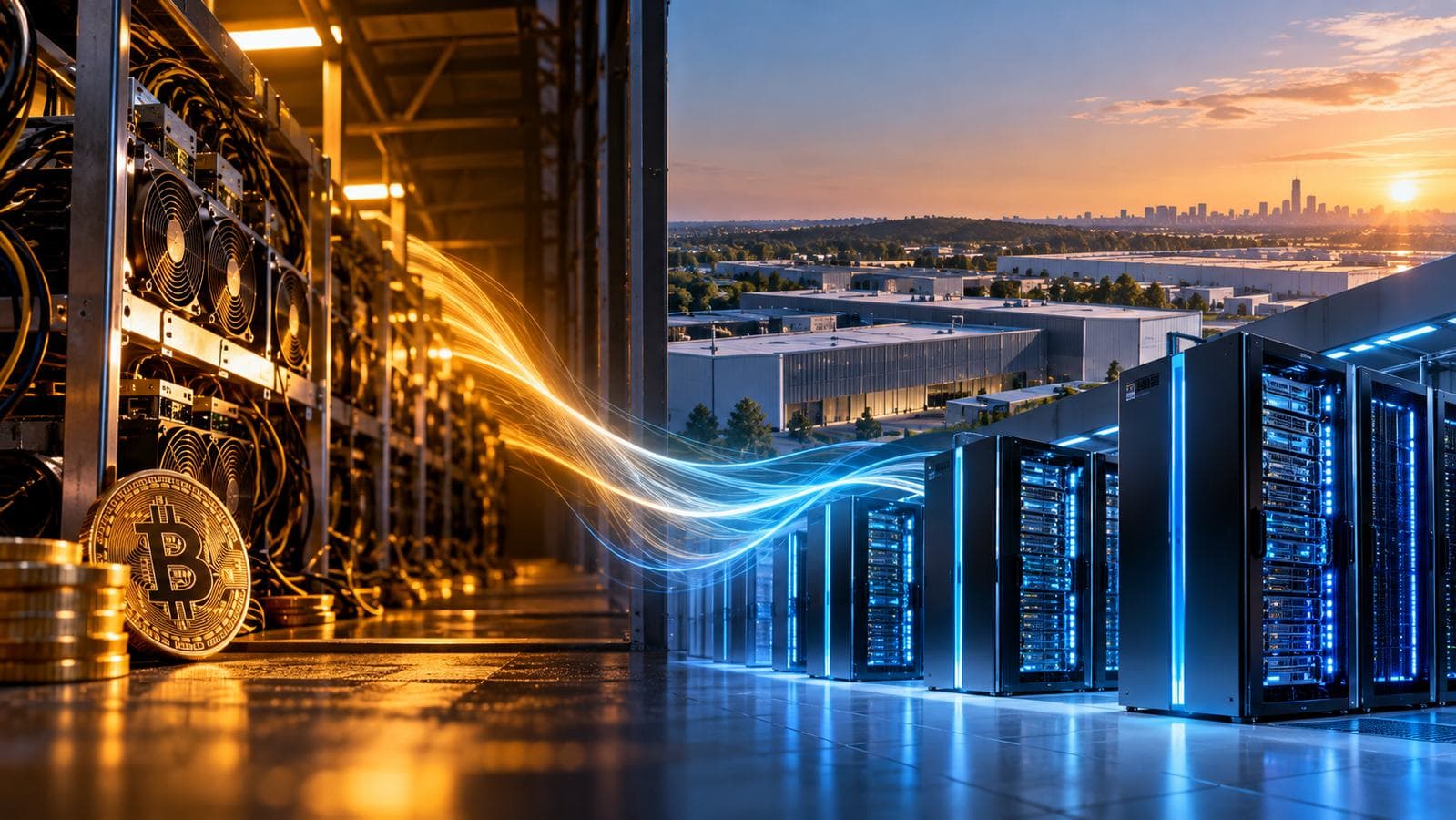
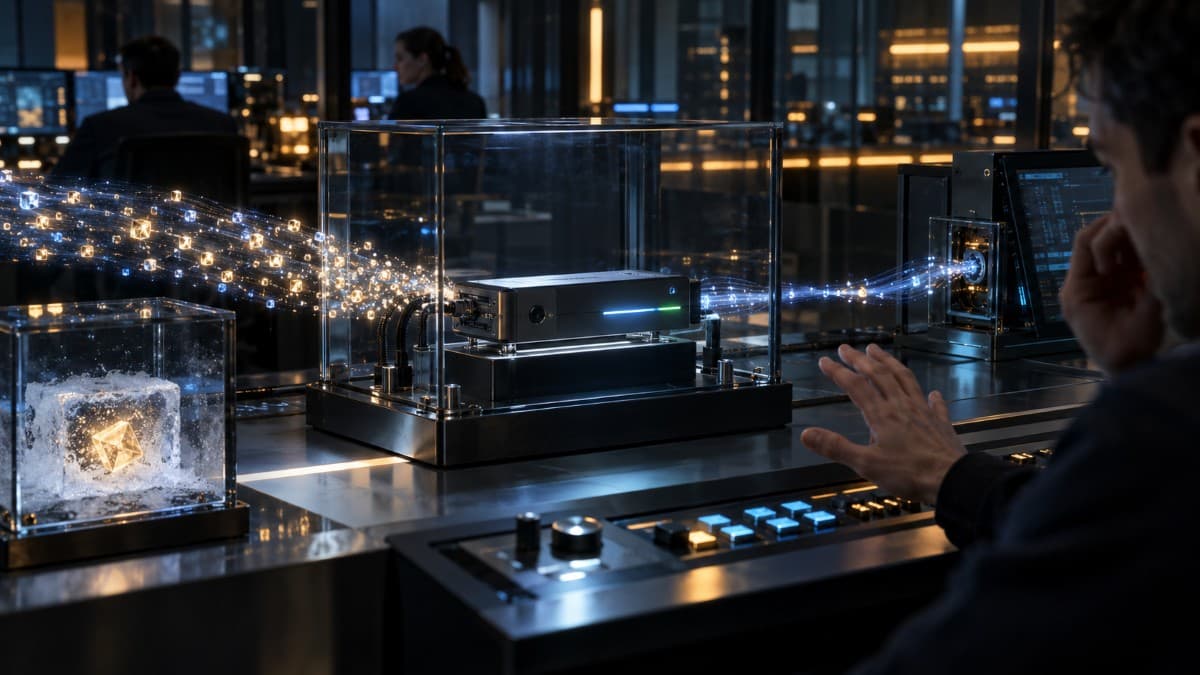
SWI is betting that the future of digital infrastructure lies less in mining Bitcoin and more in supplying the computing power behind artificial intelligence.
The Amsterdam-listed, Singapore-registered group has raised €800 million ($900 million) to expand its data center business, building on a strategy that increasingly treats electricity access as a more valuable asset than cryptocurrency mining equipment.
The company had a market capitalization of approximately $6 billion as of last Friday, according to a report by The Wall Street Journal.
A key part of that strategy is Genesis Digital Assets, a Bitcoin mining operator whose facilities SWI began acquiring in June. The initial $500 million investment came on June 15, the same day the FTX bankruptcy estate dropped its lawsuit against the company. SWI subsequently increased its stake to become the majority owner.
Chief Executive Max-Hervé George told the Wall Street Journal that the legal disputes involving FTX and other shareholders had been resolved.
The acquired infrastructure spans Texas, North Carolina, South Carolina and Sweden. According to SWI, Genesis has 1.3 gigawatts of contracted power capacity across 15 facilities. With the acquisition, the group’s total capacity across Europe and North America reaches 3.6 gigawatts.
That capacity is central to SWI’s next phase. George has said the company is selling its remaining assets in Kazakhstan, where it began operating, including three smaller mining sites. He has described his interest in Bitcoin mining as effectively nonexistent, arguing that the company needs capital to deploy more computing capacity.
The intended customers are hyperscalers such as Amazon Web Services and Google Cloud, whose data center networks support large-scale cloud computing and AI workloads.
SWI’s acquisition is not simply a bet on the buildings or the mining machines inside them. Its appeal lies largely in the combination of power access, infrastructure and locations that could be repurposed for more demanding computing workloads.
When announcing the Genesis investment, George described grid connections as among the most valuable assets in digital infrastructure and argued that converting older mining facilities to support AI computing could represent their best use.
The economics help explain the shift. According to CoinShares, AI contracts can generate roughly three times as much revenue per megawatt as Bitcoin mining. CoinShares also estimated that listed miners’ average cost of producing one Bitcoin reached approximately $80,000 in the fourth quarter of 2025.
For miners operating near or below that production cost, dedicating electricity to Bitcoin mining can become less attractive than securing contracts to provide computing capacity for AI and other high-performance workloads.
The comparison is not automatic, however. AI data centers require more than electricity and floor space. They need suitable cooling systems, networking, equipment and infrastructure capable of supporting much denser computing loads. Converting a mining site can therefore require substantial additional investment before it generates revenue from AI customers.
Still, the underlying incentive is clear: power capacity that once supported cryptocurrency production may command a different value when used to serve cloud providers and AI developers.
SWI is part of a wider industry shift. In May 2026, Charles Schwab noted that every major publicly listed mining company had announced some form of expansion into AI data centers.
CoinShares has projected that AI-related business could account for as much as 70% of revenue for miners that have signed AI contracts by the end of 2026, compared with roughly 30% at the beginning of the year. Announced contracts across the sector have exceeded $70 billion.
Investors have also assigned higher valuations to miners with exposure to high-performance computing. Companies that have secured HPC contracts trade at approximately 12.3 times projected revenue, compared with 5.9 times for businesses focused exclusively on mining, according to the figures cited in the source report.
That gap suggests that investors are valuing contracted or prospective AI infrastructure business more highly than traditional mining operations. It also helps explain why SWI can raise substantial capital for infrastructure connected to a business that, in an earlier context, was at the center of a contentious bankruptcy dispute.
The difference is not merely a change in investor sentiment toward Bitcoin. It reflects a reassessment of what the underlying assets can be used for, and how much revenue they might generate under a different business model.
SWI’s position differs from that of many mining companies attempting to reinvent themselves. Rather than starting as a Bitcoin miner and gradually redirecting its own operations toward AI, the group is approaching the opportunity as an investor acquiring infrastructure at a moment of weakness.
The company manages approximately €10 billion in assets, according to the source report, and acquired its majority position in Genesis after the operator became entangled in the fallout from FTX’s collapse.
Genesis also complements SWI’s European platform, AiOnX, which is developing data center projects in Ireland, the United Kingdom, Denmark, Spain and Italy. The source report said one Dublin facility was already leased to a hyperscaler, reportedly Amazon, although the tenant was not confirmed.
The broader strategy is to assemble sites and power capacity across multiple markets, then position them to serve large computing customers. That gives SWI exposure to the growing demand for AI infrastructure without relying solely on the economics of Bitcoin mining.
The first is execution. Securing a grid connection does not guarantee that a facility can support AI workloads. Upgrades to cooling, networking and power distribution may be needed, and these projects can take time and capital. CoinShares has noted that revenue from some of Cipher Mining’s multibillion-dollar AI contracts had yet to begin in the fourth quarter, illustrating the potential gap between announcing a deal and generating income.
The second is the absence of confirmed long-term contracts for Genesis’ facilities. SWI has not announced such agreements for the acquired sites in the information provided. Until customers, operating schedules and revenue commitments are disclosed, much of the infrastructure’s prospective value remains tied to its potential rather than demonstrated cash flow.
The third is competition. As more mining companies target the same AI and high-performance computing customers, securing contracts and completing conversions could become harder for businesses that are slower to adapt. The transition also has consequences for the Bitcoin market: publicly listed miners sold more than 32,000 BTC from their treasuries in the first quarter of 2026 to help finance their strategic shifts, adding potential selling pressure.
Genesis’ history adds another layer to the story. Sam Bankman-Fried entered the business in 2021 through Alameda Research, investing more than $1 billion for a 20% stake.
In a lawsuit filed last year seeking to recover $1.15 billion, the FTX bankruptcy estate characterized the investment as one of Bankman-Fried’s most reckless bets. The filing described the Kazakhstan assets as nearly worthless and argued that the US assets were worth only a fraction of the amount paid. SWI’s subsequent acquisition and expansion strategy now rests on a different assessment of the infrastructure’s potential.
Another Bankman-Fried investment provides a striking contrast. Alameda invested $500 million for a 7.8% stake in AI company Anthropic. The FTX estate sold that holding in 2024 for approximately $1.3 billion. Based on Anthropic’s latest valuation cited in the source report, the stake would be worth substantially more today.
Bankman-Fried is serving a 25-year prison sentence following his conviction for fraud. The contrast between the two investments illustrates how the value of technology-related assets can diverge sharply depending on the business model, market conditions and the timing of an exit.
SWI’s Genesis acquisition is less a vote of confidence in Bitcoin mining than a wager on the changing economics of digital infrastructure. A facility that struggles to make money producing cryptocurrency may become more valuable if its electricity access and physical infrastructure can be adapted for AI computing.
But the transformation is not complete simply because the power is available. The decisive test will be whether SWI secures long-term customers, completes the necessary upgrades and turns its expanded capacity into predictable revenue.
Until those milestones become visible, the company’s valuation reflects both a genuine opportunity and an expectation about what its infrastructure could become.
The difference between the two will determine whether SWI has bought undervalued assets or paid for an AI future that still needs to be built.

Disclaimer of Warranty
The information provided in this article is for general informational purposes only. We make no warranties about the completeness, reliability, and accuracy of this information. Read full disclaimer

Editor's Picks
In the Same Space
3iQ Secures In-Principle ADGM Approval for UAE Expansion

News Desk

Oct 12, 2026

3 min
Sui's Hashi Network to Unlock Bitcoin Lending With $500 Million in Commitments
News Desk
Oct 9, 2026
5 min

Institutional Demand Drives $2.7B in September Inflows for Spot Bitcoin ETFs
News Desk
Oct 2, 2026
3 min

IMF Clears $139 Million Disbursement to El Salvador After Bitcoin Breach
News Desk
Oct 2, 2026
4 min