Advertisement
Markets
Share
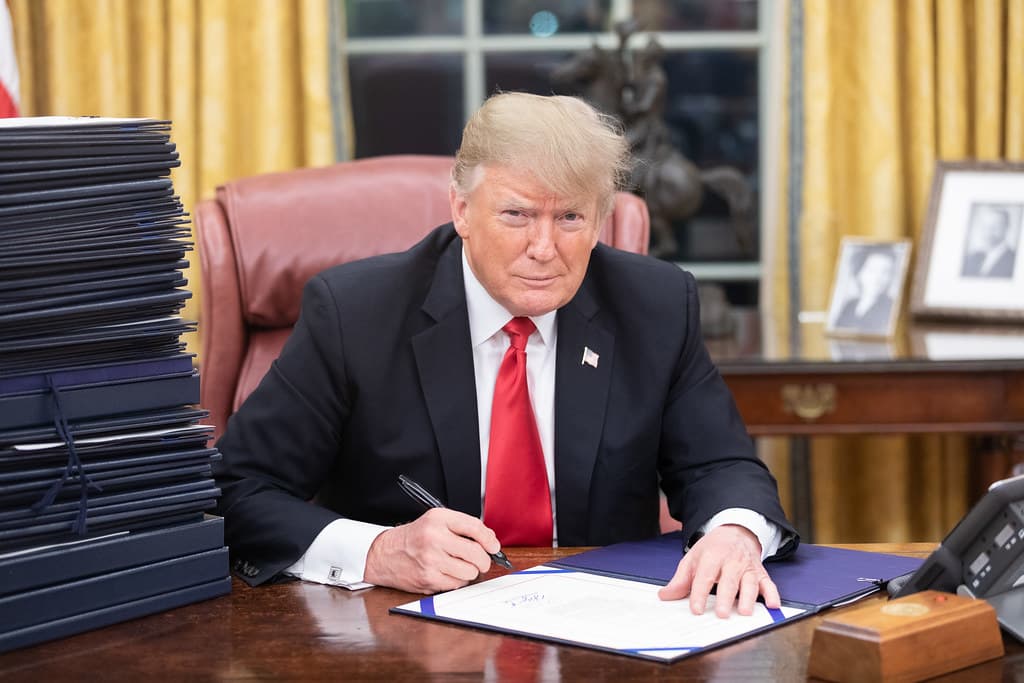
Bitcoin’s price surged after President Donald Trump announced that the United States would not proceed with new tariffs that were scheduled to take effect in February. As a result, Bitcoin jumped from around $87,300 to $90,000 in just a few hours. This move reflects a broader shift in market behavior, as Bitcoin trading increasingly resembles that of fast-moving macro assets rather than the “digital gold” it was once perceived to be.
By contrast, gold moved in the opposite direction, declining from roughly $4,850 to $4,777. This pullback highlights how traders rotated out of safe-haven assets and back into higher-risk investments. For investors, this divergence is particularly telling, as it sheds light on the type of macro signals Bitcoin is currently responding to.
Notably, this reaction was not confined to the cryptocurrency market alone. Equities, bonds, and precious metals also moved in tandem once the tariff threat eased. Together, these shifts reinforce the idea that Bitcoin is now influenced by the same headlines that drive Wall Street, behaving more like a mainstream financial asset.
Over the weekend, Trump’s Greenland campaign escalated into a direct trade threat, pushing Bitcoin below $92,000 as selling pressure intensified. A similar pattern emerged across other digital assets, which also came under pressure amid growing concerns over tariffs.
However, the mood quickly shifted. Trump later announced a “framework for a future agreement” and a suspension of the proposed tariffs, easing market fears and reviving risk appetite. Consequently, Bitcoin rebounded sharply in a short span of time.
Taken together, these moves underscore a reality often overlooked by newer investors: Bitcoin now trades like a more volatile version of technology stocks. When fear spikes, prices fall abruptly; when those fears fade, Bitcoin tends to recover faster than most assets. This dynamic helps explain why more than $1 billion was wiped out in a single day, as tariff-related headlines have previously triggered Bitcoin price swings of between 7% and 17%. When leverage is involved, such moves can quickly snowball into aggressive liquidation events.
Ultimately, these developments show that cryptocurrencies are no longer a fringe market operating in isolation from the global economy. Instead, Bitcoin and other digital assets now respond directly to political and trade decisions, inflation expectations, and shifts in investor risk sentiment.
As geopolitical and trade uncertainties continue to rise, cryptocurrencies are likely to maintain a dual role: on one hand, a highly news-sensitive speculative asset, and on the other, a fast-moving barometer of global market mood. While gold may still dominate as a safe haven during periods of acute panic, cryptocurrencies remain well positioned to lead powerful rebounds once risks begin to subside, placing them firmly at the center of the investment landscape in the period ahead.

Disclaimer of Warranty
The information provided in this article is for general informational purposes only. We make no warranties about the completeness, reliability, and accuracy of this information. Read full disclaimer

Editor's Picks

Why Zondacrypto’s Collapse Would Unfold Differently in the UAE

Walid Abou Zaki

Aug 28, 2026

8 min

The Missing Orchestration Layer Holding Back Institutional Digital Assets
Julian Sawyer
Aug 18, 2026
5 min

Beyond Crypto Access: How ARP Digital Is Building the UAE’s Digital Capital Infrastructure
Anna K.
Aug 17, 2026
8 min
Read More Articles

In the Same Space

$320M Exploit Drains Bitcoin From Network Used by Exchanges
News Desk
Sep 7, 2026
4 min

ARK Invest, Glassnode Map Decentralization Tradeoffs Across Bitcoin, Ethereum and Solana
News Desk
Sep 3, 2026
5 min

Corporate Crypto Treasury Boom: Strive Enters Top Five Bitcoin Holders as Bitmine Nears 5% of ETH Supply
News Desk
Sep 1, 2026
4 min

Trump Jr.-Backed 1789 Capital Leads $1 Billion Polymarket Funding Round at $21 Billion Valuation
News Desk
Sep 1, 2026
5 min