Advertisement
Markets
Share
Public Citizen estimates $4.7B in investor losses across Trump-linked crypto ventures since 2022, while Real Trump Coins denied authorizing the GOLD token that briefly appeared on its platforms before collapsing after 82.45% of supply was concentrated in developer wallets.
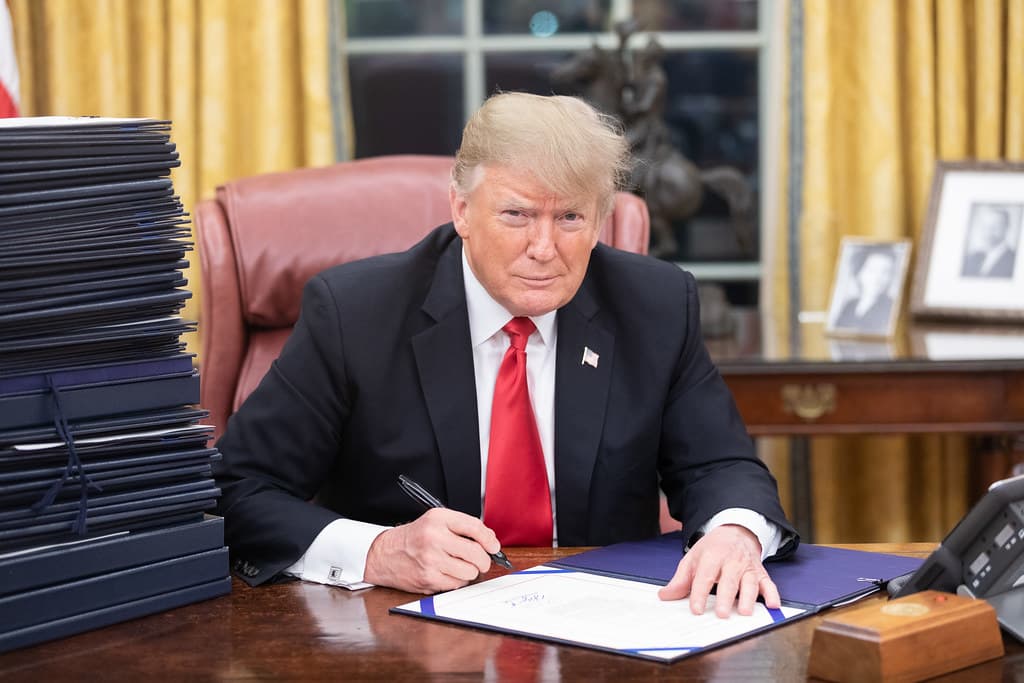
Donald Trump’s expanding involvement in the cryptocurrency industry is facing renewed scrutiny after a nonprofit advocacy group estimated that investors have suffered billions of dollars in losses across Trump- and family-linked digital asset projects, while a separate Trump-branded crypto venture denied authorizing a token that briefly appeared on its platforms.
The developments add another layer to the debate surrounding Trump’s crypto activities, as questions over investor protection, token ownership and the role of political figures in digital assets continue to draw attention in Washington.
Public Citizen, a nonprofit consumer advocacy organization, estimates that investors have been left roughly $4.7 billion underwater across several Trump and family-associated crypto ventures since 2022.
According to the group’s analysis, the largest losses were tied to the Official Trump (TRUMP) memecoin, which it estimates resulted in approximately $3.2 billion in investor losses.
The report also attributed at least $1 billion in losses to the World Liberty Financial governance token, while Trump Media’s digital asset treasury accounted for an estimated $450 million. Trump-branded NFT trading cards launched in 2022 were estimated to have generated at least $9.3 million in losses for holders.
The figures represent estimated declines in the value of assets held by investors rather than a direct measure of money paid to Trump or his businesses.
One notable exception was USD1, the stablecoin associated with World Liberty Financial. Because the token is designed to maintain a value of $1, holders were not exposed to the same market-price decline measured in the report.
The financial debate comes as a separate controversy has emerged around Real Trump Coins, a Trump-linked crypto brand that has denied involvement with a newly launched token called Trump Digital GOLD.
The Solana-based GOLD token appeared on the company’s online channels over the weekend, including promotion through the Real Trump Coins account on X and its associated website. The posts were subsequently removed.
Real Trump Coins later said that it had not launched, promoted, or authorized any digital token, attributing the GOLD promotion to unidentified third parties and saying it was working with authorities to investigate what happened.
The company’s denial has left unanswered questions about how the token was promoted through channels associated with the brand in the first place.
The controversy intensified after blockchain analytics firm Lookonchain reported that the token’s supply was heavily concentrated among the developer and newly created wallets.
According to the analysis, wallets linked to the token’s team controlled approximately 82.45% of GOLD’s total supply. Lookonchain also reported that 15 wallets associated with the team sold their holdings for around $330,000, generating an estimated profit of approximately $312,000.
The concentration raised concerns among crypto observers because large holdings controlled by a small number of wallets can create significant risks for other traders, particularly if those wallets sell into market liquidity.
The token subsequently collapsed, adding to questions about its origins and the circumstances surrounding its promotion.
The incident has also raised questions about the security and control of Real Trump Coins’ digital channels.
The company’s X account had promoted GOLD and directed users to RealTrumpCoins.com, while its profile later pointed visitors toward a different domain, TrumpCoins.com.
That discrepancy prompted members of the crypto community to question whether the company’s social media account, website, or both had been compromised.
The situation was made more confusing by the fact that the Real Trump Coins account had continued directing customers to RealTrumpCoins.com as recently as August 25, according to Cointelegraph.
At the time of the report, the RealTrumpCoins.com website was still displaying promotional material for GOLD despite the company’s subsequent denial of involvement.
Trump also continued to follow the Real Trump Coins account on X, adding another point of attention for observers examining the relationship between the brand and the president.
The latest controversy arrives as Trump’s broader crypto activities have become increasingly relevant to the political debate over digital asset regulation in the United States.
Trump and his family have expanded their presence across multiple areas of the crypto industry, including memecoins, stablecoins, decentralized finance and digital asset investment vehicles.
That activity has become particularly contentious as Congress considers legislation intended to establish clearer rules for digital assets.
Trump’s crypto interests have emerged as a sticking point in negotiations over the CLARITY Act, with Democratic lawmakers pushing for stronger safeguards aimed at preventing elected officials from using their political positions to issue or benefit from cryptocurrencies.
Critics argue that political figures launching or promoting digital assets can create conflicts of interest and expose retail investors to risks that are difficult to separate from the influence of the individual behind the project.
The GOLD episode highlights a different but equally important challenge: authenticity and security.
For investors, determining whether a token promoted through an apparently legitimate account is actually authorized by the organization behind it can be difficult, particularly when websites, social media accounts and token contracts can change rapidly.
The episode also demonstrates how quickly uncertainty can translate into market losses. A token can attract attention through an association with a recognizable political brand, only for questions about its legitimacy to emerge after trading has already begun.
Meanwhile, the multibillion-dollar losses estimated by Public Citizen underscore the scale of the financial risks surrounding Trump-linked crypto ventures.
Taken together, the developments put renewed focus on the intersection of politics, crypto markets and investor protection.
As Trump continues to support the growth of the digital asset industry, scrutiny is likely to intensify over who controls the projects carrying his name, how investors are protected and where political influence ends, and commercial activity begins.

Disclaimer of Warranty
The information provided in this article is for general informational purposes only. We make no warranties about the completeness, reliability, and accuracy of this information. Read full disclaimer

Editor's Picks
In the Same Space

The Battle Over Crypto Banking Is Now Headed to Court, What's Next?

Anna K.

Oct 6, 2026

7 min
CFTC Unveils Federal Framework for Leveraged Crypto Trading
News Desk
Oct 6, 2026
4 min

Trump Launches $215M Quantum Computing Competition Amid Crypto Risks
News Desk
Oct 9, 2026
6 min

DIFC Courts Introduce Blockchain Credentials for Global Document Verification
News Desk
Oct 14, 2026
4 min