Advertisement
Infrastructure & Scaling
The new system uses NFT-based digital credentials to verify the origin and integrity of court documents within seconds, without storing confidential case information on-chain.
Share
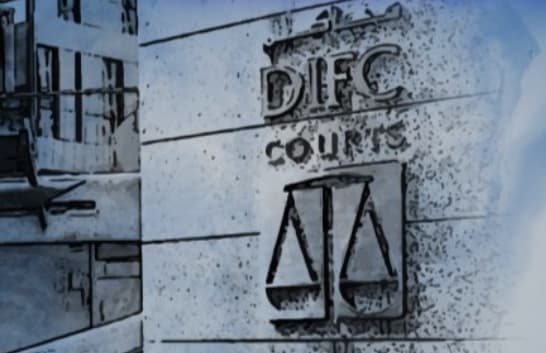
DIFC Courts has launched an Avalanche C-Chain-based system that attaches NFT-derived, non-transferable digital credentials to court orders and judicial documents, enabling global recipients to verify authenticity and integrity within seconds without exposing confidential content.
The Dubai International Financial Centre (DIFC) Courts has begun issuing court orders and other judicial documents with unique, non-transferable digital credentials that allow recipients worldwide to verify their authenticity and integrity within seconds.
Announced on October 14, the system uses blockchain technology to help banks, government agencies, courts, businesses and other recipients independently confirm that a document was issued by the DIFC Courts and has not been altered since issuance.
The initiative is designed to reduce the time required to authenticate judicial documents used across borders, particularly when they are presented to institutions or authorities outside the United Arab Emirates.
When a court order or judgment is issued, the system generates a cryptographic hash of the digital file and links it to a unique digital credential based on a non-fungible token (NFT). The credential is recorded on Avalanche C-Chain.
Recipients can verify the document by checking its cryptographic hash against the information recorded on the blockchain. If the file has been modified after issuance, its hash will no longer match the recorded data, causing verification to fail.
The judicial document itself is not stored on the blockchain. Neither its contents nor confidential case information or details about the parties are recorded on the network.
The system therefore allows recipients to verify a document’s source and integrity without exposing the underlying information publicly.
The system is intended to support the use of DIFC Courts documents by institutions and authorities internationally, including in cases where businesses or individuals choose the courts under their opt-in jurisdiction.
Digital credentials can help recipients establish that a document originated from the DIFC Courts and matches the version originally issued. However, verification does not determine the document’s legal status in the receiving jurisdiction or replace any applicable requirements for authentication, recognition or enforcement.
This distinction is particularly relevant when judicial documents are submitted to foreign courts, government agencies or financial institutions, where additional legal procedures may still apply.
The new system adds to the DIFC Courts’ existing use of distributed ledger technology. The courts previously used Hedera to record transactions associated with their Notary Service.
Unlock Blockchain covered that implementation in its report on DIFC Courts’ blockchain-enabled Notary Service, which described how Hedera records notarisation events and timestamps to support document integrity.
The courts also selected Hedera for their Digital Asset Will, as detailed in Unlock Blockchain’s earlier coverage of the DIFC Courts’ Digital Asset Will.
The newly announced document-verification system uses Avalanche C-Chain for its digital credentials. The announcement describes this as an additional application of blockchain technology within the courts’ services; it does not indicate that the existing Hedera-based services have been discontinued or migrated.
The system was designed and implemented by Deca4 Advisory, the DIFC Courts’ technology partner for blockchain, and integrated into the courts’ existing digital-document infrastructure.
DIFC Courts Director Omar Al Mheiri said the initiative allows recipients to independently verify judicial documents’ source and integrity within seconds, extending trusted digital judicial infrastructure beyond traditional court boundaries.
He added that the system provides international businesses and court users with greater confidence when submitting judicial documents to institutions and courts in different jurisdictions.
John Nahas, Chief Business Officer at Ava Labs, said the initiative demonstrates how trusted institutions can use blockchain infrastructure while keeping confidential information off-chain and preserving the existing user experience.
The initiative forms part of the DIFC Courts’ continued development of secure digital judicial services and aligns with Dubai’s broader digital transformation objectives, including the Dubai Digital Strategy and Dubai Economic Agenda D33.

Disclaimer of Warranty
The information provided in this article is for general informational purposes only. We make no warranties about the completeness, reliability, and accuracy of this information. Read full disclaimer

Editor's Picks
In the Same Space

Russia’s Digital Ruble Reaches the Payroll for the First Time Ever

News Desk

Oct 5, 2026

2 min

Sui's Hashi Network to Unlock Bitcoin Lending With $500 Million in Commitments
News Desk
Oct 9, 2026
5 min

France Considers Taxing Crypto-to-Stablecoin Swaps Under 2027 Budget
News Desk
Oct 14, 2026
4 min

Standard Chartered Extends Crypto Trading to UAE Wealth Clients
News Desk
Oct 14, 2026
3 min