Advertisement
Institutional Adoption
Share
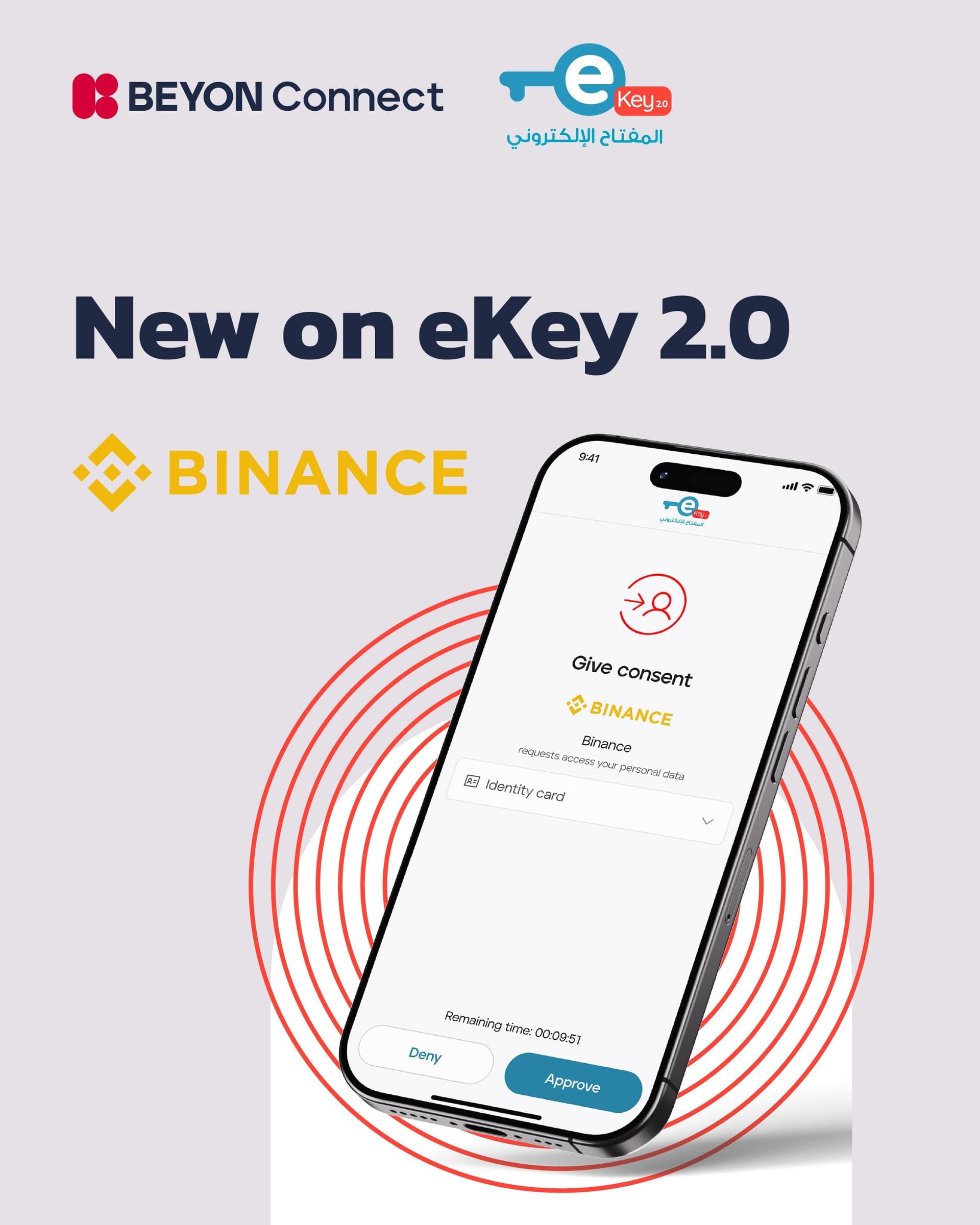
Binance Bahrain has partnered with Beyon Connect to integrate the Kingdom of Bahrain’s eKey 2.0 national digital identity solution into its onboarding and transaction verification flows, allowing residents and citizens to complete secure digital verification using government-backed identity credentials.
The integration enables eligible users to access Binance Bahrain’s services through eKey 2.0, streamlining Know Your Customer (KYC) procedures while aligning with local compliance and security requirements. The move positions Binance Bahrain among the first digital asset platforms in the Kingdom to directly leverage Bahrain’s national digital identity infrastructure for regulated user verification.
The partnership reflects a broader regional trend in which regulated digital asset service providers are increasingly embedding sovereign digital identity systems into onboarding frameworks to reduce friction, strengthen compliance, and improve trust in user authentication.
Under the arrangement, Binance Bahrain will access verified user information through the enhanced eKey 2.0 application, available via the Kingdom’s eGovernment App Store and operated by the Information & eGovernment Authority (iGA).
Beyon Connect, which holds exclusive authorized reseller rights for the eKey 2.0 system, is enabling the integration layer that allows Binance Bahrain to use the national identity platform as part of its KYC process.
The eKey 2.0 solution is designed as a core component of Bahrain’s broader digital transformation strategy, allowing both public and private sector institutions to verify identity through a government-backed framework without building separate identity-matching infrastructure from scratch.
For regulated crypto platforms, this reduces onboarding complexity while potentially lowering fraud exposure and compliance overhead, especially in markets where local licensing regimes require stronger customer verification controls.
According to the announcement, eKey 2.0 is powered by biometric authentication and 3D facial recognition, replacing legacy one-time password (OTP)-based verification methods with a more advanced identity assurance model.
The platform is designed to improve data protection and user experience while reducing impersonation and account fraud risks. By shifting from document-heavy or OTP-based onboarding to biometric-backed digital identity, Bahrain is effectively creating a reusable trust layer that can be adopted across financial services, telecom, and government use cases.
For Binance Bahrain, this may improve conversion during onboarding while reinforcing its ability to meet regulatory expectations around customer due diligence and transaction integrity.
Trarik Erik, MENAT Lead at Binance, said the integration supports Bahrain’s wider innovation agenda while improving the customer journey for regulated digital asset access.
“We are proud to partner with Beyon Connect to integrate eKey 2.0 into Binance Bahrain’s onboarding journey. This collaboration reflects our commitment to supporting Bahrain’s innovation-driven digital vision, while delivering a seamless, secure, and efficient experience for users,”Erik said.
Chris Hild, CEO of Beyon Connect, described the partnership as part of a broader push to modernize financial services infrastructure in the Kingdom.
“Trust and security are the foundations of financial services. Through eKey 2.0 we are enabling financial institutions to meet regulatory requirements with confidence, protect customers, and deliver faster and smarter services,” Hild said.
The Binance Bahrain–Beyon Connect partnership is more than a product integration — it signals how national digital identity systems are beginning to intersect directly with regulated crypto market infrastructure.
In practical terms, Bahrain is extending its sovereign digital identity rails into digital asset onboarding, giving licensed crypto operators access to trusted, government-verified credentials in a way that can improve KYC efficiency, reduce fraud risks, and support regulatory compliance.
For the wider digital asset industry, the development is notable because it illustrates what a maturing crypto regulatory environment can look like in practice: not just licensing frameworks, but interoperability between public digital identity infrastructure and private-sector virtual asset services.
As more jurisdictions explore digital ID, e-government services, and regulated virtual asset ecosystems in parallel, Bahrain’s model may become a reference point for how national identity systems can support compliant, scalable crypto adoption.

Disclaimer of Warranty
The information provided in this article is for general informational purposes only. We make no warranties about the completeness, reliability, and accuracy of this information. Read full disclaimer

Editor's Picks
In the Same Space

Why Are Apple and Google Recruiting for Blockchain and Stablecoin Roles?

News Desk

Sep 21, 2026

7 min

Deutsche Bank Moves Into Institutional Crypto Custody With Bitcoin, Ether and Stablecoins
News Desk
Sep 17, 2026
4 min

Solana Begins Testing Alpenglow Upgrade Targeting 150ms Finality
News Desk
Sep 23, 2026
3 min
UAE PASS Digital Vault Set for Shift to Avalanche Infrastructure
Walid Abou Zaki
Sep 14, 2026
6 min