Advertisement
Exchanges & Trading
Backpack’s US exchange and clearing approvals support plans for leveraged perpetual futures and unified global liquidity, while its Dubai license remains limited to spot trading.
Share

WA
CEO & Editor-in-Chief


Backpack has obtained CFTC designation for TLD Markets as a contract market and registered TLD Clearing as a derivatives clearing organization, enabling US leveraged crypto perpetual futures trading. Its existing Dubai VARA license remains spot-only, leaving the connection between US derivatives infrastructure and the UAE entity unresolved.
Backpack has secured US regulatory approvals for a derivatives exchange and clearinghouse, advancing its plans to connect American traders with its global liquidity through leveraged crypto perpetual futures.
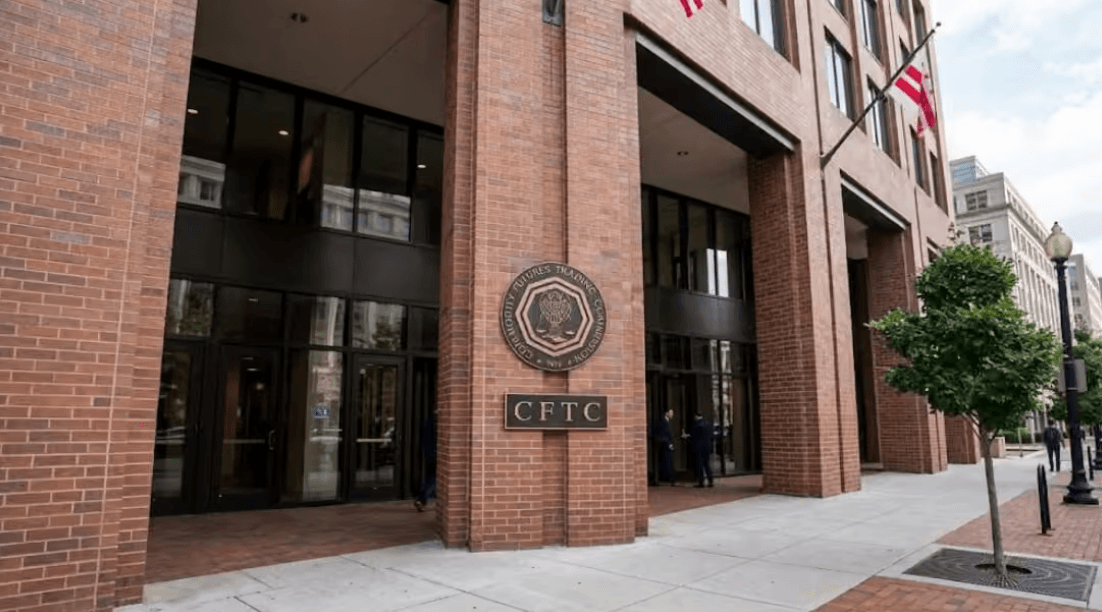
The Commodity Futures Trading Commission designated TLD Markets, Inc. as a contract market on November 16, 2026. The decision followed the November 13 registration of TLD Clearing, Inc., trading as Backpack Clearing, as a derivatives clearing organization.
For Dubai, where Backpack holds an active Virtual Assets Regulatory Authority ( VARA) license, the development raises a question about the group’s next stage of expansion: how will its proposed global derivatives infrastructure connect with a local business currently authorized for spot trading?
The CFTC designation order establishes TLD Markets as a regulated derivatives exchange. Its affiliated clearinghouse is permitted to clear margined futures, alongside fully collateralized futures, options on futures and swaps, according to the CFTC’s clearing registration record.
In its November 16 announcement, Backpack said US users would be able to trade leveraged crypto perpetual futures around the clock, post fiat or crypto collateral, cross-margin positions and access a unified global order book.
These are the capabilities described by Backpack for its US offering. The announcement did not specify a customer trading launch date, while the short CFTC orders establish the exchange and clearing authorizations without individually detailing every advertised feature.
The US development follows a regulatory expansion that Unlock has tracked since Backpack’s Dubai exchange announcement in October 2023.
That earlier coverage describedan initial spot trading offering and plans to add derivatives, margin and cross-collateral functionality while securing further regulatory permissions globally. These features were presented as future ambitions rather than services already covered by the Dubai license.
Unlock subsequently reported on Backpack’s acquisition of FTX EU in January 2025 and the opening of a withdrawal process for former FTX Europe customers that May.
Backpack later announced the launch of its European platform in September 2025, offering perpetual futures under a MiFID II license regulated by the Cyprus Securities and Exchange Commission.
The US approvals add another jurisdiction to that expansion, while leaving the scope of each regulated entity’s permissions distinct.
VARA’s public register lists Trek Labs Ltd FZE, trading as Backpack, as holding an active Exchange Services license issued on October 30, 2023. The entity may serve retail, qualified and institutional investors.
Backpack’s own VARA disclosure defines the product scope more precisely: its Dubai authorization covers spot trading.
“Our VARA license does not cover Futures or Margin Trading,” the disclosure states. It adds that those services are unavailable in the UAE and that the license covers users onboarded by Trek Labs, rather than other entities operating under the Backpack brand.
The CFTC approvals therefore do not automatically make the US derivatives offering available through Backpack’s Dubai entity. VARA’s rules require exchange operators to obtain explicit derivatives authorization, expressly stipulated in their license.
The proposed unified order book is central to Backpack’s ambition, but the announcement leaves its connection to Dubai unexplained.
Will Backpack seek to expand its VARA license to include derivatives? Would a future Dubai derivatives offering connect eligible local customers to the same liquidity as US participants? And which entity would hold collateral, clear positions and carry responsibility for customer protections?
Cross-margin introduces an additional question. VARA’s derivatives segregation rules require a client’s derivatives trading account to remain segregated from their other trading accounts and restrict which balances may be used as derivatives margin.
Any future Dubai model would need to satisfy those requirements; the US approvals alone do not establish how that would work.
The next development to watch is whether Backpack’s expanding derivatives capabilities are followed by a broader Dubai authorization. Its public disclosures currently establish a US derivatives framework alongside an active, spot-only Dubai business. How the group connects those operations remains an open question.

Disclaimer of Warranty
The information provided in this article is for general informational purposes only. We make no warranties about the completeness, reliability, and accuracy of this information. Read full disclaimer

Editor's Picks
In the Same Space
US Nominates Four Officials to SEC and CFTC With Crypto Policy Experience

News Desk

Nov 13, 2026

4 min

Wall Street Goes On-Chain: Justin Sun Brings 20 U.S. Assets to HTX, Declines to Discuss Previous SEC Case
News Desk
Nov 9, 2026
5 min
Dubai-Built Crypto Attention Platform Uses AI to Track Market Narratives
News Desk
Nov 5, 2026
6 min
Morgan Stanley Takes DTCC's Tokenized Securities Infrastructure Into Institutional Use
News Desk
Nov 5, 2026
4 min