
Advertisement
Stablecoins & Payments
Share
US cryptocurrency lobby group told US regulators that stablecoins do not pose a systemic risk and as such do not need to be regulated. This comes at a time when US regulators are looking to impose tighter oversight on stablecoins because it is a fast growing technology.
As a result, the President's Working Group on Financial Markets - which comprises top U.S. regulators including the Treasury and Federal Reserve - is focusing on them as part of wider efforts to rein in crypto. The group is widely expected to publish in the coming months a report detailing the risks and opportunities of stablecoins.
In a letter to the group seen by Reuters, the Washington- based Chamber of Digital Commerce said retail-focused stablecoins pegged to the dollar should not be subject to a new set of rules "simply because new technology is being deployed".
Stablecoins are "not at significant scale to merit a separate, compulsory regulatory regime," it said, adding that they should be treated like other retail-focused digital payment tools, and not as an investment product.
The Chamber's members include Wall Street banks Goldman Sachs Inc Group GS.N and Citigroup Inc C.N as well as crypto companies such as Circle, which issues the second-biggest stablecoin USD Coin. Hong Kong-incorporated Tether, which issues the largest stablecoin, is not part of the group.
Proponents say stablecoins could revolutionise payments by avoiding the volatility of bitcoin while offering the same advantages of speed and low-cost. But they are more widely used for crypto trading than payments, with their growing size grabbing the attention of financial watchdogs.
Current stablecoin regulation is patchy across the globe. The size and nature of reserves held by stablecoin issuers is typically not subject to the same oversight as is the case for reserves held by commercial banks.
The value of Tether has jumped to $69 billion from $15 billion a year ago, according to CoinMarketCap. USD Coin has also soared in the same period, nearing $33 billion from just $2.7 billion.
Global regulators said this month that stablecoins would have to comply with the same safeguards as more traditional competitors in payments.
In the United States, stablecoins are subject to a patchwork of state-based rules as well as oversight from some federal agencies.
U.S. Treasury Secretary Janet Yellen told regulators in July the government must move quickly to establish a regulatory framework for stablecoins.
Opposing a new set of rules, the chamber also called for "well-regulated" U.S. stablecoin companies to have access to Federal Reserve payments infrastructure.

Disclaimer of Warranty
The information provided in this article is for general informational purposes only. We make no warranties about the completeness, reliability, and accuracy of this information. Read full disclaimer

Editor's Picks

When Assets Move—or Stop—Without Consent: The Limits of Crypto Wallet Control

Walid Abou Zaki

Sep 29, 2026

6 min

Where Do the Dollars Behind the UAE’s Crypto Economy Sit?
Anna K.
Sep 21, 2026
9 min

As U.S. Crypto Legislation Stalls, Circle Launches Its Own Financial Network
Walid Abou Zaki
Sep 16, 2026
9 min
Read More Articles

In the Same Space
Where Do the Dollars Behind the UAE’s Crypto Economy Sit?
Anna K.
Sep 21, 2026
9 min

UAE Stablecoin Market Expands as Digital Dirham Enters Next Phase
News Desk
Sep 18, 2026
7 min
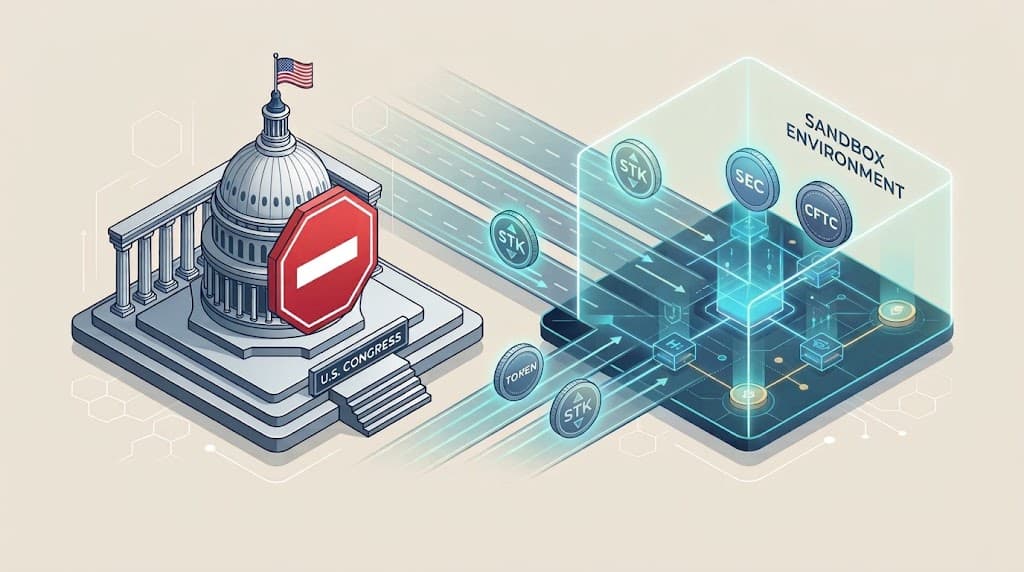
CLARITY Stalled. U.S. Crypto Regulation Didn’t.
Salma Naueihed
Sep 18, 2026
7 min
Kraken Parent Payward Plans Onchain Perpetuals on Hyperliquid for U.S. Clients
News Desk
Sep 17, 2026
4 min