Advertisement
Regulation & Policy
Share
We’re excited to announce that the Technical Steering Committee (TSC) has voted to approve the launch of Hyperledger Labs! Hyperledger Labs aims to provide a channel suitable for innovation and testing of ideas where work can easily be started without the creation of a formal Hyperledger project. It will allow teams to experiment with new frameworks and new modules without the promise of stable code or MVP.
We believe Hyperledger Labs supports the main goal behind Hyperledger to help build communities by gathering people sharing a common interest in developing blockchain related software.
Why Hyperledger Labs?
Currently, the project lifecycle at Hyperledger requires projects to be started in Incubation and graduate to Active projects. However, the only way to currently do this is to submit a project proposal and launch a formal project in Incubation. This is a relatively heavy process that requires a level of endorsement by Hyperledger that is not suitable for cases where projects are immature from a code-complete, production-quality, or community building perspective, or experimental.
Hyperledger Labs lowers the pressure on the TSC to start new projects and allow for work to be done within a legal framework that eases transition to a project in Incubation in cases where this ends up being the chosen path for the Labs.
What can be in Labs?
Examples of possible Labs include: projects too early for TSC approval as an incubator because there’s not a lot of code; demos; documentation examples; sample code from hackathons, research projects, etc.
There is no guarantee that a Lab will become an incubated or fully-fledged project at Hyperledger. If at any point a Lab wants to enter Incubation and become a formal project, a project proposal will need to be submitted for TSC consideration.
How will Labs work?
Hyperledger Labs is not directly controlled by the TSC. Labs are proposed and run by the community. They can be created by a simple request (done by submitting a Pull Request) to the Labs Stewards.
Labs Stewards act in oversight to ensure legal compliance, etc., and will produce a quarterly hyperledger-labs-wide “project” report to the TSC. To help the community understand the status of the different Labs, Stewards will also be responsible for curating the set of Labs, moving to an archives space those that become dormant or unresponsive for an extended period (6+ months), or are explicitly deemed by the committers to be deprecated/obsoleted. In case of issue with the Labs Stewards, requesters and/or committers can appeal to the TSC for arbitration.
The Labs Stewards will consist of the Hyperledger Community Architect(s), who are staff members of The Linux Foundation, and subsequently any volunteer from the community approved by the TSC.

Disclaimer of Warranty
The information provided in this article is for general informational purposes only. We make no warranties about the completeness, reliability, and accuracy of this information. Read full disclaimer

Editor's Picks
In the Same Space
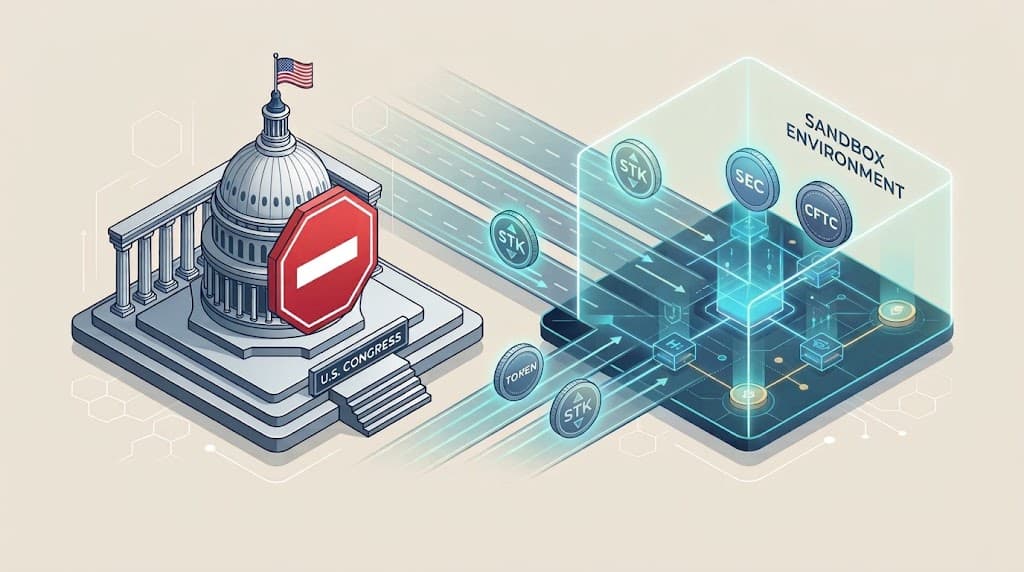
CLARITY Stalled. U.S. Crypto Regulation Didn’t.

Salma Naueihed

Sep 18, 2026

7 min

Lunar Ark Secures VARA In-Principle Approval for Virtual Asset Brokerage
News Desk
Sep 17, 2026
2 min

House Committee Advances Digital Asset Tax Bill in 38-5 Vote
News Desk
Sep 17, 2026
4 min

Stablecoin Yield Fight Helps Derail CLARITY Act in Senate
Walid Abou Zaki
Sep 15, 2026
8 min