Advertisement
Stablecoins & Payments
Share
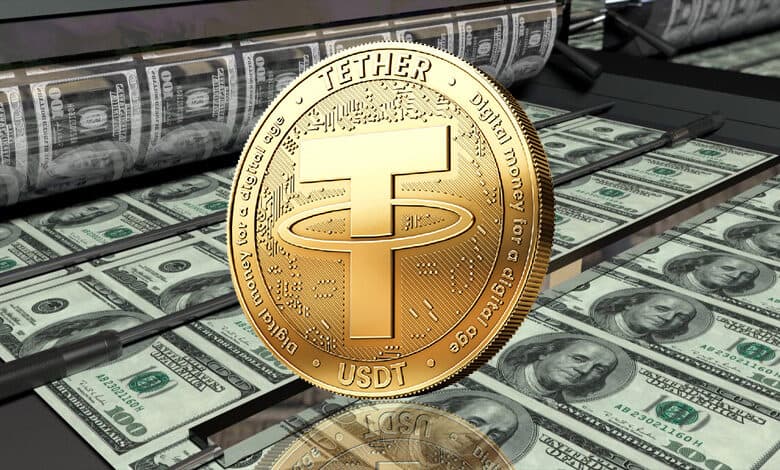
Tether, issuer of the popular USDT stablecoin, has announced the integration of its dollar-pegged token onto the Aptos blockchain, which aims to reduce transaction costs and enhance digital currency accessibility.
By launching USDT on Aptos, Tether seeks to leverage the blockchain's scalability and efficiency to offer users significantly reduced transaction fees. The integration is expected to make microtransactions and large-scale enterprise operations more economically viable, thanks to Aptos’s low gas fees.
Paolo Ardoino, CEO of Tether, expressed enthusiasm about the collaboration, stating, “The team at Tether is excited to integrate and collaborate with the Aptos ecosystem, enhancing our commitment to making digital currencies more accessible and functional.” He highlighted that Aptos technology would facilitate faster and more cost-effective transactions with USDT.
It is worth noting that the Aptos blockchain, which has seen significant growth throughout the year, reported an increase in daily active users from 96,000 in January to 170,000 in July. The blockchain also set a record in May 2024, processing 157 million transactions in a single day.
In addition to Tether’s expansion, Aptos recently partnered with blockchain analytics provider Nansen. This collaboration aims to empower users and investors with analytical tools to track trends within the Aptos ecosystem.
While Tether has successfully launched USDT on several blockchains, it has predominantly succeeded on Tron and Ethereum, with supply figures of $60.82 billion and $52.99 billion respectively. The stablecoin's presence on Aptos is expected to broaden its market reach and lower operational costs.
However, Tether’s expansion comes amid ongoing legal disputes. On August 10, the defunct cryptocurrency exchange Celsius sued Tether, claiming misappropriation of assets. The lawsuit seeks $3.5 billion in damages and alleges that Tether liquidated Bitcoin collateral used during Celsius’s bankruptcy proceedings.
Tether’s recent decision to halt minting new USDT on the EOS and Algorand blockchains and its support for Bitcoin, Kusama, and Bitcoin Cash reflects a strategic shift towards more profitable platforms. Despite reporting a record net profit of $5.2 billion for the first half of 2024, Tether's profits were impacted by fluctuations in Bitcoin's price.

Disclaimer of Warranty
The information provided in this article is for general informational purposes only. We make no warranties about the completeness, reliability, and accuracy of this information. Read full disclaimer

Editor's Picks

Why Zondacrypto’s Collapse Would Unfold Differently in the UAE

Walid Abou Zaki

Aug 28, 2026

8 min

The Missing Orchestration Layer Holding Back Institutional Digital Assets
Julian Sawyer
Aug 18, 2026
5 min

Beyond Crypto Access: How ARP Digital Is Building the UAE’s Digital Capital Infrastructure
Anna K.
Aug 17, 2026
8 min
Read More Articles

In the Same Space

Stablecoins vs. Tokenized Deposits: Who Will Control Digital Money?
Salma Naueihed
Aug 20, 2026
9 min
Universal Partners With Bitcoin.com to Bring UAE-Regulated USDU to Wallet
News Desk
Aug 19, 2026
3 min

World Liberty Brings $4B USD1 Stablecoin to Canton for RWA Settlement
News Desk
Aug 26, 2026
4 min

UAE's Zand Expands Stablecoin Reach Across Global Markets With New USDC Integration
News Desk
Aug 25, 2026
5 min