Advertisement
Stablecoins & Payments
Share
WA
CEO & Editor-in-Chief


DDSC, the UAE dirham-backed stablecoin backed by IHC, FAB and Sirius International Holding, has received a CBUAE No Objection Certificate to operate on selected VARA-regulated exchange platforms, but the article argues that regulatory access alone does not guarantee liquidity, merchant adoption or sustained circulation.
DDSC, the UAE dirham-backed stablecoin developed by International Holding Company, First Abu Dhabi Bank and Sirius International Holding, has received a No Objection Certificate from the Central Bank of the UAE to go live on selected VARA-regulated exchange platforms.
The announcement marks another step in the UAE’s regulated payment-token rollout. But it also puts DDSC, and the wider AED stablecoin market, under a more practical test: whether regulatory access can turn into liquidity, redemption activity, merchant acceptance and sustained circulation.
According to the announcement, DDSC is pegged 1:1 to the UAE dirham, settles on ADI Chain, and has processed more than AED 150 million in transactions to date. Subject to meeting the NOC requirements, DDSC will be able to go live on selected VARA-regulated platforms, allowing users to access, buy and redeem the token through compliant channels.
The companies behind DDSC positioned the NOC as a step toward broader access. Syed Basar Shueb, CEO of IHC, said the next phase “expands its potential reach” to businesses and individuals through selected regulated platforms. FAB also described the approval as a way of making regulated digital payments more accessible across the financial ecosystem.
That positioning is relevant, but access should not be confused with adoption.
For AED stablecoins, regulatory approval is only the first layer. Exchange availability may improve access, but it does not automatically create active order books, deep liquidity, redemption flows, merchant acceptance or user demand. The sector’s next phase will depend on whether issuers, banks, exchanges, market makers and payment providers can build practical use cases around these tokens.
This distinction matters because the UAE is moving from the approval phase into the implementation phase. Zand previously announced that it had received Central Bank approval to launch Zand AED, a regulated multi-chain AED-backed stablecoin on public blockchains, and Bybit currently displays an AEDZ/USDT spot market page.
The lesson is clear: approval and listing access do not necessarily translate into visible liquidity, recurring usage or practical demand.
DDSC’s announcement says the stablecoin has processed more than AED 150 million in transactions to date. That figure supports the claim that the infrastructure has handled institutional-scale movement, but it should not be read as proof that AED 150 million is currently circulating in the market.
In stablecoins, cumulative transaction volume and current supply are different metrics. The same token supply can move more than once. Tokens can also be issued for a transaction and later redeemed, burned or otherwise removed from circulation.
This distinction is important for DDSC.
Unlock previously reported that DDSC executed an AED 110 million transaction on ADI Chain. At the time, DDSC’s transparency data showed 110.2 million DDSC in circulation and AED 110.2 million in reserves as of May 1, 2026.
However, Unlock’s latest review of DDSC’s live transparency dashboard shows 50.0 million DDSC total supply and AED 50.0 million in reserve, with the reserve composition marked live as of July 4, 2026, 10:36 AM UTC. DDSC’s transparency page also states that every DDSC in circulation is matched 1:1 by UAE dirhams held with licensed UAE custodians, with reserve attestations conducted by Crowe.
The lower live supply does not necessarily contradict the AED 150 million transaction claim. Instead, it highlights the difference between cumulative transaction activity and current circulating supply. It may indicate that part of the earlier issued supply was redeemed or removed from circulation, although the public dashboard alone does not explain the timing, reason or mechanics behind the change.
The AED 150 million figure therefore supports DDSC’s infrastructure narrative, but it does not by itself prove sustained liquidity, market depth or ongoing adoption.
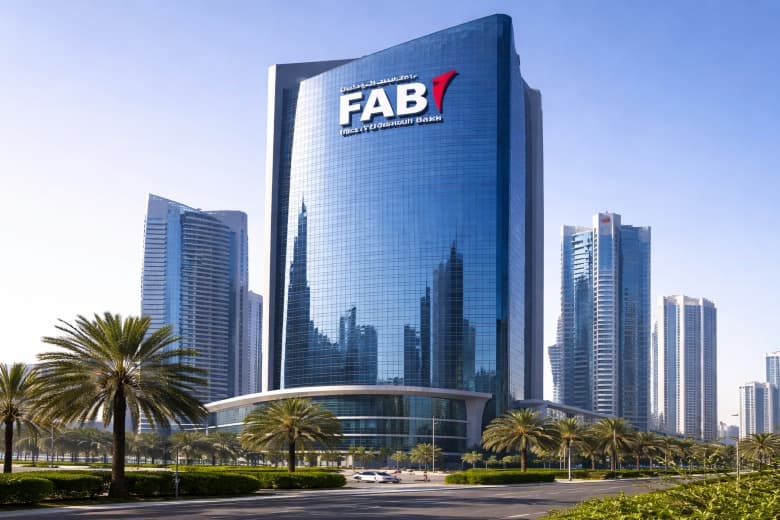
UAE Central Bank Approves FAB’s DDSC as Fourth AED Stablecoin
4 minThe real test for DDSC begins after exchange access.
A regulated AED stablecoin must compete not only with other local tokens, but also with existing payment rails, bank transfers, cards, digital wallets and dollar-denominated stablecoins such as USDT and USDC. For retail users, the question is simple: why hold and use an AED stablecoin if existing payment methods already work?
For merchants, the question is whether the token reduces cost, improves settlement speed or creates access to new customers. For exchanges, the issue is whether there is enough demand to support active AED-denominated liquidity.
DDSC has a stronger institutional starting point than many digital asset projects. Its ecosystem includes IHC, FAB and Sirius International Holding, while settlement takes place on ADI Chain, the institutional Layer-2 blockchain developed by ADI Foundation. The reported AED 150 million in cumulative transactions also suggests that DDSC has already been tested in institutional settlement environments.
Still, institutional readiness does not automatically guarantee market circulation. DDSC now needs liquidity providers, exchanges, banks, acquirers, merchants and users to operate around the token with enough clarity and incentive.
DDSC’s NOC also comes as global stablecoin infrastructure is moving into a new phase.
Open Standard, a consortium involving more than 140 organizations including Visa, Mastercard, Coinbase and BNY, has launched Open USD, a dollar-backed stablecoin model designed around shared governance, fee-free minting and redemption, and reserve-income sharing for participating members. Unlock Blockchainreported that UAE banks including ADIB, Emirates NBD, Mashreq and RAK Bank are listed among the consortium’s partners.
This does not mean UAE banks are moving away from AED stablecoins. But it shows that local institutions are also watching global models where adoption is being built through incentives, distribution, institutional networks and infrastructure partnerships.
For AED stablecoins, this raises the benchmark. Regulatory approval remains essential, but faster adoption may require more than permission to issue or list. It may require clearer operating pathways around exchange distribution, redemption, KYC reliance, merchant acceptance, acquirer integration, market incentives and cross-border use.
Without those layers, AED stablecoins risk competing against dollar stablecoins that are backed not only by liquidity, but also by global institutional networks.
DDSC’s NOC is important, but it should be read carefully.
It signals that regulated exchange access is becoming part of the UAE’s AED stablecoin market. It also shows that Central Bank approval and VARA-regulated platforms may play complementary roles in shaping how payment tokens reach users.
But the milestone does not settle the bigger question.
The real test for DDSC, and for UAE AED stablecoins more broadly, is whether regulatory permission can become market activity. Liquidity, redemption, merchant acceptance, current circulation and user incentives will determine whether these tokens become active financial infrastructure or remain regulated instruments searching for demand.
The UAE has opened the door for AED stablecoins. The harder question is whether regulation, market incentives and infrastructure partnerships can now move fast enough to turn that door into real usage.

Disclaimer of Warranty
The information provided in this article is for general informational purposes only. We make no warranties about the completeness, reliability, and accuracy of this information. Read full disclaimer

Editor's Picks

When Assets Move—or Stop—Without Consent: The Limits of Crypto Wallet Control

Walid Abou Zaki

Sep 29, 2026

6 min

Where Do the Dollars Behind the UAE’s Crypto Economy Sit?
Anna K.
Sep 21, 2026
9 min

As U.S. Crypto Legislation Stalls, Circle Launches Its Own Financial Network
Walid Abou Zaki
Sep 16, 2026
9 min
Read More Articles

In the Same Space
Stablecoins Solved the Transfer. Saleem Wants to Solve the Last Mile.
Ola Rajeh
Sep 21, 2026
8 min
Mashreq and Citi Complete Live Tokenized Payment on Swift’s Blockchain Ledger
News Desk
Sep 30, 2026
3 min
SoFi Becomes First National Bank to Launch Stablecoin Settlement
News Desk
Sep 23, 2026
4 min

EEMEA SMEs Turn to Crypto and Stablecoins as Digital Adoption Accelerates
News Desk
Sep 28, 2026
5 min