Advertisement
Policy & Industry
Share
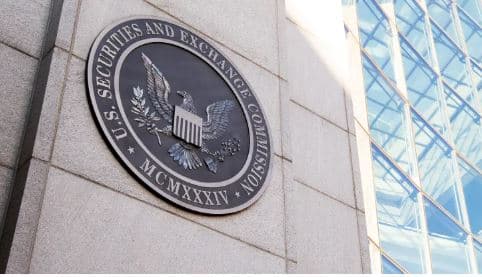
The US Securities and Exchange Commission (SEC) has reportedly postponed plans to introduce a regulatory exemption that would have allowed broader trading of tokenized stocks, following concerns raised by stock exchange operators and market participants over how the framework would function in practice.
According to a report by Bloomberg citing people familiar with the matter, the SEC had initially been expected to release its proposed “innovation exemption” for tokenized equities during the week. Staff members at the agency had reportedly already reviewed a draft version of the proposal before the delay.
The proposal would have created a regulatory pathway for crypto platforms to offer blockchain-based representations of publicly traded stocks under a more flexible framework designed to encourage financial innovation.
The reported delay follows extensive industry feedback submitted to the SEC regarding implementation risks and investor protections tied to tokenized equities.
Under the proposal, platforms offering tokenized shares would have been required to guarantee that investors receive rights equivalent to those of traditional shareholders, including voting rights and dividend entitlements.
However, market participants reportedly raised concerns over the possibility of unauthorized third parties issuing tokenized versions of public company shares without issuer consent.
Questions were also raised about how ownership verification and shareholder rights enforcement would function on semi-pseudonymous blockchain networks, particularly in cases involving custody, settlement, and corporate governance.
Despite the delay, the SEC reportedly has not formally abandoned or substantially altered the proposal and continues reviewing feedback from hundreds of industry participants.
The development comes amid growing institutional interest in tokenization and blockchain-based financial infrastructure across both Wall Street and the digital asset industry.
Regulatory attitudes toward crypto-related financial products have also become more accommodating under the Trump administration, particularly around tokenization, stablecoins, and blockchain-based capital markets.
According to Cointelegraph, approximately $34 billion worth of real-world assets have already been tokenized globally, including around $1.55 billion in tokenized equities.
Still, market adoption remains below earlier projections made by major financial institutions. Citibank and McKinsey & Company had previously forecast that tokenization could evolve into a multi-trillion-dollar market by the end of the decade.
Several executives within the digital asset industry publicly supported the SEC’s decision to slow down implementation of the proposal.
Carlos Domingo, chief executive of tokenization platform Securitize, stated on X that regulators needed to ensure the exemption is applied to the “right instruments.”
He added that it would be preferable to delay the framework rather than introduce rules that could create broader market problems.
Meanwhile, Tom Farley, chief executive of crypto exchange Bullish, said the SEC appeared to recognize that public companies themselves should remain the only entities authorized to issue tokenized versions of their own shares.
The delay also follows comments made by SEC Commissioner Hester Peirce, who said earlier this week that any future exemption would likely remain “limited in scope.”
According to Peirce, the framework would likely focus only on “digital representations” of equity securities similar to instruments already available in secondary markets.
Earlier this year, the SEC also introduced distinctions between different categories of tokenized securities.
The regulator classified tokenized securities into “custodial” and “synthetic” structures. Custodial tokenized securities are issuer-backed digital shares held through regulated intermediaries and include full shareholder rights, while synthetic tokenized securities primarily provide price exposure without direct ownership of the underlying stock.
The SEC’s delay highlights the growing complexity surrounding the intersection of blockchain infrastructure and traditional capital markets.
While tokenization continues attracting attention from exchanges, banks, and crypto firms seeking faster settlement and broader market accessibility, regulators are increasingly focused on ensuring that investor protections, ownership rights, and issuer controls remain intact as financial assets migrate onto blockchain networks.
The debate also reflects a broader tension emerging across global financial markets: how to modernize securities infrastructure using blockchain technology without disrupting the legal and operational frameworks underpinning traditional equity markets.

Disclaimer of Warranty
The information provided in this article is for general informational purposes only. We make no warranties about the completeness, reliability, and accuracy of this information. Read full disclaimer

Editor's Picks

When Assets Move—or Stop—Without Consent: The Limits of Crypto Wallet Control

Walid Abou Zaki

Sep 29, 2026

6 min

Where Do the Dollars Behind the UAE’s Crypto Economy Sit?
Anna K.
Sep 21, 2026
9 min

As U.S. Crypto Legislation Stalls, Circle Launches Its Own Financial Network
Walid Abou Zaki
Sep 16, 2026
9 min
Read More Articles

In the Same Space
Fed Sets Proposed Framework for Stablecoin Reserves and Bank Issuers
News Desk
Sep 25, 2026
6 min

Crypto ETFs Pull In $2.39B as Bitcoin Slips on Rising Treasury Yields
News Desk
Sep 30, 2026
5 min
CFTC Updates Tokenized Asset and Blockchain Rules as Crypto Bill Stalls
News Desk
Sep 25, 2026
5 min

Kraken Parent Payward Takes Institutional Settlement 24/7
News Desk
Oct 5, 2026
6 min