
Advertisement
Research & Analysis
Share
CA
Senior Arabic Editor


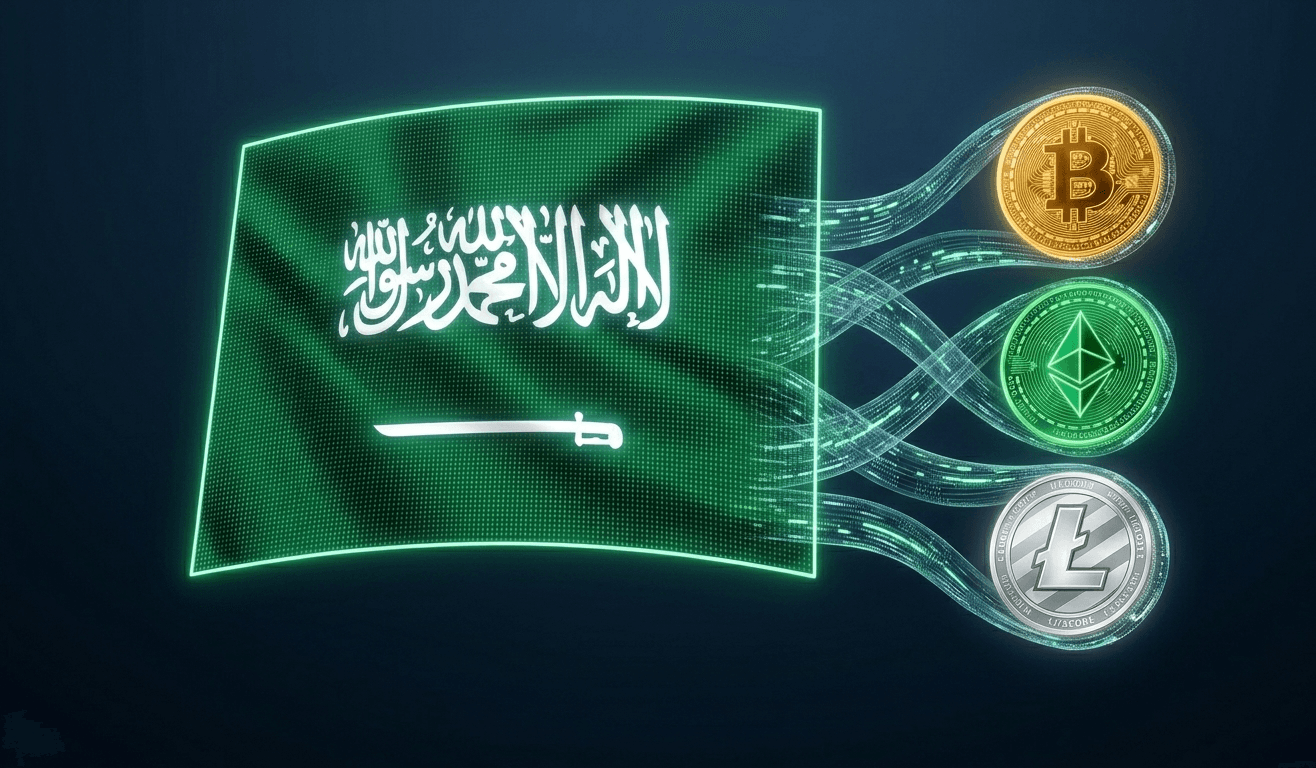
Saudi Arabia’s cryptocurrency market is entering a new phase of growth, with its total value expected to nearly double over the next decade as digital assets become increasingly integrated into the Kingdom’s financial system.
According to a recent report by IMARC Group, the Saudi crypto market reached approximately $24.9 billion in 2025 and is projected to grow to around $47.8 billion by 2034, reflecting a compound annual growth rate (CAGR) of 7.51% between 2026 and 2034.
The projected growth highlights a broader transformation within Saudi Arabia’s digital economy. Cryptocurrencies are no longer viewed solely as speculative investment tools but are increasingly becoming part of a wider financial ecosystem that intersects with technology, innovation, and digital infrastructure.
This shift is supported by growing confidence in digital systems and rising awareness among both retail users and institutional players, contributing to stronger adoption across the market.
A key driver behind this expansion is Saudi Arabia’s policy direction, particularly under Saudi Vision 2030, which prioritizes digital transformation and economic diversification.
Authorities are working to create a regulatory environment that balances innovation with oversight, encouraging blockchain adoption and fintech investment while maintaining governance standards. This approach is helping attract both domestic and international investors to the sector.
At the same time, increasing participation in trading and decentralized finance (DeFi), along with widespread access to smartphones and internet connectivity, is accelerating the pace of adoption.
The Saudi crypto market is also evolving beyond simple trading activity. Blockchain applications are expanding into areas such as financial services, supply chains, and data management, reflecting a broader shift toward real-world utility.
Institutional interest is also growing, signaling a change in how digital assets are perceived, from speculative instruments to strategic components of investment portfolios.
Institutional participation is playing an increasingly important role in shaping the market. Financial institutions are beginning to incorporate digital assets into their portfolio diversification strategies, reflecting a more mature understanding of the asset class.
Government support for emerging technologies has also attracted venture capital and private equity investment, strengthening the market’s infrastructure.
One notable initiative is the mBridge project, launched in 2024 with the involvement of the Saudi Central Bank and international partners, aimed at exploring central bank digital currencies (CBDCs). Such initiatives demonstrate that institutions are moving from observation to active participation in the digital asset space.
While Saudi Arabia’s crypto market remains in a relatively early stage compared to more mature markets such as the United States and Europe, it benefits from strong acceleration factors, including government backing, fintech investment, and digital infrastructure development.
Regionally, the United Arab Emirates stands out as a more advanced regulatory hub, with frameworks developed by entities such as Virtual Assets Regulatory Authority and Abu Dhabi Global Market. These frameworks have helped position the UAE as a global leader in crypto regulation.
In contrast, Saudi Arabia is advancing through a phase of structured acceleration, leveraging regional regulatory models while building its own long-term framework. This dynamic could allow the Kingdom to shorten the development timeline compared to other markets.
Decentralized finance is gaining traction in Saudi Arabia, with both individuals and businesses exploring more flexible, intermediary-free financial solutions.
The Kingdom is home to more than 200 fintech companies, with investments in the sector reaching approximately $1 billion in 2023, further supporting innovation and adoption.
Crypto is also intersecting with other industries, including gaming, where “play-to-earn” models are attracting younger users. This convergence reflects the growing role of digital assets within a broader, interconnected digital economy.
Despite strong growth, the market still faces challenges. These include varying levels of user awareness, an evolving regulatory framework, and the inherent volatility of digital assets, which may deter more risk-averse investors.
However, these challenges also present opportunities. They could drive clearer regulatory policies, stronger financial education initiatives, and deeper integration between digital assets and traditional financial systems.
From an analytical perspective, Saudi Arabia’s crypto market appears to be transitioning from an experimental phase to a more structured, institution-driven environment.
Future growth is likely to be supported by long-term investments, improved infrastructure, and regulatory development, rather than short-term speculation alone.
If current trends continue, Saudi Arabia is well-positioned to establish itself as a major regional hub for digital assets, supported by a clear strategic vision and sustained investment in financial technology.

Disclaimer of Warranty
The information provided in this article is for general informational purposes only. We make no warranties about the completeness, reliability, and accuracy of this information. Read full disclaimer

Editor's Picks
In the Same Space
“One Financial System”: What OKX’s New Investors Are Backing

Walid Abou Zaki

Oct 8, 2026

6 min
S&P Global Takes On DeFi’s $10B Lending Boom With New Risk Framework
News Desk
Oct 5, 2026
4 min

When Assets Move—or Stop—Without Consent: The Limits of Crypto Wallet Control
Walid Abou Zaki
Sep 29, 2026
6 min
ESMA Assesses Liquidity and Legal Risks of Tokenized Collateral
News Desk
Oct 9, 2026
6 min