Advertisement
Companies & Deals
Share
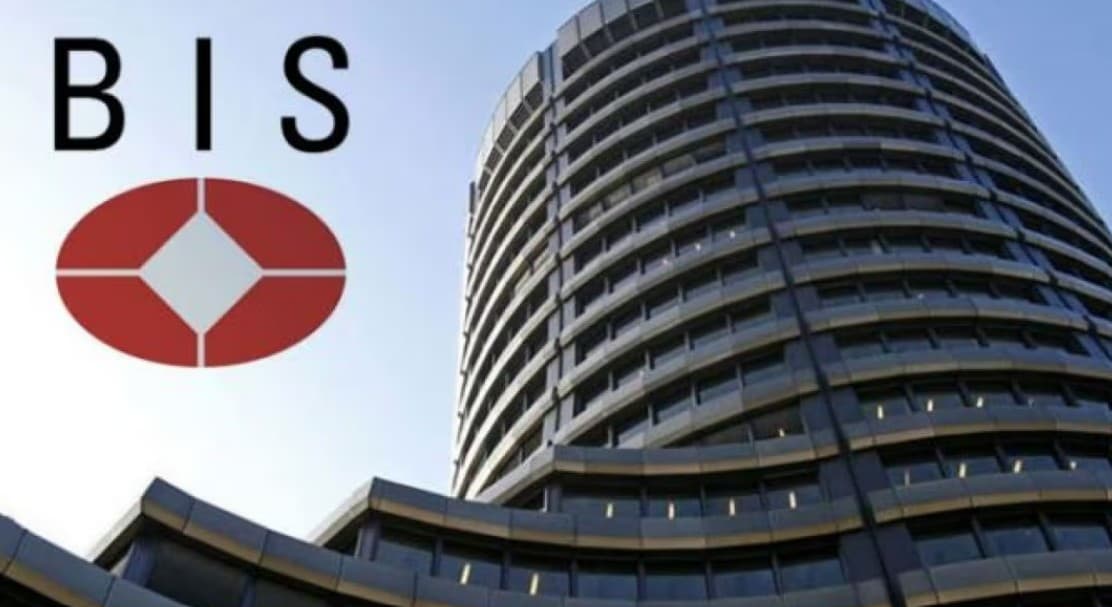
Project Agorá, led by the Bank for International Settlements (BIS), is entering a new phase that will test blockchain-based cross-border payments using real money, marking a major step toward modernizing global financial infrastructure.
The initiative, which was first introduced two years ago, brings together seven central banks and more than 40 regulated financial institutions in an effort to improve how international money transfers are processed. By moving into live transaction testing, the project is shifting from theoretical development into practical implementation.
The Basel-based BIS said Project Agorá was created to explore whether tokenization and distributed-ledger technology can make cross-border payments faster, cheaper, and more transparent.
Today, international transfers often pass through multiple intermediary banks, increasing costs and settlement times while reducing transparency. Project Agorá aims to streamline this process without weakening existing protections related to sanctions enforcement, compliance monitoring, and anti-money laundering controls.
Tim Adams, president of the Institute of International Finance, which coordinated participation from private financial firms, said the initiative could ultimately strengthen the broader global financial system.
The project includes some of the world’s most influential monetary and financial institutions.
Participating central banks include:
The Federal Reserve Bank of New York
The European Central Bank
The Bank of Japan
The Bank of Canada
The Bank of England
Private-sector participants include major financial firms such as:
JPMorgan, UBS Group, Deutsche Bank, Mastercard, Visa.
The broad participation reflects growing institutional interest in integrating blockchain infrastructure into traditional banking systems rather than building parallel alternatives.
At the core of Project Agorá is a “unified ledger” model developed by the BIS. The system brings together tokenized central bank reserves and commercial bank deposits onto a shared programmable platform.
In theory, this structure could allow banks operating in different jurisdictions to settle international transfers almost instantly.
The payment process is designed so that all transaction conditions are verified beforehand, while account balances are updated simultaneously once settlement occurs. According to BIS Deputy General Manager Andrea Maechler, this model allows transactions to be completed “in one go” once all requirements are confirmed.
Although the prototype relies on distributed-ledger technology, the BIS emphasized that the project is not intended to replace correspondent banking.
Instead, Project Agorá keeps the existing correspondent banking framework as the foundation of global payments while attempting to improve its efficiency through tokenization and automation.
This distinction is considered important because correspondent banking networks remain central to international compliance systems, including sanctions screening and anti-money laundering oversight.
The BIS said early testing suggests tokenization can reduce inefficiencies in wholesale cross-border payments while preserving financial safeguards and operational security.
Despite progress in the pilot phase, the BIS has not announced a timeline for a broader rollout.
Participants have indicated that ensuring operational reliability and regulatory compatibility remains more important than accelerating deployment. The project is therefore being treated as a long-term infrastructure experiment rather than a near-term commercial product launch.
Project Agorá may become one of the clearest examples yet of how blockchain technology is gradually being integrated into mainstream finance instead of existing outside it. Rather than disrupting banks entirely, the initiative reflects a growing trend toward modernizing traditional financial infrastructure using tokenization and programmable settlement systems.
If the pilot succeeds, it could influence how central banks, payment providers, and financial institutions approach the future of international settlement networks. More importantly, it highlights a broader shift in global finance: blockchain is increasingly being viewed less as an alternative system and more as an infrastructure layer capable of improving the efficiency of existing banking operations without removing regulatory oversight.

Disclaimer of Warranty
The information provided in this article is for general informational purposes only. We make no warranties about the completeness, reliability, and accuracy of this information. Read full disclaimer

Editor's Picks
In the Same Space

UK Names Six Banks to Lead First Digital Government Bond

News Desk

Oct 7, 2026

3 min
Sui's Hashi Network to Unlock Bitcoin Lending With $500 Million in Commitments
News Desk
Oct 9, 2026
5 min
Samsung’s New Crypto Wallet Patent Could Change How Private Keys Work
News Desk
Oct 6, 2026
5 min

IMF Clears $139 Million Disbursement to El Salvador After Bitcoin Breach
News Desk
Oct 2, 2026
4 min