Advertisement
Policy & Industry
Share
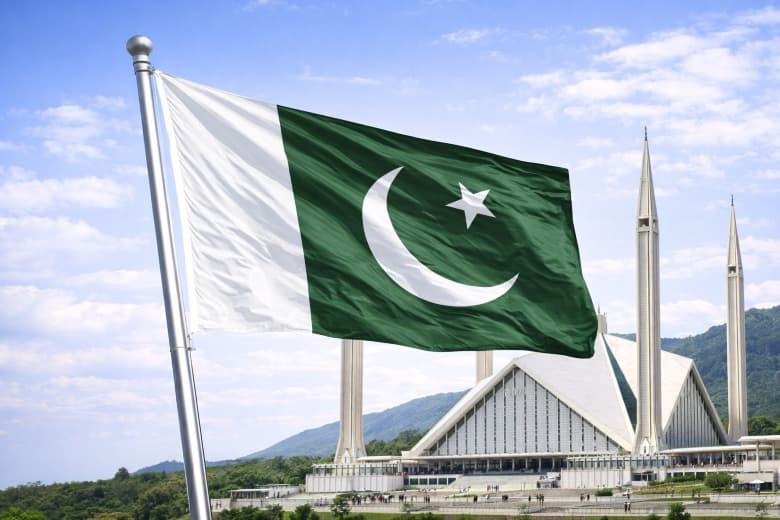
Pakistan's Virtual Assets Regulatory Authority (PVARA) has formally asked a leading Islamic seminary to issue differentiated Shariah rulings on stablecoins and tokenized assets versus speculative cryptocurrencies, as the country builds out its crypto licensing regime.
Pakistan's digital asset regulator is seeking greater regulatory clarity on how Islamic law should apply to different categories of digital assets, as the country moves forward with plans to license crypto businesses and expand tokenized finance.
Bilal Bin Saqib, Chairman of the Pakistan Virtual Assets Regulatory Authority (PVARA), said the regulator has asked one of the country's most influential Islamic seminaries to distinguish speculative cryptocurrencies from asset-backed digital assets, following a religious ruling that questioned whether cryptocurrencies qualify as wealth under Shariah.
The discussions come as Pakistan accelerates efforts to establish a regulated digital asset ecosystem, including licensing virtual asset service providers, exploring tokenized government assets and supporting stablecoin-based cross-border payments.
Rather than treating all digital assets as a single category, PVARA is advocating for an approach that evaluates blockchain-based financial instruments according to their underlying characteristics and economic function.
Last month,Jamia Darul Uloom Karachi ruled that cryptocurrencies, in their current form, do not constitute recognised wealth under Islamic law and therefore should not be considered a valid means of payment.
The fatwa was issued by a group of religious scholars at the seminary, including Mufti Muhammad Taqi Usmani, a leading authority in Islamic Finance. It was issuedin response to a question regarding the use of cryptocurrency to purchase books and online educational courses.
While the ruling has raised questions about Pakistan's expanding crypto strategy, the regulator argues that digital assets should not be assessed as a single asset class.
"The central question the fatwa raises is whether a digital asset constitutes recognized wealth under Shariah. That is precisely the right question, and it is why these instruments must be examined individually," Saqib told Reuters.
According to PVARA, blockchain technology itself should not be viewed as a financial asset but as infrastructure that records and verifies ownership.
The regulator argues that blockchain-recorded sukuk (Islamic bonds), gold-backed digital tokens and fully reserved stablecoins represent ownership claims over identifiable assets and therefore warrant separate consideration from speculative cryptocurrencies.
By contrast, digital assets with no underlying economic backing present different legal and religious considerations.
"The scholars' concerns there must be taken seriously," Saqib said, referring to speculative cryptoassets.
The regulator said it will continue engaging with Islamic scholars as Pakistan develops its licensing framework for virtual asset service providers while advancing work on stablecoins and real-world asset (RWA) tokenization.
Pakistan has rapidly expanded its digital asset ambitions in recent months.
The government is preparing to issue licenses for crypto exchanges, exploring the tokenization of state assets and promoting blockchain-based financial infrastructure.
Islamabad has also pursued international partnerships around digital assets, including cooperation involving the USD1 stablecoin for cross-border payments as part of its broader strategy to modernize financial services.
The latest discussions suggest that Shariah governance could become an important component of Pakistan's emerging regulatory framework, particularly as policymakers seek to balance innovation with Islamic financial principles.
The debate reflects a broader evolution in digital asset regulation, where policymakers are increasingly distinguishing between speculative cryptocurrencies and blockchain-based financial instruments backed by real-world assets.
For jurisdictions with significant Islamic finance sectors, the distinction could influence how stablecoins, tokenized securities and digital payment systems are regulated and adopted by financial institutions.
As tokenization expands globally, Pakistan's approach may provide an early example of how Shariah principles are incorporated into digital asset regulation rather than applied uniformly across all blockchain-based assets.

Disclaimer of Warranty
The information provided in this article is for general informational purposes only. We make no warranties about the completeness, reliability, and accuracy of this information. Read full disclaimer

Editor's Picks
In the Same Space
The Battle Over Crypto Banking Is Now Headed to Court, What's Next?

Anna K.

Oct 6, 2026

7 min

Kraken Parent Payward Takes Institutional Settlement 24/7
News Desk
Oct 5, 2026
6 min
Greece Proposes 10% Crypto Gains Tax as Digital Assets Enter Tax Framework
News Desk
Oct 8, 2026
5 min
Russia Opens Regulated Crypto Market as Sberbank, VTB Enter First Registries
News Desk
Oct 7, 2026
4 min