Advertisement
Event Coverage
Share
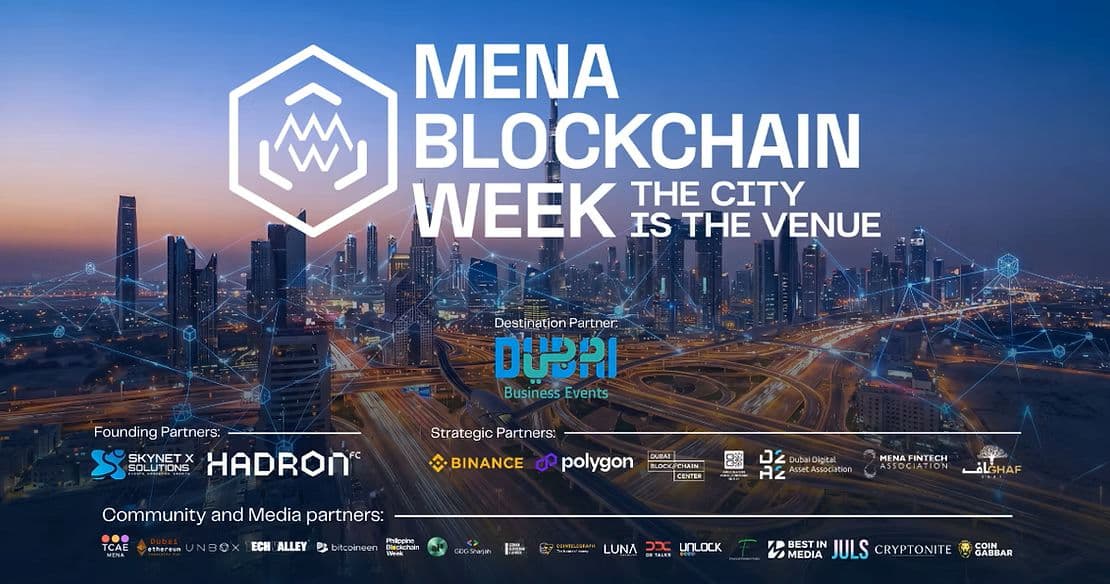
MENA Blockchain Week 2026 concluded its inaugural edition in Dubai as the region's first decentralized, city-wide blockchain initiative, spanning 40-plus events across seven themed days and drawing over 5,000 participants from regulators, exchanges, and financial institutions.
MENA Blockchain Week 2026 has concluded its inaugural edition, bringing together regulators, exchanges, blockchain companies, financial institutions, and technology providers through what organizers describe as the region’s first decentralized city-wide blockchain initiative.
Rather than concentrating activity inside a single conference venue, the event was structured as a multi-location ecosystem program spanning Dubai. The initiative began with a private Community Resilience Summit on May 14 and continued through seven themed days between May 18 and May 24, covering topics ranging from artificial intelligence and blockchain to stablecoins, tokenization, regulation, payments, and digital asset markets.
According to organizers, the week featured more than 40 events across the city, attracted over 5,000 participants, and included more than 100 speakers representing organizations across the blockchain, financial services, and technology sectors.
The significance of MENA Blockchain Week lies less in attendance figures and more in its organizational structure.
Dubai has hosted major blockchain conferences for years. What distinguished MENA Blockchain Week was its attempt to distribute activity across multiple venues, communities, and industry stakeholders rather than centralizing discussions under a single organizer or conference hall.
The initiative brought together ecosystem participants that included Binance, Coinbase, Polygon, the Stellar Development Foundation, CoinMarketCap, Google, Bitpanda, Chainalysis, Oracle, RAKBank, Zand, AD Ports, and Laser Digital.
Government and regulatory participation included representatives from the UAE’s Virtual Assets Regulatory Authority (VARA), Dubai Blockchain Center, and Bahrain’s Ministry of Interior.
The model reflects a broader trend visible across Dubai’s digital asset sector, where growth increasingly depends on collaboration between regulators, financial institutions, infrastructure providers, technology companies, and industry associations rather than individual market participants acting in isolation.
The week’s programming reflected many of the themes currently shaping global digital asset markets.
Dedicated sessions focused on stablecoins, banking integration, cross-border payments, tokenization, regulatory frameworks, cybersecurity, custody, artificial intelligence, and digital asset infrastructure.
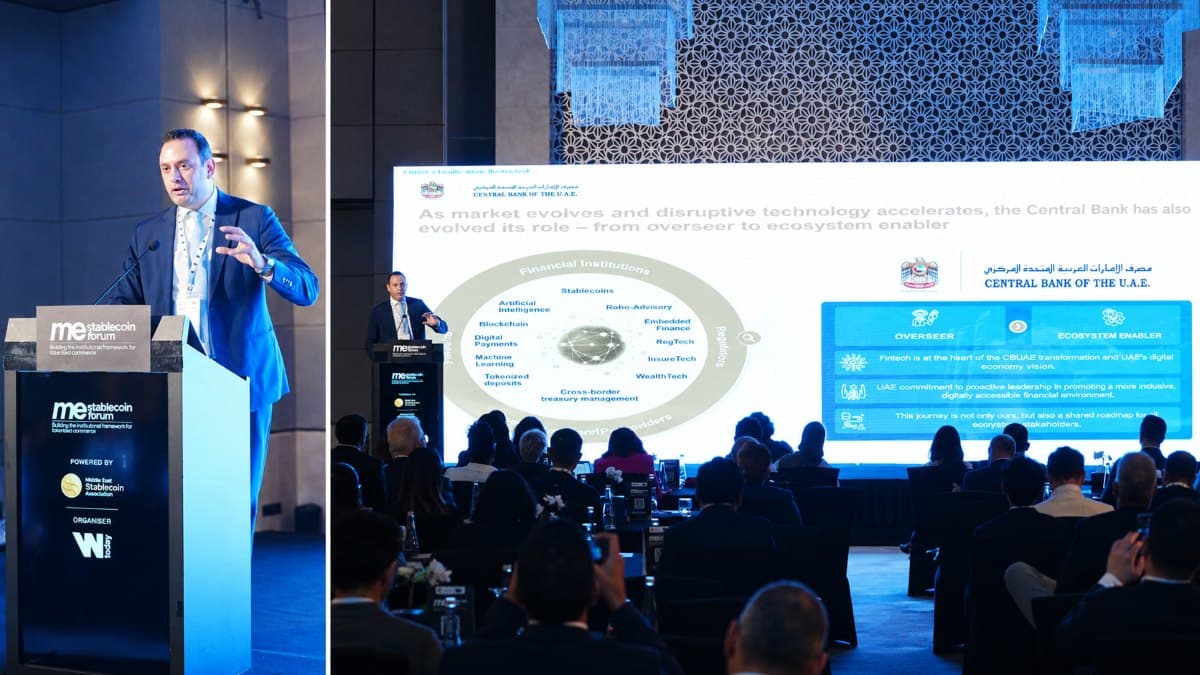
One of the flagship sessions was a closed-door stablecoin and tokenization gathering hosted at the DMCC Crypto Centre, bringing together representatives from the Middle East Stablecoin Association (MESA), Dubai Digital Asset Association (D2A2), Zodia Markets, Aquanow, Ledger, and other industry participants.
The prominence of stablecoins throughout the week mirrors a broader industry shift as jurisdictions including the UAE, United States, Europe, and Japan move toward regulated digital payment infrastructure and institutionally focused digital asset settlement systems.
The event also highlighted Dubai’s continued efforts to position itself as a global hub for blockchain innovation and digital assets.
The initiative received support from Dubai Business Events, operating under Dubai’s Department of Economy and Tourism, through an official memorandum of understanding aligned with the emirate’s D33 Economic Agenda.
Institutional participation throughout the week reinforced one of Dubai’s key competitive advantages: the ability to bring regulators, industry associations, infrastructure providers, investors, and technology companies into the same ecosystem.
VARA representatives participated alongside executives from major exchanges and blockchain firms, reflecting the collaborative regulatory approach that has helped attract digital asset companies to the emirate.
The broader significance of MENA Blockchain Week may ultimately be what it signals about the evolution of the UAE’s digital asset sector.
In earlier market cycles, blockchain conferences often focused primarily on networking, fundraising, and emerging projects. The discussions at MENA Blockchain Week reflected a more mature market focused on infrastructure, regulation, payments, compliance, tokenization, and institutional adoption.
That shift mirrors developments taking place across the UAE, where stablecoins, tokenized assets, digital payment infrastructure, and regulated virtual asset activities are increasingly becoming part of mainstream financial discussions.
For organizers, the inaugural edition was intended as a proof of concept for a city-wide model. Whether that approach becomes a recurring feature of Dubai’s event landscape remains to be seen.
What is clear, however, is that the initiative demonstrated the depth and breadth of the UAE’s digital asset ecosystem, bringing together participants from across the industry at a time when blockchain infrastructure, digital payments, and tokenization are moving closer to the center of global financial markets.

Disclaimer of Warranty
The information provided in this article is for general informational purposes only. We make no warranties about the completeness, reliability, and accuracy of this information. Read full disclaimer

Editor's Picks
In the Same Space
Stablecoins Solved the Transfer. Saleem Wants to Solve the Last Mile.

Ola Rajeh

Sep 21, 2026

8 min
CoinMENA Becomes First Digital Asset Platform Live in Jordan’s Regulatory Sandbox
Anna K.
Sep 21, 2026
3 min
VARA Approves Alya Marrakchi as Managing Director of GC Exchange FZE
Chantal Assi
Sep 21, 2026
4 min
Binance Launches Tokenized U.S. Stocks and ETFs in UAE With bStocks
News Desk
Sep 21, 2026
4 min