Advertisement
Policy & Industry
Share
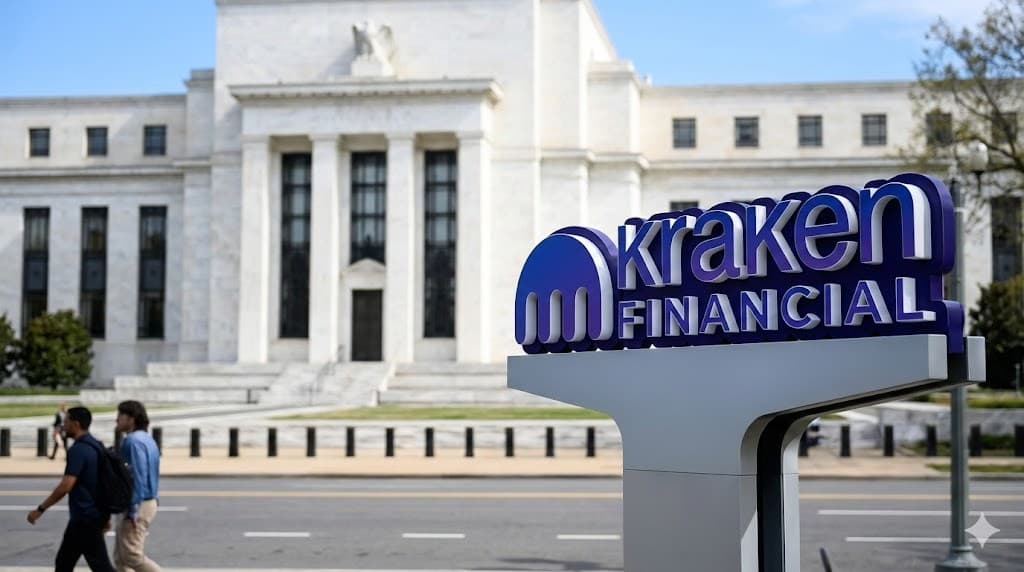
Crypto exchange Kraken has secured a landmark Federal Reserve master account, granting its Wyoming-based banking arm direct access to the central bank’s payment infrastructure. Following this development, the latest disclosures shift focus from access to the conditions, restrictions, and systemic implications of that approval.
The account, approved by the Federal Reserve through the Kansas City Fed, allows Kraken to transact via Fedwire and hold limited balances at the central bank. The approval follows more than five years of applications and marks the first time a crypto-native firm has gained such access.
However, the account comes with restrictions. Kraken cannot earn interest on reserves, access emergency lending, or use other payment systems such as FedNow or ACH, according to company disclosures.
The approval reflects a controlled expansion of access to central bank infrastructure, where innovation is being balanced against liquidity, credit, and operational risk safeguards.
The approval has drawn scrutiny from policymakers and banking stakeholders. Maxine Waters has formally requested further disclosure on the account’s conditions, citing concerns over transparency and adherence to Federal Reserve protocols.
Critics argue the approval process lacked clarity and may set a precedent for additional crypto firms seeking similar access. The Federal Reserve has not publicly detailed the full scope of restrictions applied to Kraken’s account.
The case highlights ongoing tension between innovation and oversight as regulators evaluate how crypto firms fit within existing financial frameworks.
Despite restrictions, the account provides Kraken with a structural advantage. Direct access to Fedwire enables faster and lower-cost settlement by removing reliance on intermediary banks.
Initially, Kraken plans to use the account for wholesale clients, with the potential to expand functionality over time. The company has framed the approval as validation of its compliance-first approach and alignment with banking-grade standards.
Other firms, including Ripple, Anchorage Digital, and Wise, are also pursuing similar access, suggesting Kraken may be the first in a broader wave of crypto-native institutions entering central bank infrastructure.
The move has reignited debate over systemic risk. Banking groups warn that allowing crypto firms direct access to central bank rails could shift deposits away from traditional banks, weakening a key pillar of financial system stability.
Experts also point to operational and compliance risks. Unlike federally insured banks, crypto-linked depository institutions may face less rigorous ongoing supervision, raising concerns about resilience during periods of stress.
There are also heightened concerns around anti-money laundering (AML) exposure and cybersecurity vulnerabilities, which regulators have repeatedly flagged across the crypto sector.
If a crypto firm with direct Fed access were to experience a disruption—such as a cyberattack or liquidity shortfall—the impact could extend beyond the firm itself and into the broader payment system.
The Federal Reserve has signaled openness to expanding access to its payment rails, including exploring new types of restricted accounts similar to Kraken’s model. These would limit exposure to credit and liquidity risks while enabling innovation.
Still, policymakers acknowledge the uncertainty. Federal Reserve Governor Michelle Bowman recently described Kraken’s account as “an experiment,” reflecting the untested nature of integrating crypto-native firms into core financial infrastructure.
Kraken’s master account represents a structural shift in how crypto firms interface with the U.S. financial system. While restrictions aim to contain risk, the approval sets a precedent that could reshape access to central bank infrastructure.
As more firms seek similar status, the debate will likely intensify around how to balance innovation, competition, and systemic stability.
The outcome will determine whether direct central bank access becomes a standard feature of institutional crypto—or remains a tightly controlled exception.

Disclaimer of Warranty
The information provided in this article is for general informational purposes only. We make no warranties about the completeness, reliability, and accuracy of this information. Read full disclaimer

Editor's Picks
In the Same Space

The Battle Over Crypto Banking Is Now Headed to Court, What's Next?

Anna K.

Oct 6, 2026

7 min
CFTC Unveils Federal Framework for Leveraged Crypto Trading
News Desk
Oct 6, 2026
4 min

Hong Kong Prepares to Rewrite the Rules for Virtual Assets, Licensing Bill Planned for 2026
News Desk
Oct 5, 2026
4 min

SpaceX Pre-IPO Fraud Case Highlights the Risks Behind On-Chain Private-Market Bets
News Desk
Oct 1, 2026
4 min