Advertisement
Policy & Industry
Share
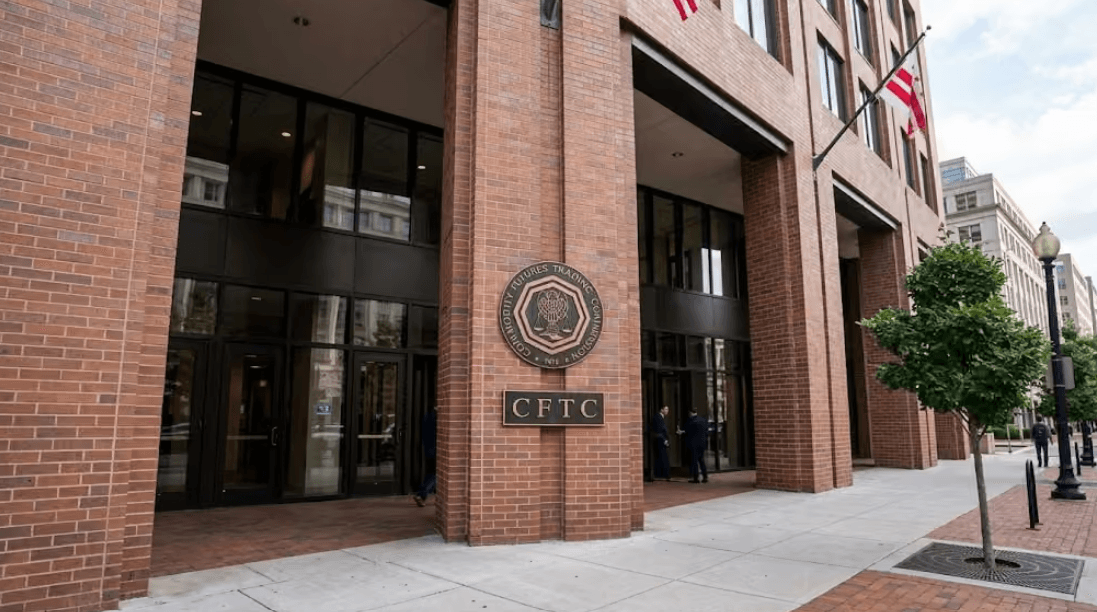
A new investigation published by The New York Times has raised fresh scrutiny around the role of the US Commodity Futures Trading Commission (CFTC) and its handling of several crypto-related companies tied to business associates and family members connected to President Donald Trump.
The report, published Sunday by journalists Sharon LaFraniere and David Yaffe-Bellany, describes what it characterizes as a year-long internal campaign inside the CFTC aimed at removing regulatory obstacles for three crypto and prediction-market companies while sidelining employees who raised concerns internally.
According to the investigation, the reporting was based on official agency records, interviews with more than 30 current and former employees, and discussions with executives linked to the companies involved.
The investigation focuses on three firms that reportedly required CFTC approval to expand ambitions tied to prediction markets and digital asset products: Polymarket, Crypto.com, and Gemini’s Gemini Titan entity.
According to the report, each company maintains some level of connection to figures within Trump’s political or business network.
Polymarket reportedly received investment from 1789 Capital, a venture capital company partially owned by Donald Trump Jr., who also serves as an unpaid adviser to the firm.
Crypto.com separately entered into an exclusive partnership last October with Trump Media & Technology Group to launch “Truth Predict,” a prediction-market service tied to the president’s social platform Truth Social.
Meanwhile, Gemini co-founders Cameron Winklevoss and Tyler Winklevoss have reportedly backed American Bitcoin, a mining and digital asset venture co-founded by Eric Trump.
According to the report, several senior CFTC officials internally raised concerns regarding how some of the firms handled investor protections and regulatory oversight.
Officials reportedly questioned whether Crypto.com was treating retail investors fairly and expressed concerns about the adequacy of fraud protections on Polymarket’s platform.
Gemini Titan was also reportedly criticized internally for not fully completing required regulatory review procedures before launching certain operations.
The investigation claims that former acting CFTC chair Caroline Pham and her legal adviser Bridget Wells became directly involved in the matters tied to the three companies.
According to the investigation, two officials who raised concerns about the cases were suspended by the end of the year, barred from entering agency headquarters, and subjected to internal investigations.
The report also stated that three additional employees involved in digital asset enforcement matters faced disciplinary measures, although no detailed public explanation was provided.
Several current and former employees reportedly told the newspaper that staff inside the agency increasingly understood the message to be: avoid creating problems for these sectors.
Pham later left the CFTC in December and joined MoonPay, which operates a prediction-market partnership with Polymarket.
Bridget Wells subsequently joined Gemini Titan in March as general counsel.
The report also highlighted what it described as a sharp slowdown in digital asset enforcement activity inside the CFTC during Trump’s second administration.
According to the investigation, the agency has reportedly announced only two crypto-related enforcement actions during the current administration, compared with more than 80 during President Joe Biden’s term and more than 24 during Trump’s first presidency.
Within prediction markets specifically, the agency reportedly pursued only one case involving a US military serviceman accused of using confidential information to place bets through Polymarket.
The report further claimed that at least five additional crypto investigations were dropped despite some reportedly being in advanced stages.
The investigation also pointed to structural concerns within the CFTC itself.
According to the report, current chairman Michael Selig is presently serving as the commission’s only active commissioner after vacant seats were left unfilled.
The structure effectively gives Selig unusually broad authority over decisions involving sectors closely connected to parts of Trump’s broader business network, a situation that has reportedly drawn criticism from lawmakers.
Leaders within the House Agriculture Committee have reportedly urged the administration to complete pending appointments, arguing that restoring a full five-member commission would improve regulatory balance and decision-making.
The controversy arrives as Congress continues debating the proposed CLARITY Act, legislation that would significantly expand the CFTC’s authority over spot digital asset markets.
At the same time, the nomination of former CFTC official Brian Quintenz was reportedly withdrawn after pressure from influential figures within the crypto industry, according to the report.
Several lawmakers and policy experts have since raised concerns about potential conflicts of interest surrounding the agency and questioned whether broader regulatory powers should be granted to an institution already facing criticism over independence and oversight standards.
The White House denied allegations of conflicts of interest, stating that President Trump acts only in the interests of the American public.
Some companies named in the report defended their compliance with federal regulations, while others declined to comment publicly.
Meanwhile, several lawmakers sharply criticized the agency’s handling of crypto firms and prediction-market platforms, warning about potential risks tied to market integrity, investor protections, and national security.
Some legal and policy experts described the allegations outlined in the report as evidence of broader institutional governance concerns surrounding digital asset oversight in the United States.
Beyond the specific companies involved, the controversy highlights broader tensions emerging around how digital asset markets and prediction platforms are regulated in the United States.
The combination of political influence, institutional instability, and rapidly expanding blockchain-based financial products continues raising questions about whether regulatory agencies can maintain independence while overseeing increasingly powerful digital asset industries.
The situation also reflects a larger challenge facing global crypto regulation: ensuring that emerging blockchain markets develop under consistent and transparent oversight standards while avoiding political interference, uneven enforcement, or conflicts of interest within the agencies responsible for supervising them.

Disclaimer of Warranty
The information provided in this article is for general informational purposes only. We make no warranties about the completeness, reliability, and accuracy of this information. Read full disclaimer

Editor's Picks

When Assets Move—or Stop—Without Consent: The Limits of Crypto Wallet Control

Walid Abou Zaki

Sep 29, 2026

6 min

Where Do the Dollars Behind the UAE’s Crypto Economy Sit?
Anna K.
Sep 21, 2026
9 min

As U.S. Crypto Legislation Stalls, Circle Launches Its Own Financial Network
Walid Abou Zaki
Sep 16, 2026
9 min
Read More Articles

In the Same Space

The Battle Over Crypto Banking Is Now Headed to Court, What's Next?
Anna K.
Oct 6, 2026
7 min

Kraken Parent Payward Takes Institutional Settlement 24/7
News Desk
Oct 5, 2026
6 min
Fed Sets Proposed Framework for Stablecoin Reserves and Bank Issuers
News Desk
Sep 25, 2026
6 min
IMF Clears $139 Million Disbursement to El Salvador After Bitcoin Breach
News Desk
Oct 2, 2026
4 min