Advertisement
Policy & Industry
Share
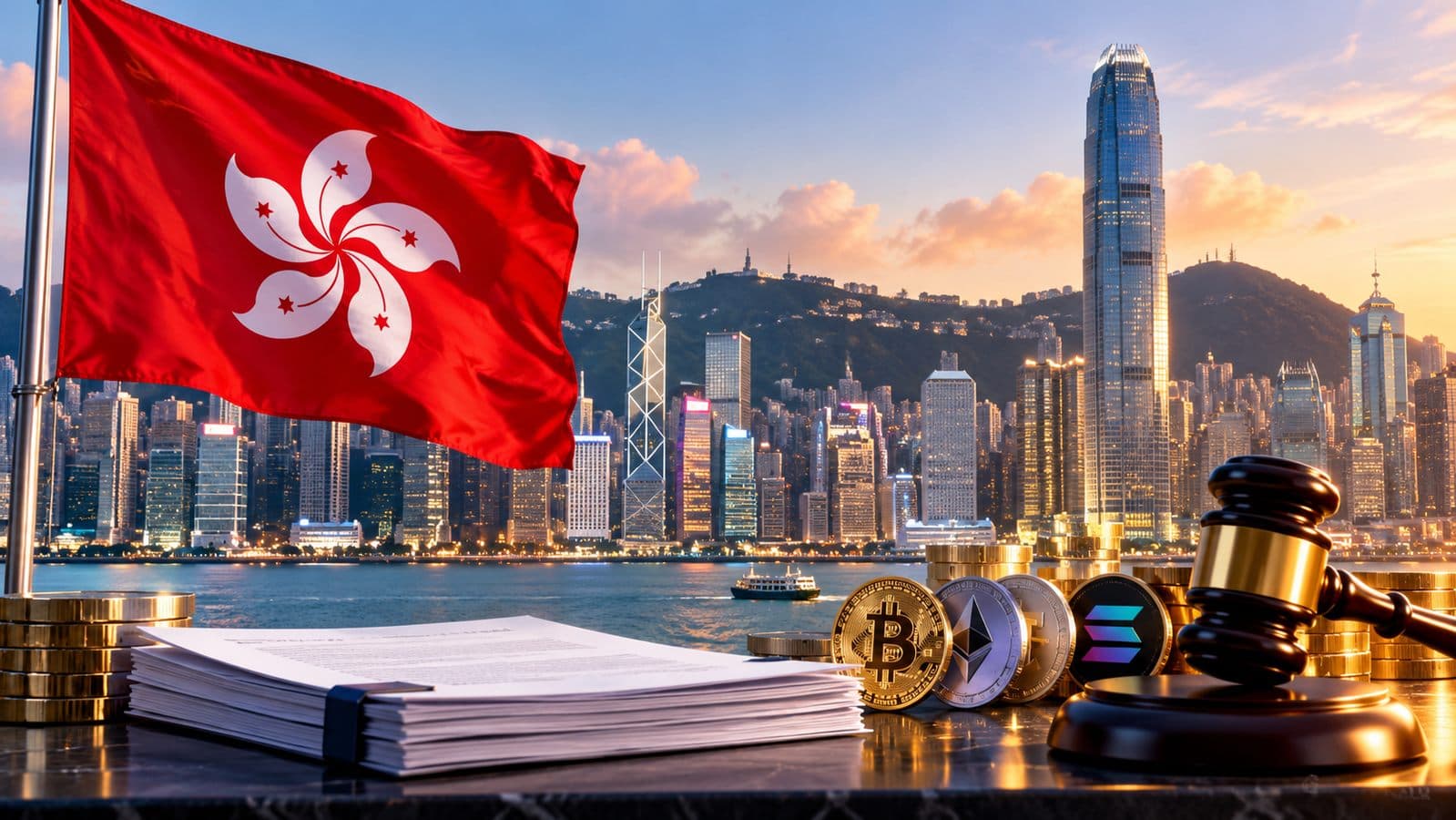
Hong Kong plans to submit a virtual asset licensing amendment bill by end-2025, covering trading, custody, advisory, and asset management services, as part of its 2026–2030 financial development strategy.
Hong Kong plans to submit a draft amendment bill this year for businesses providing virtual asset trading, custody, advisory and management services, adding another layer to the city’s expanding digital-asset regulatory regime.
Christopher Hui, Hong Kong’s secretary for financial services and the treasury, said on October 5 that the government plans to submit amendments to the relevant ordinances before the end of the year.
The proposed framework forms part of Hong Kong’s broader 2026–2030 financial market development strategy, which seeks to strengthen the city’s position as an international financial center while creating new sources of growth across the financial sector.
The planned legislation would bring four areas of virtual-asset activity under a dedicated licensing system: trading, custody, advisory services and asset management.
Hui did not provide detailed licensing requirements at the briefing, including application criteria or the number of businesses that could ultimately fall within the framework.
The proposal nevertheless signals a broader regulatory approach to virtual assets, extending oversight beyond trading platforms to other services that connect investors and institutions with digital assets.
The government is also reviewing the wider legal framework surrounding virtual assets in cooperation with the Hong Kong Monetary Authority (HKMA).
Hong Kong’s regulatory work is extending beyond virtual assets themselves.
The government is examining legal changes aimed at improving the detection and removal of fraudulent content that misuses artificial intelligence. Authorities plan to work with the technology and telecommunications sectors to strengthen systems for identifying and responding to such content.
The initiative forms part of a wider fintech policy under Hong Kong’s financial development strategy, which places technology alongside financial-market development as a key area for future growth.
The proposed licensing regime is being developed alongside initiatives covering other areas of Hong Kong’s financial markets.
The government plans to reinforce the city’s role as an offshore renminbi hub, including discussions with the People’s Bank of China on optimizing currency-swap arrangements.
Hong Kong also intends to introduce a seven-day offshore renminbi liquidity bidding mechanism and explore short-term offshore renminbi debt instruments as part of efforts to strengthen the offshore renminbi interest-rate curve.
The Hong Kong Stock Exchange is also expected to launch an Offshore RMB Bond Index, which could serve as a benchmark for exchange-traded funds, while authorities plan to expand the issuance of Dim Sum bonds.
The city is also developing its commodity-market infrastructure, with gold among the areas receiving particular attention.
The Hong Kong Gold Central Clearing and Settlement System is scheduled to launch in the first quarter of 2027. The Hong Kong Stock Exchange is also expected to announce details of new renminbi-denominated, physically settled gold futures contracts this year.
The government is further examining opportunities to expand commodity trading and cooperation between exchanges.
Taken together, the initiatives show that Hong Kong’s virtual-asset strategy is being developed as part of a much broader effort to expand the city’s financial infrastructure rather than as a standalone crypto policy.
For the virtual-asset sector, the immediate milestone is the planned submission of the amendment bill later this year.
The government has yet to publish the detailed rules that would determine how the proposed licensing regime works in practice. Those details will be important for firms providing trading, custody, advisory and management services, as well as for institutions assessing Hong Kong as a base for digital-asset operations.
The legislation would add another component to Hong Kong’s evolving virtual-asset framework while placing digital assets alongside fintech, offshore renminbi markets, wealth management and commodities in the city’s broader financial-development strategy.

Disclaimer of Warranty
The information provided in this article is for general informational purposes only. We make no warranties about the completeness, reliability, and accuracy of this information. Read full disclaimer

Editor's Picks

When Assets Move—or Stop—Without Consent: The Limits of Crypto Wallet Control

Walid Abou Zaki

Sep 29, 2026

6 min

Where Do the Dollars Behind the UAE’s Crypto Economy Sit?
Anna K.
Sep 21, 2026
9 min

As U.S. Crypto Legislation Stalls, Circle Launches Its Own Financial Network
Walid Abou Zaki
Sep 16, 2026
9 min
Read More Articles

In the Same Space

Hong Kong Targets $2.6B Multi-Currency Digital Bond Sale
News Desk
Sep 24, 2026
3 min

Kraken Parent Payward Takes Institutional Settlement 24/7
News Desk
Oct 5, 2026
6 min
S&P Global Takes On DeFi’s $10B Lending Boom With New Risk Framework
News Desk
Oct 5, 2026
4 min

UAE FIU and VARA Join Forces to Crack Down on Virtual Asset Crime
News Desk
Oct 5, 2026
3 min