Advertisement
Stablecoins & Payments
Share
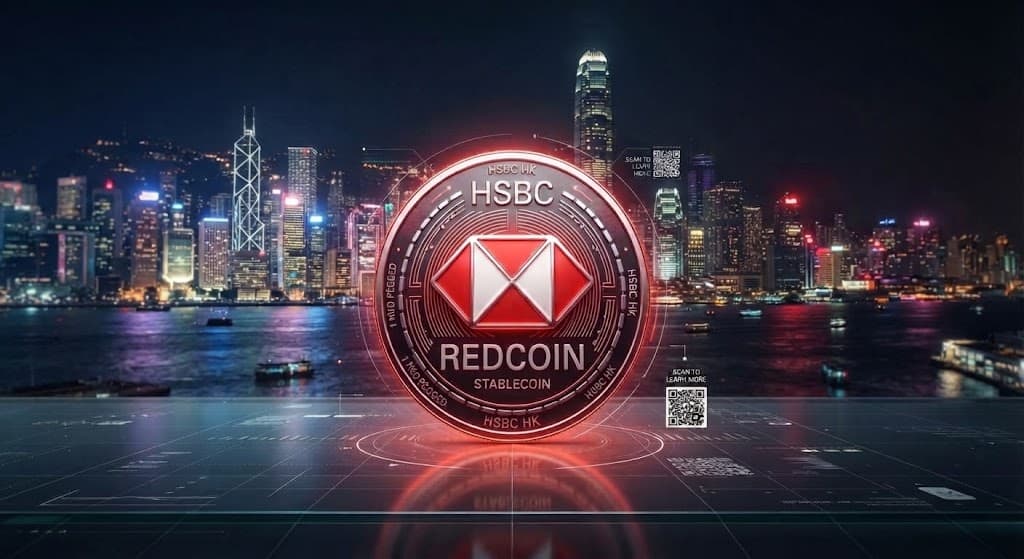
The Hong Kong Monetary Authority (HKMA) is preparing to issue its first batch of stablecoin licenses in March, despite China’s continued opposition to cryptocurrency activity. Officials are reviewing an initial tranche of 36 applications, according to HKMA Chief Executive Eddie Yue, who briefed the Legislative Council on February 2.
Hong Kong passed its Stablecoins Ordinance in May 2025, requiring licenses for entities issuing stablecoins or pegged to the Hong Kong Dollar. The law took effect in August, and the HKMA began accepting applications shortly afterward.
Stablecoins are digital assets designed to maintain relatively stable values by pegging to fiat currencies or commodities, providing lower volatility than other cryptocurrencies. Jordan Wain, policy advisory lead at Chainalysis, noted that stablecoins now account for more than half of value recorded on blockchains, highlighting their importance in the broader crypto ecosystem.
The HKMA memo cites cross-border payments and tokenized deposit systems for international banks as potential use cases for stablecoins. Tokenized deposits are digital representations of customer deposits on blockchain networks that remain under regulatory supervision.
Payment technology firms, such as Payment Cards Group, have indicated that Hong Kong Dollar-backed stablecoins could facilitate “faster refunds, quicker cross-border payments, and more transparent foreign exchange rates.”
Despite Hong Kong’s initiatives, Beijing has maintained a conservative stance on digital assets. Chinese regulators, including the People’s Bank of China, expressed opposition to Hong Kong’s licensing program in October 2025, effectively pausing progress, according to the Financial Times.
Beijing’s concerns include financial stability, illicit fund transfers, and potential circumvention of renminbi oversight. A recent report estimated that stablecoins are used by organized crime networks in China to transfer up to $44 million daily. Monique Taylor, academic at the University of Helsinki, explained that Beijing prioritizes state control over money, payments, and capital flows, while also monitoring the impact of U.S.-pegged stablecoins on global dollar dominance.
Analysts view Hong Kong’s stablecoin licensing as a controlled experiment rather than a shift in Beijing’s overall policy. The framework allows the city to explore adoption while demonstrating regulatory compliance.
Wain emphasized that the regime enables Hong Kong to show that stablecoins can be effectively supervised while supporting payments, tokenization, and Web3 development. Taylor noted that while the clarity may attract foreign investors, Hong Kong is unlikely to implement a fully liberalized crypto environment, reflecting continued caution from Beijing.
China reinforced its stance in February 2026, when eight state regulators jointly reaffirmed the ban on crypto activities, including unauthorized issuance of yuan-backed stablecoins.

Disclaimer of Warranty
The information provided in this article is for general informational purposes only. We make no warranties about the completeness, reliability, and accuracy of this information. Read full disclaimer

Editor's Picks
In the Same Space

Who Gets the $5B Bitcoin Fortune? UK Ruling Complicates Victims’ Fight

News Desk

Oct 13, 2026

6 min

SoFi Bridges Bank Deposits and Onchain Finance With New Tokenized Dollar
News Desk
Oct 23, 2026
4 min
JPMorgan Takes JPM Coin to Ethereum in Major Push to Bring Bank Deposits Onchain
News Desk
Oct 19, 2026
5 min

Mastercard Partners With BVNK to Connect Stablecoins With Traditional Payments
News Desk
Oct 16, 2026
5 min