Advertisement
Tokenization & RWA
Share
Ethereum developer Eric Conner has proposed ERC-8392, a standardized interface that allows tokenized assets to report their operational status, enabling smart contracts to distinguish between scheduled market closures, oracle failures, trading halts and suspended issuance or redemptions.
As tokenized stocks and real-world assets gain traction across blockchain networks, a new Ethereum proposal is seeking to solve a problem that could become increasingly important: how should smart contracts know what is actually happening to the underlying asset?
Ethereum developer and EthHub co-founder Eric Conner has proposed a standardized interface that would allow tokenized assets to report their operational status, helping decentralized applications distinguish between normal market closures, trading disruptions, stale pricing and suspended issuance or redemptions.
Conner introduced the idea on X on Aug. 24, initially referring to it as ERC-8391. A subsequent Ethereum Magicians discussion and the accompanying draft identify it as ERC-8392, titled “Asset Status Interface for Tokenized Assets.”
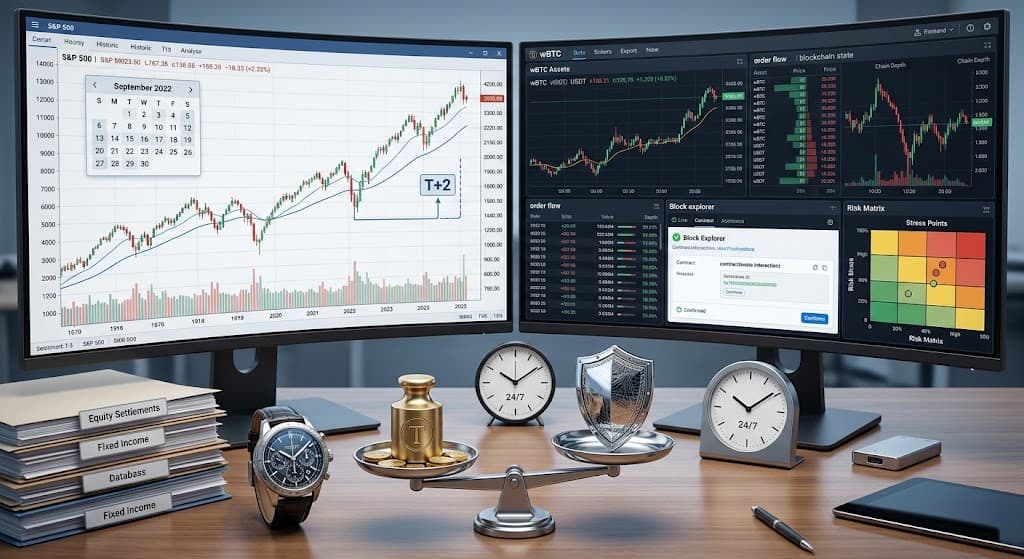
The proposal addresses a growing disconnect between blockchain markets, which can operate around the clock, and traditional financial markets, which remain bound by defined trading sessions.
Tokenized shares can theoretically move between wallets or interact with smart contracts at any hour, even when the traditional exchange where the underlying security trades is closed.
That creates a problem for applications that rely on real-time information.
Suppose a tokenized stock continues trading on a Saturday while its underlying exchange is closed. The most recent official stock price may remain unchanged for hours. But the same lack of a new price could also occur because an oracle has stopped updating, a trading venue has experienced an outage or an unexpected corporate event has disrupted the market.
The raw price data could look identical in each case.
The appropriate response from a smart contract, however, may be completely different.
A lending protocol could reasonably continue using a previous price during a scheduled market closure. If the same price has remained unchanged because the pricing oracle has failed during an active trading session, the protocol might instead need to suspend liquidations or take other protective measures.
That distinction is at the heart of Conner's proposal.
Price feeds alone do not tell an application everything it needs to know about a tokenized security.
A smart contract may also need to determine whether the underlying market is operating normally, whether trading has been restricted, whether the issuer has paused its tokenization program or whether investors can currently mint or redeem the asset.
ERC-8392 proposes standardized queries for those different conditions.
At the center of the draft is IAssetStatus, a required interface intended to describe the operational state and lifecycle of a tokenized-asset program.
Three optional extensions would provide additional information covering the reference market, valuation data and the underlying issuance and redemption processes.
The goal is not to dictate how applications should respond, but to give them a common language for understanding what is happening.
The market-status component can identify whether the underlying market is in a normal trading session, extended trading, an auction or a scheduled closure.
It also provides separate information about disruptions, including asset-level or market-wide trading halts and price restrictions.
For tokenized listed equities, the proposal includes a market identifier based on ISO 10383, allowing applications to compare the reported status against the official trading calendar of the relevant venue.
The valuation component addresses another potential source of confusion: the difference between a price that is intentionally unchanged and one that has become stale.
During a weekend closure, for example, the interface could indicate that no new price is expected. If an oracle fails to update during an active session, the system could instead report a delayed or unavailable valuation.
Issuance and redemption receive their own status because a valid market price does not necessarily mean that an investor can create or redeem a token.
Some funds may impose minimum net asset value thresholds, operate within defined subscription windows or temporarily suspend redemptions.
The proposal also includes an “unknown” state for each category. Making that the default would prevent newly deployed or upgraded contracts from being interpreted as fully operational simply because their storage fields are empty.
The proposed interfaces are also designed to avoid relying on the caller or automatically reverting to an earlier status. Conner has argued against requiring events because scheduled market sessions can change over time without any blockchain transaction taking place.
Importantly, the proposed standard does not instruct protocols to buy, sell, liquidate or freeze assets.
Instead, it standardizes the information that applications can request and leaves the decision about what to do with that information to each protocol.
A lending market could reduce its maximum loan-to-value ratio when the reference exchange is closed. Another protocol could continue operating if it has sufficient liquidity and alternative pricing sources.
A wallet could simply display a warning when an asset's valuation is delayed or redemption is unavailable.
The status information would remain advisory rather than a guarantee that the underlying information is correct. An issuer or data provider could report relevant conditions, while the asset contract would expose those conditions through a standardized format.
The need for standardization becomes clearer when looking at how tokenized products currently report operational conditions.
According to the proposal, Ondo provides an interface for reporting the status of off-chain transactions. Robinhood's blockchain-based stock products use a dedicated query, while many other assets rely on a generic function.
This fragmentation forces lending protocols and other applications to create asset-specific logic for every token they support.
ERC-8392 is intended to reduce that complexity by establishing a common interface that applications can use across different tokenized assets.
The proposal is not intended to replace existing Ethereum standards for tokenized assets.
Instead, ERC-8392 is designed to operate alongside them.
The draft leaves share-splitting functionality to ERC-8056, while transfer restrictions remain within the scope of standards including ERC-7943 and ERC-3643.
Economic mechanics surrounding merging and splitting assets are also outside the proposal's core scope, although their operational effects could appear through transaction pauses or changes in an asset's status.
The approach reflects an increasingly modular architecture for tokenized securities, where ownership, transfer restrictions, market status and valuation can each be handled by separate components.
The proposal arrives as tokenized equity markets continue to expand across blockchain networks.
According to crypto.news reporting cited in the proposal, tokenized stock trading through Uniswap's Robinhood-related infrastructure reached $1 billion in cumulative volume by Aug. 21.
Robinhood has also introduced around 95 tokenized stock products for eligible customers across more than 120 countries, including products tracking companies such as Nvidia, Apple and Alphabet.
Those products are not currently available in the United States. Robinhood describes them as debt instruments linked to reference stocks rather than direct ownership of the underlying shares.
Meanwhile, Token Terminal estimated on Aug. 15 that the tokenized equity market had grown to approximately $2.7 billion, compared with around $80 million a year earlier.
Ondo accounted for the largest share, while Binance's bStocks and Kraken-backed xStocks each surpassed $600 million in value.
As the market expands, the consequences of inconsistent status reporting become more significant.
Continuous blockchain trading introduces a particularly difficult issue for tokenized securities.
A token can continue changing hands while the primary exchange for the underlying stock is closed. That can expose investors and lending protocols to prices established outside conventional market hours.
Under Conner's proposal, an application could check the status of the reference market before accepting a tokenized asset as collateral, executing a liquidation or displaying a valuation.
The technical interface, however, would not change the legal status of the underlying security.
The SEC has distinguished between different forms of tokenized securities, including issuer-sponsored, custodial and synthetic structures, which can provide investors with different ownership rights while remaining subject to U.S. federal securities laws.
Legal ownership can also depend on records maintained outside the token's smart contract.
That distinction underscores why a technical status standard cannot solve every problem associated with tokenized securities. It can tell an application what the system reports about an asset, but it cannot independently establish the investor's legal rights.
ERC-8392 remains a draft and is open to technical review.
Conner has said he is working on a reference implementation alongside Foundry tests designed to evaluate the proposal.
The draft has already prompted discussion around historical status data and settlement. From a lending perspective, participants have suggested that status events could help protocols track how often transactions are paused or valuations become delayed.
There have also been suggestions for creating a state summary that applications could verify at settlement, particularly when conditions have changed after an earlier status check.
Conner has invited feedback from issuers, lending-market teams and financial-market specialists. The draft has been reviewed against scenarios including Hong Kong's midday trading breaks, German exchange outages, London auctions, Gulf trading weeks and price limits in mainland China.
But the proposal has not yet reached its final form.
ERC-8392 addresses a problem that could become more important as tokenization moves from isolated experiments toward continuously operating financial markets.
For years, blockchain applications have largely been designed around assets that can be transferred whenever the network is operating. Tokenized securities introduce a more complicated reality: the blockchain may be open even when the underlying market is not.
That means price alone is no longer enough.
A lending protocol may need to know whether the market is open. A liquidator may need to know whether a price is current. An investor may need to know whether redemption is available.
A standardized status layer could give these applications the information needed to make those distinctions.
The success of ERC-8392, however, will ultimately depend on whether issuers, data providers and protocols adopt it—and whether the information they provide can be trusted.

Disclaimer of Warranty
The information provided in this article is for general informational purposes only. We make no warranties about the completeness, reliability, and accuracy of this information. Read full disclaimer

Editor's Picks
In the Same Space

ECB Considers Three Models for Tokenizing Central Bank Money Onchain

News Desk

Oct 2, 2026

4 min
Citi Raises 12-Month Bitcoin Target to $113,000 as Institutional ETF Demand Returns
News Desk
Oct 1, 2026
4 min

Cboe and S&P Dow Jones Put Tokenized Options on the Table Under New 25-Year Agreement
News Desk
Sep 30, 2026
5 min
ESMA Puts Three-Month Clock on EU Crypto Firms for Non-MiCA Stablecoins
News Desk
Oct 8, 2026
6 min