Advertisement
Stablecoins & Payments
Share
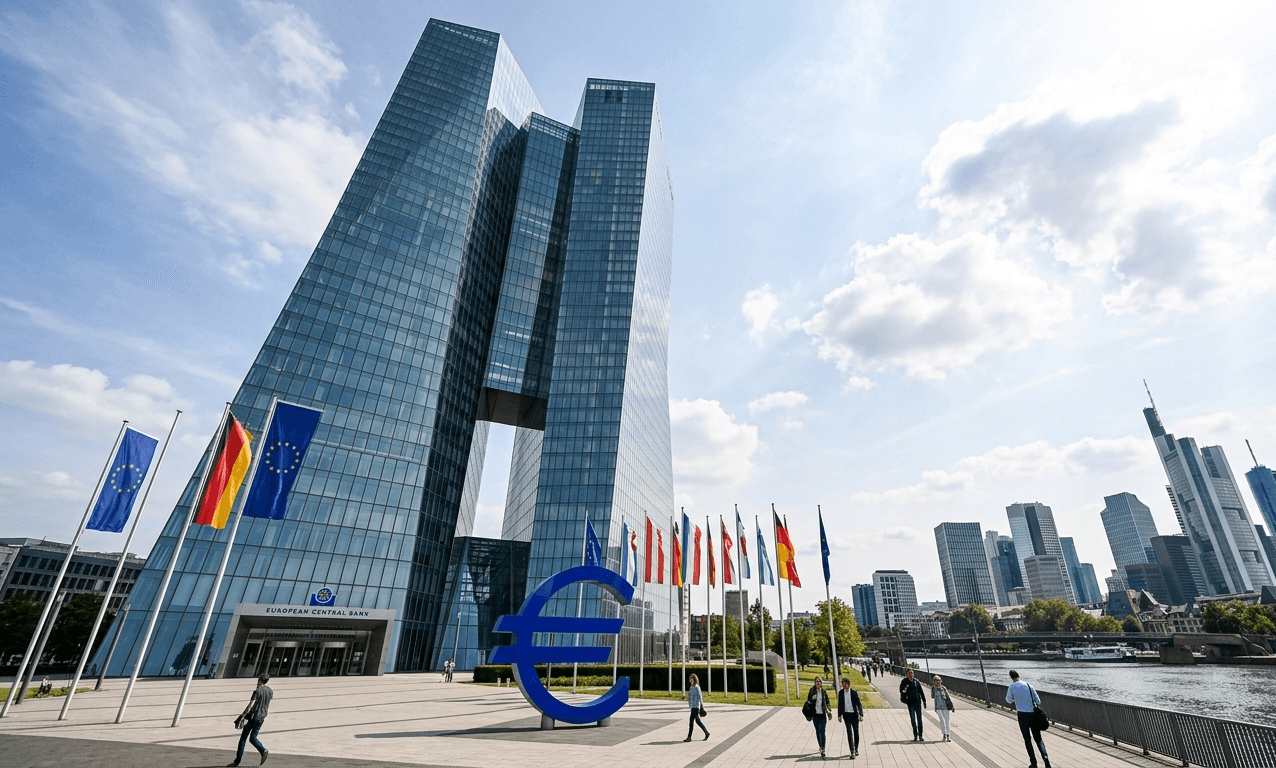
A senior official at the European Central Bank has warned that the rapid rise of stablecoins could pose growing risks to financial stability and reinforce the global dominance of the US dollar, arguing that Europe must accelerate the development of a digital euro in response.
Speaking at the 2026 Bank of Korea International Conference in Seoul, ECB Executive Board member Isabel Schnabel said central banks should not resist digital asset innovation, but instead establish strong regulatory safeguards and central bank digital currencies (CBDCs) to preserve monetary stability and public trust.
Schnabel said the stablecoin sector has expanded rapidly in recent years, with total market capitalization approaching $300 billion globally, despite a recent slowdown in growth.
She warned that stablecoins could create vulnerabilities tied to liquidity mismatches and declining confidence in reserve assets, potentially exposing the sector to destabilizing runs during periods of market stress.
According to Schnabel, the dominance of dollar-backed stablecoins also raises broader geopolitical and monetary concerns.
Today, nearly all major stablecoins are denominated in US dollars, with Tether’s USDT and Circle’s USDC accounting for roughly 90% of the market.
The ECB official argued that the growing use of dollar-based stablecoins risks strengthening the international influence of the US dollar and amplifying the global transmission of American monetary policy.
In contrast, euro-denominated stablecoins remain relatively limited in scale and adoption.
Schnabel described the proposed digital euro as a critical component of Europe’s financial future, positioning it as more than just a technological project.
She said a retail-focused CBDC could help preserve public access to central bank money while reducing Europe’s dependence on non-European payment providers and infrastructure.
The digital euro could also help unify fragmented payment systems across the European Union by creating a pan-European settlement solution with legal tender status.
Beyond payments, Schnabel emphasized that Europe must ensure innovation develops within a framework that preserves financial stability, monetary policy transmission, and confidence in the euro.
The ECB is currently in the technical preparation phase for the digital euro, with the institution aiming to be operationally ready for a possible launch by 2029, assuming legislation supporting the project is adopted in 2026.
The discussion comes as Europe continues evaluating how to balance regulation with competitiveness in digital asset markets.
Separately, Coinbase’s Director of International Policy, Katie Harries, called on European regulators to strengthen the region’s digital asset framework during the upcoming review of the Markets in Crypto-Assets (MiCA) regulation.
In a recent policy statement, Harries described MiCA as a strong starting point but argued that Europe should refine the framework to improve competitiveness, support tokenization, and create more practical conditions for euro-based stablecoins.
She also criticized existing reserve requirements that require stablecoin issuers to hold between 30% and 60% of reserves in commercial bank deposits, arguing that broader access to high-quality sovereign assets could reduce systemic risk rather than concentrate it.
Additionally, Coinbase urged regulators to provide clearer guidance around decentralized finance and allow non-interest-based incentives such as cashback rewards and loyalty programs tied to digital asset products.
The debate reflects a broader shift taking place across global financial systems as governments and central banks attempt to respond to the rapid growth of digital assets and tokenized money.
While the United States has taken a more cautious stance toward CBDCs under the current administration, Europe appears increasingly focused on building sovereign digital payment infrastructure capable of competing with both private stablecoins and foreign financial networks.
It is worth noting that the European Commission has already launched a formal review of MiCA and opened a public consultation process running through August 2026 as policymakers assess the next phase of digital asset regulation across the bloc.

Disclaimer of Warranty
The information provided in this article is for general informational purposes only. We make no warranties about the completeness, reliability, and accuracy of this information. Read full disclaimer

Editor's Picks
In the Same Space

UAE and Morocco Deepen Financial Ties With Payment and CBDC Agreements

News Desk

Oct 9, 2026

5 min

Coinbase Outlines Bitcoin’s Path Toward Quantum-Resistant Security
News Desk
Oct 14, 2026
5 min

ESMA Puts Three-Month Clock on EU Crypto Firms for Non-MiCA Stablecoins
News Desk
Oct 8, 2026
6 min

Greece Proposes 10% Crypto Gains Tax as Digital Assets Enter Tax Framework
News Desk
Oct 8, 2026
5 min