
Advertisement
Security & Audits
Share
WA
CEO & Editor-in-Chief


The crypto industry thrives on transparency, and nowhere was this more evident than in how Bybit handled one of the biggest exchange hacks in history. Unlike traditional financial breaches, which can take weeks or months to surface, the nature of blockchain made this attack public knowledge almost immediately. When ZachXBT first flagged unusual outflows, it became clear within minutes that something was wrong. Shortly after, Bybit confirmed the attack: a $1.46 billion exploit targeting its ETH cold wallet through smart contract manipulation.
A hack of this scale could have easily shattered confidence in the exchange. But instead of retreating into silence, Bybit turned the crisis into an opportunity to showcase resilience, leadership, and trustworthiness. Through real-time communication, decisive action, and reliance on industry support, Bybit not only contained the damage but positioned itself as a model for crisis management in the crypto space.
Security breaches in traditional finance often remain hidden for weeks, if not months. Bybit took the opposite approach—it acknowledged the attack immediately, provided clear explanations, and kept users informed every step of the way.
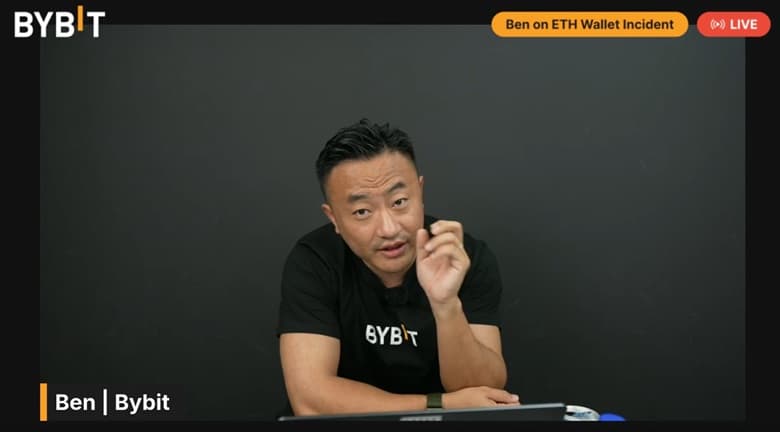
CEO Ben Zhou went live on X, detailing how the breach happened: the attacker manipulated the transaction UI, tricking signers into approving a smart contract change that gave them full control of the ETH cold wallet. His direct and open approach reassured users that Bybit was in control and not hiding behind vague statements or delays.
Beyond communication, Bybit backed up its response with swift technical and operational measures. The affected wallet was isolated, while the team engaged blockchain forensics experts and law enforcement to track the stolen funds. Unlike many exchanges that have responded to hacks by freezing operations indefinitely, Bybit kept withdrawals open, ensuring users could access their funds and preventing panic.
One of the most remarkable aspects of Bybit’s crisis response was how it leaned on industry allies for support. Market makers stepped in to stabilize trading, ensuring minimal disruption despite the scale of the attack. Other major exchanges, including Binance and Bitget, blacklisted the hacker’s wallets, preventing further movement of stolen funds.
Rather than handling the crisis in isolation, Bybit publicly acknowledged and thanked the key players who supported them. This move not only reinforced Bybit’s credibility but also strengthened its position within the global crypto ecosystem.
Despite the financial blow, Bybit’s handling of the crisis has strengthened its reputation rather than damaged it. The company demonstrated strength, accountability, and an ability to manage high-stress situations with professionalism.
Bybit is currently in the early stages of securing its license in Dubai_UAE, a region that has emerged as a global leader in crypto regulation. The UAE prioritizes compliance, security, and operator trustworthiness—all qualities that Bybit showcased in how it handled this crisis. If Bybit continues to pursue its Dubai license, the UAE would be gaining a resilient and transparent industry player, one that has already proven its ability to navigate extreme challenges.
The attack may have been painful, but Bybit’s response proved one thing: in crypto, transparency and trust matter just as much as security measures. If blockchain technology itself hadn’t provided an open ledger for on-chain analysts like ZachXBT to detect suspicious activity, would this hack have been uncovered as quickly?
As blockchain technology continues to evolve, will this level of radical transparency become the new standard for crisis management? Or will other exchanges continue to hide in the shadows when security incidents occur?

Disclaimer of Warranty
The information provided in this article is for general informational purposes only. We make no warranties about the completeness, reliability, and accuracy of this information. Read full disclaimer

Editor's Picks
In the Same Space

UK Banks Complete First Interbank Transactions Using Tokenized Deposits

News Desk

Sep 24, 2026

4 min

ADGM Puts DLT Foundation Audits and Disclosure in Focus
Walid Abou Zaki
Sep 23, 2026
7 min

Solana Begins Testing Alpenglow Upgrade Targeting 150ms Finality
News Desk
Sep 23, 2026
3 min
CFTC Chair Calls for ‘Mass Tokenization’ of Financial Markets
News Desk
Sep 23, 2026
4 min