Exchanges & Trading
Share
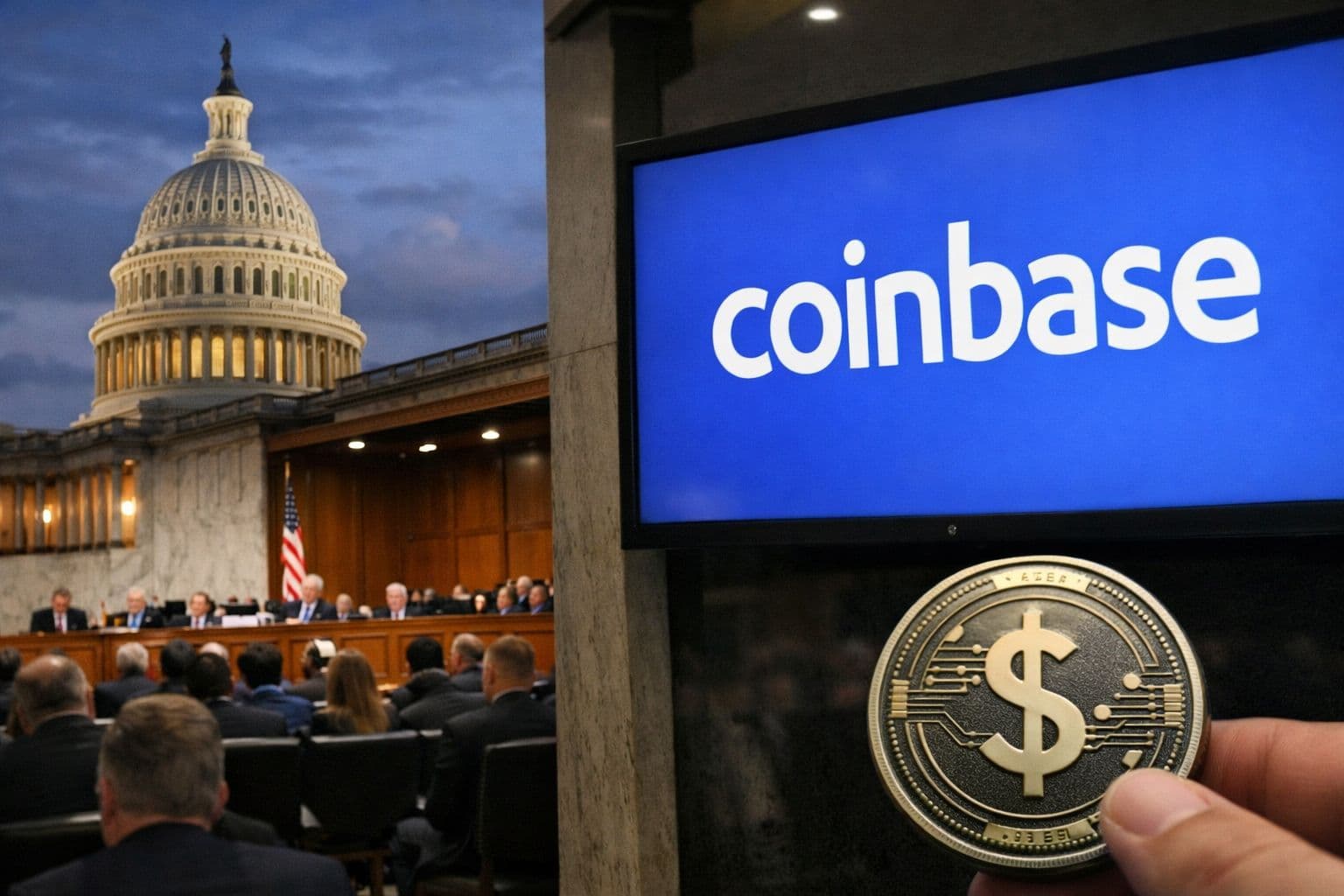
Crypto exchange Coinbase has called on the U.S. Treasury Department to ensure that upcoming regulations under the GENIUS Act remain closely aligned with congressional intent, warning that excessive rulemaking could curb innovation and undermine America’s bid to become the “crypto capital of the world.”
In a detailed response to the Treasury, Faryar Shirzad, Coinbase’s Chief Policy Officer, emphasized that regulators should “stick to the clear intent of the bill text” and avoid introducing burdens beyond what the statute requires.
“The implementing regulations must ensure that U.S.-issued stablecoins have the versatility and competitiveness needed to become the world’s dominant payment and settlement instrument,” Shirzad said in a post on X Wednesday.
Coinbase urged Treasury to apply a narrow interpretation of the GENIUS Act’s provisions, clarifying that the law should not extend to non-financial software developers, blockchain validators, or open-source protocol operators. The exchange also stressed that the Act’s interest-payment prohibition applies solely to stablecoin issuers, not to intermediaries or exchanges offering rewards or loyalty programs.

Disclaimer of Warranty
The information provided in this article is for general informational purposes only. We make no warranties about the completeness, reliability, and accuracy of this information. Read full disclaimer
“Treating third‐party rewards or loyalty programs as prohibited ‘interest’ would rewrite Congress’s carefully drawn lines and conflict with the statute’s text and purpose,” Coinbase stated.
The company further recommended that payment stablecoins be treated as cash equivalents for both tax and accounting purposes, arguing that their design closely mirrors the functionality of fiat money.
“Payment stablecoins replicate the stability and utility of fiat currency. Their tax treatment should reflect this reality,” Coinbase wrote, urging the Treasury and the Internal Revenue Service (IRS) to adopt a “pragmatic, low-burden approach” to stablecoin taxation.
Enacted in July 2025, the GENIUS Act created the first comprehensive federal framework for stablecoins in the United States. The law mandates that stablecoins be fully backed by U.S. dollars or similarly liquid assets, enforces annual audits for eligible issuers, and sets standards for foreign issuance.
Coinbase’s response underscores the tension between policymakers aiming to safeguard the financial system and industry players seeking regulatory clarity without compromising innovation.




Editor's Picks
VARA Introduces Virtual Asset Derivatives Framework As Dubai Deepens Market Maturity

Walid Abou Zaki

Mar 31, 2026

7 min

Crypto-Collateral Mortgage Gap Signals Future Opportunity for Dubai
Walid Abou Zaki
Mar 28, 2026
7 min

The UAE’s Institutional Digital Assets Moment: Why Regulatory Activation Matters Now
Walid Abou Zaki
Mar 27, 2026
6 min
Read More Articles

In the Same Space

Binance Tightens Rules for Token Market Makers and Liquidity Providers
News Desk
Mar 26, 2026
3 min

Binance Expands VIP Program Access With New Eligibility Rules
News Desk
Mar 24, 2026
4 min

Maxine Waters Requests Clarity on Kraken Federal Reserve Account
Chantal Assi
Mar 27, 2026
3 min

Tether’s Big Four Audit Deal Marks Major Shift in Stablecoin Accountability
News Desk
Mar 27, 2026
3 min