Advertisement
Regulation & Policy
Share
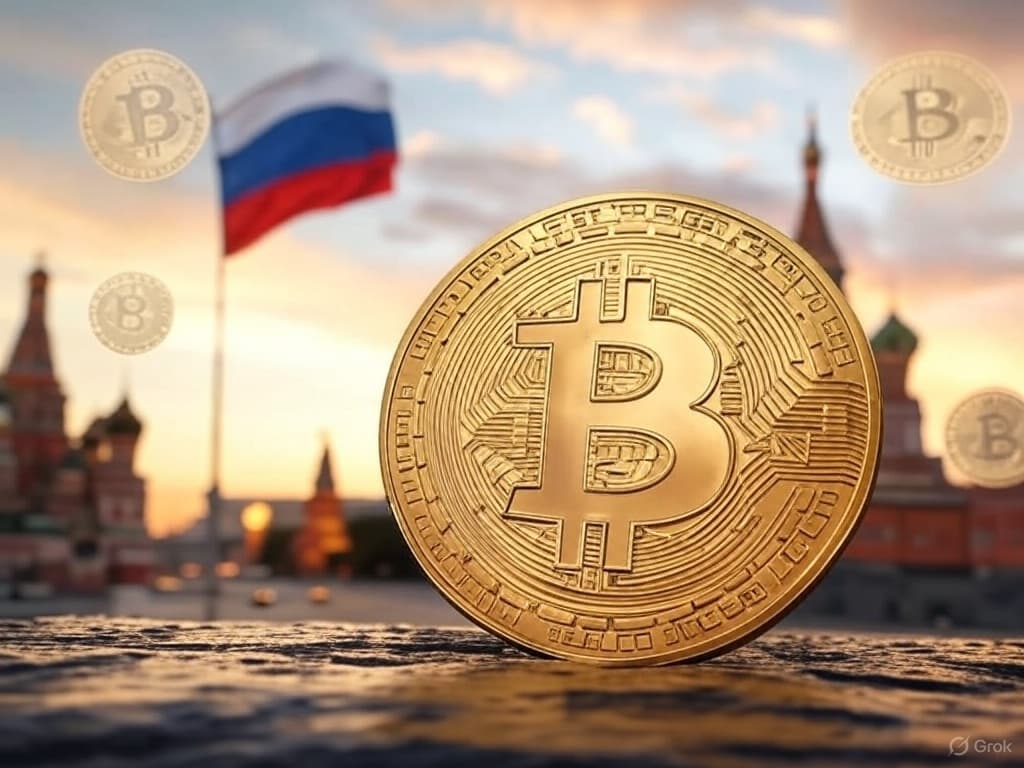
Russia is moving toward tighter regulation of cryptocurrency trading after the government approved a package of draft laws that would require most digital asset transactions to be conducted through licensed intermediaries while limiting access for retail investors.
The proposed legislation, approved by the government and introduced by the Finance Ministry, is aimed at formalizing the country’s digital asset market while increasing state oversight of cryptocurrency activity.
Under the proposed regulatory framework, cryptocurrency transactions conducted without approved intermediaries would be prohibited. Instead, trading would be routed through licensed operators such as regulated exchanges, custodians, banks, and brokers that meet specific regulatory and compliance requirements.
The framework is designed to create a controlled crypto market rather than banning digital assets outright, allowing the government to monitor transactions and enforce tax and compliance rules more effectively.
The legislation also includes licensing requirements for companies involved in cryptocurrency services, including exchanges and custodial service providers. Organizations operating without licenses could face administrative penalties under the new rules.
One of the most significant elements of the proposal is the restriction placed on retail investors. Under the draft rules, non-qualified investors would be allowed to purchase only certain highly liquid cryptocurrencies defined by the central bank.
Retail investors would also be required to pass a qualification test before being allowed to buy digital assets. Even then, their purchases would be capped at 300,000 rubles per year, equivalent to approximately $3,700, and transactions would have to be conducted through a single licensed intermediary.
More sophisticated or qualified investors would have access to fewer restrictions, suggesting the framework is designed to limit retail speculation while still allowing institutional participation.
Despite the tighter domestic controls, Russian residents would still be allowed to purchase cryptocurrencies through foreign platforms using overseas accounts, provided that these transactions are reported to tax authorities.
This provision suggests that Russia’s strategy is not to eliminate cryptocurrency trading but to bring domestic activity under regulatory supervision and taxation while maintaining some level of access to global markets.
The proposed framework would also allow traditional financial institutions such as banks and brokers to participate in crypto-related activities, provided they meet prudential and regulatory requirements.
This move could gradually integrate digital assets into the traditional financial system under a regulated structure, rather than leaving the sector entirely to independent crypto companies.
While the government aims to formalize and regulate the crypto sector, some industry participants argue that strict limits and heavy regulation could push trading activity into unregulated markets instead of improving oversight.
Critics warn that excessive restrictions may drive users toward foreign platforms, peer-to-peer trading, or underground markets, making regulation and monitoring more difficult rather than easier.
Overall, the proposed legislation reflects a controlled approach to cryptocurrency regulation in Russia. Rather than banning digital assets, the government appears to be building a regulated market structure where trading is monitored, intermediaries are licensed, and retail participation is limited.
If passed into law, the framework would significantly reshape how cryptocurrency trading operates in Russia, shifting the market toward regulated financial institutions and licensed platforms while restricting access for retail investors.

Disclaimer of Warranty
The information provided in this article is for general informational purposes only. We make no warranties about the completeness, reliability, and accuracy of this information. Read full disclaimer

Editor's Picks
In the Same Space

Lunar Ark Secures VARA In-Principle Approval for Virtual Asset Brokerage

News Desk

Sep 17, 2026

2 min
Stablecoin Yield Fight Helps Derail CLARITY Act in Senate
Walid Abou Zaki
Sep 15, 2026
8 min

KelpDAO Files Suit Against LayerZero Over 2026’s Largest Exploit
News Desk
Sep 25, 2026
6 min
ARK Invest’s $1.3B Fund Heads to Ethereum Through Tokenization
News Desk
Sep 25, 2026
3 min