Advertisement
Regulation & Policy
Share
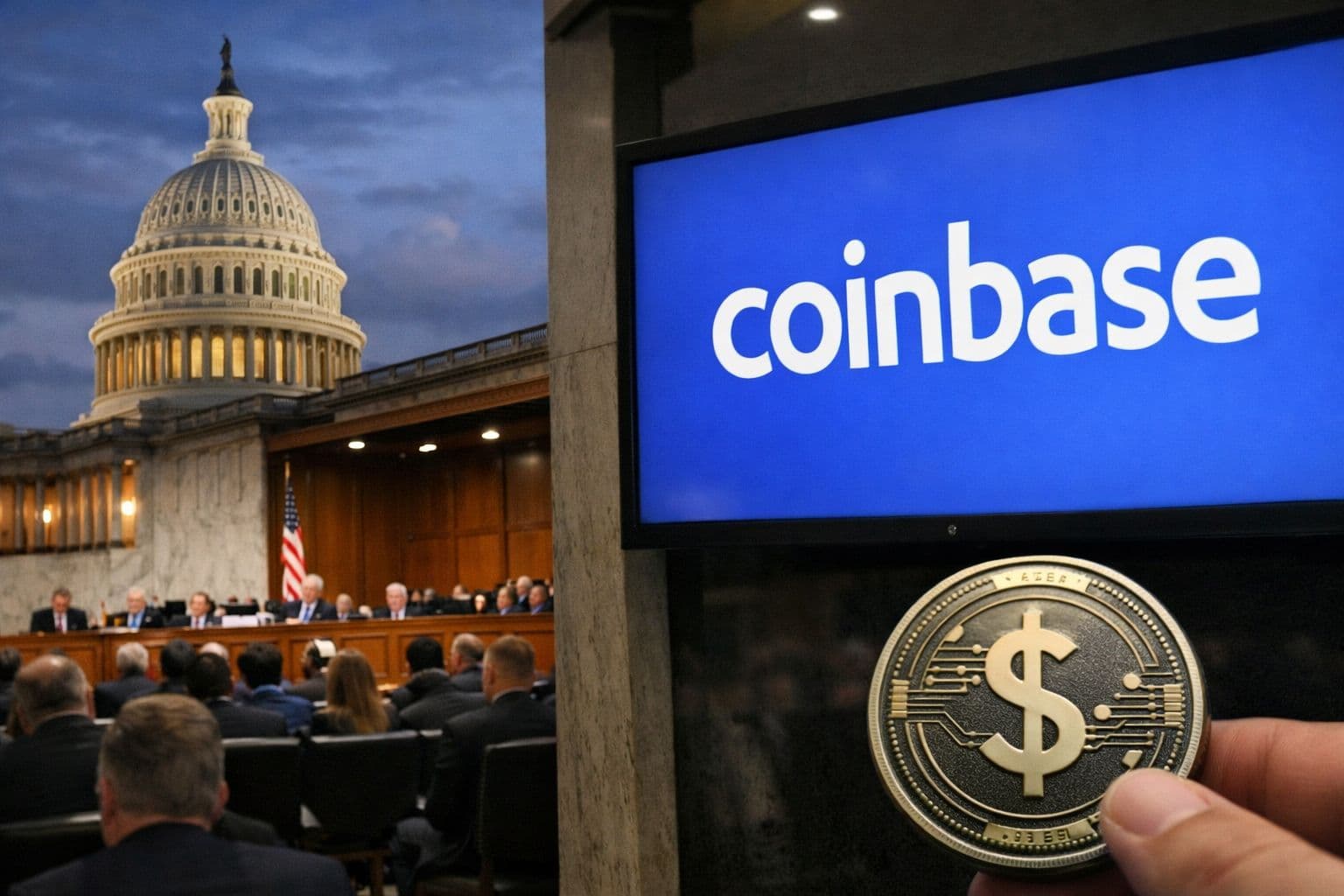
Coinbase has again pushed back against the latest Senate draft of the Clarity Act, signaling that the largest U.S. crypto exchange remains opposed to provisions that would restrict stablecoin yield offerings.
According to a Wednesday report from Punchbowl News, Coinbase informed Senate officials earlier this week that it could not support the latest version of the legislation, despite a revised bipartisan compromise intended to address concerns from traditional banks over stablecoin-related rewards.
The report, citing four sources familiar with the matter, said Coinbase raised “significant concerns” over updated language tied to stablecoin yield. The latest provisions were reportedly shaped by U.S. Senators Thom Tillis and Angela Alsobrooks as part of ongoing negotiations to advance the bill.
A bipartisan proposal circulated earlier this week would reportedly prevent crypto exchanges from paying rewards on customer stablecoin balances. It would also impose additional restrictions on incentive structures by limiting access to transaction size data, making it more difficult for platforms to calculate or offer reward programs.
The latest draft appears designed to ease objections from the banking sector, which has strongly opposed allowing yield on idle stablecoin balances. Banks argue that such incentives could encourage deposit migration away from traditional financial institutions, potentially weakening a key funding base used to support lending activity.
Crypto firms, meanwhile, have argued that stablecoin yield expands customer utility and can improve financial flexibility, while also creating new business opportunities for digital asset firms and potentially for banks willing to participate in the emerging market.
The outcome of the stablecoin yield debate carries direct commercial implications for Coinbase and other crypto-native firms.
Coinbase reported $1.35 billion in stablecoin-related revenue in 2025, much of it tied to distribution payments from its partnership with Circle around USDC. Any legislative outcome that restricts rewards or incentive-linked stablecoin programs could materially affect a meaningful revenue stream for the exchange.
Coinbase had already withdrawn support in January for the Senate Banking Committee’s earlier draft of the Clarity Act after that version included a ban on stablecoin yield offerings. At the time, Coinbase CEO Brian Armstrong argued that banks were lobbying policymakers to limit competition from crypto platforms.
The company has not publicly issued additional comment on the latest draft beyond the reported objections.
The stablecoin yield dispute remains one of the most contentious issues in broader U.S. digital asset legislation.
Despite multiple closed-door meetings reportedly convened by the White House to help broker a compromise between crypto firms and the banking lobby, lawmakers have not yet reached a final resolution.
Still, negotiations remain active.
Senator Cynthia Lummis signaled that bipartisan consensus remains essential for the bill’s passage, writing on X that lawmakers are “working around the clock” to protect stablecoin rewards while also addressing the risk of deposit flight from community banks.
Patrick Witt, executive director for the President’s Council of Advisors for Digital Assets, also sought to calm speculation surrounding the debate, stating on social media that there is “plenty of uninformed FUD” circulating and expressing confidence that the process would ultimately resolve positively.
Coinbase shares ended Wednesday essentially unchanged, closing up 0.03% at $181.10. However, the stock has declined 7.4% over the past five days and is down 41% over the last six months, reflecting broader pressure on crypto-linked equities.
Shares of Circle have also come under pressure in recent sessions. According to market commentary cited in the original report, Mizuho analysts pointed to uncertainty surrounding the Clarity Act and the unresolved stablecoin yield issue as a major factor weighing on sentiment.
The Clarity Act’s treatment of stablecoin yield could become a defining precedent for how U.S. lawmakers regulate consumer-facing stablecoin products.
If lawmakers side with banks and prohibit reward programs on exchange-held stablecoins, crypto firms may lose a key growth lever and a significant source of recurring revenue. If they preserve stablecoin rewards, it could strengthen the role of digital dollar products in retail and institutional finance—but deepen tensions with the traditional banking sector.
The final outcome will likely shape not only Coinbase’s business model, but also the broader competitive balance between crypto platforms, stablecoin issuers, and U.S. banks.

Disclaimer of Warranty
The information provided in this article is for general informational purposes only. We make no warranties about the completeness, reliability, and accuracy of this information. Read full disclaimer

Editor's Picks
In the Same Space

Stablecoin Yield Fight Helps Derail CLARITY Act in Senate

Walid Abou Zaki

Sep 15, 2026

8 min

House Committee Advances Digital Asset Tax Bill in 38-5 Vote
News Desk
Sep 17, 2026
4 min
U.S. House Unveils Crypto Tax Bill Ahead of Key Markup
News Desk
Sep 15, 2026
4 min

Bitcoin Rebound Faces Fed, CLARITY Vote as ETF Demand Returns
News Desk
Sep 15, 2026
4 min