Advertisement
Regulation & Policy
Share
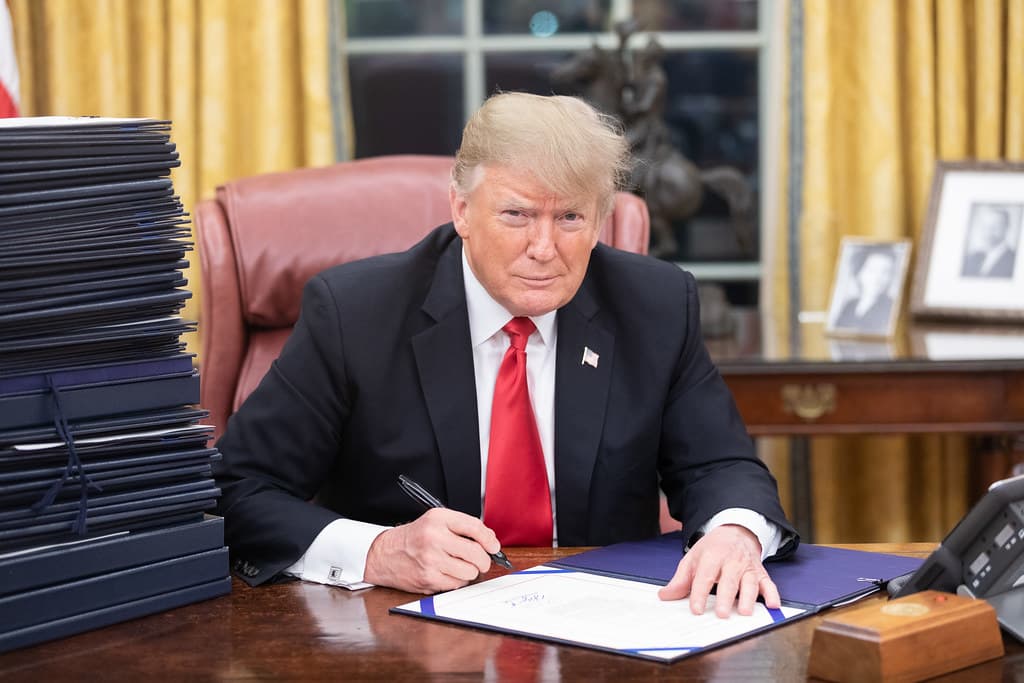
Democratic Senators Elizabeth Warren and Ron Wyden have formally contacted Tether and US Commerce Secretary Howard Lutnick following reports of a loan tied to a family trust benefiting Lutnick’s children. In their letter, the lawmakers emphasized the need to determine whether the transaction could amount to improper influence or a form of indirect financial benefit.
Lutnick assumed the role of Commerce Secretary in February 2025 after leading Cantor Fitzgerald, a firm now run by his sons. The company has maintained a close relationship with Tether since 2021, when it began acting as a custodian for the stablecoin issuer’s reserves, underscoring a deep financial connection between the two sides.
According to a Bloomberg report, Lutnick transferred his ownership stake in Cantor Fitzgerald into trusts for his children around the same time one of those trusts secured a loan from Tether, the amount of which remains undisclosed. While such asset transfers are typically required under federal ethics rules to prevent conflicts of interest, experts argue that naming his children as beneficiaries may weaken those safeguards.
Warren and Wyden suggested that Tether may have effectively financed Lutnick’s children to acquire their father’s stake in the firm, potentially in exchange for influence or a financial interest in their holdings. If accurate, they described the situation as highly concerning and significant.
The senators also pointed to the GENIUS Act, a stablecoin-related law passed last year, noting that Tether had lobbied in its favor. Their concerns come as the Senate Banking Committee continues to evaluate broader digital asset legislation, with particular attention on potential conflicts of interest in the sector.
The letter also revisits Tether’s past regulatory issues. In 2021, the company reached a settlement with the Commodity Futures Trading Commission over allegations it misrepresented its dollar backing. More recently, reports in 2024 indicated that the US Department of Justice had considered sanctions against Tether due to its alleged use by illicit actors, including extremist groups.
Tether, for its part, maintains that it actively supports law enforcement efforts by helping track and freeze USDT linked to fraud and international crime, positioning itself as a partner in combating illicit financial activity.
Neither the US Commerce Department nor Tether has issued an official response to the allegations at the time of writing.
This situation highlights the growing tension between political oversight and the expanding influence of digital asset firms within traditional financial systems. Even when actions comply with formal legal requirements, overlapping personal and institutional interests can raise serious credibility concerns.
As US lawmakers work toward a clearer regulatory framework for digital assets, cases like this underscore the importance of transparency and robust safeguards to prevent undue influence, factors that will ultimately shape institutional trust and the long-term stability of the market.

Disclaimer of Warranty
The information provided in this article is for general informational purposes only. We make no warranties about the completeness, reliability, and accuracy of this information. Read full disclaimer

Editor's Picks
Why Zondacrypto’s Collapse Would Unfold Differently in the UAE

Walid Abou Zaki

Aug 28, 2026

8 min

The Missing Orchestration Layer Holding Back Institutional Digital Assets
Julian Sawyer
Aug 18, 2026
5 min

Beyond Crypto Access: How ARP Digital Is Building the UAE’s Digital Capital Infrastructure
Anna K.
Aug 17, 2026
8 min
Read More Articles

In the Same Space
U.S. Crypto, Banks Escalate Lobbying Ahead of Clarity Act Vote
News Desk
Sep 10, 2026
2 min

ESMA Targets Prediction Markets: Polymarket and Kalshi Face EU Scrutiny Over Authorization
News Desk
Sep 11, 2026
4 min

Kalshi's Bid for Non-Stop Stock Perpetuals Reignites CFTC-SEC Turf War
News Desk
Sep 11, 2026
8 min

SEC Seeks to Allow Blockchain as Official Ledger for Tokenized Securities
News Desk
Sep 11, 2026
7 min