Advertisement
Companies & Deals
Share
Investors hoping to access the $1.3 billion worth of tokens sold by World Liberty Financial are realizing that profiting from the Trump-backed crypto project may take years, as the proposed vesting plan could extend beyond the president’s second term.
In a governance proposal released on Wednesday, the project’s team introduced a four-year plan to unlock 17 billion WLFI tokens for early backers. This structure includes a two-year cliff, followed by a two-year vesting phase that would begin once the proposal is approved.
This schedule is shorter than the one assigned to founders, team members, advisors, and partners. Their allocation, 40 billion WLFI, would become tradable over five years, while 4.5 billion tokens from their share would be permanently removed from circulation.
According to the proposal, the gradual release of tokens is designed to be predictable and manageable for the broader market. Additionally, the voluntary reduction in token supply is presented as an on-chain signal reflecting strong commitment and confidence from key stakeholders.
The vesting plan had been hinted at earlier, following criticism over a $75 million stablecoin loan obtained through the Dolomite protocol, using 5 billion WLFI as collateral. Notably, one of World Liberty’s advisors is also a co-founder of Dolomite.
Despite prior hints, many community members were caught off guard by the proposal, especially since the project began raising funds in October 2024, roughly 550 days ago. Some users reacted angrily, questioning the long wait for token distributions, while others expressed more extreme frustration.
Crypto entrepreneur and Tron founder Justin Sun strongly condemned the proposal, labeling it "tyranny". In a detailed post, he argued that the voting process is ineffective, as it penalizes dissenting holders, excludes major investors like himself, and can ultimately be overridden by those controlling the project’s smart contracts. He also criticized the anonymity of those in control, contrasting it with the transparency required from investors.
He went further, claiming the process is not genuine governance but rather a consolidation of power by a small group aiming to expand control and appropriate value.
Previously, participants in the project’s $550 million public token sale had little clarity on when or how they would gain full access to their holdings. When WLFI became tradable in September, only 20% of early investors’ tokens were unlocked.
At launch, WLFI was valued at $0.23, but its price has since dropped by 65% to around $0.08, hovering near its all-time low. Even so, early investors may still be in profit on paper, as presale prices ranged between $0.015 and $0.05 per token.
With 80% of tokens still locked, some users argue that the structure feels overly restrictive and could further damage confidence among holders. They also pointed out that the two-year lockup period offers little immediate benefit or relief.
Sun’s comments intensified an ongoing dispute that recently became public. He accused the project’s team of treating investor funds like a “personal ATM,” particularly in relation to the WLFI-backed loan.
He also alleged that a hidden backdoor exists within the smart contracts, allowing tokens to be frozen. Sun demanded control over tokens that had been blacklisted in September and referenced prior “deposit tests” he conducted on an exchange.
The proposal states that token holders must accept the vesting terms; otherwise, their tokens will remain locked indefinitely. Compliance with certain legal eligibility requirements is also necessary.
Because rejecting the proposal would leave tokens inaccessible, some investors feel their participation holds no real influence. As one user put it, "There is no democracy, the system is a joke".

Disclaimer of Warranty
The information provided in this article is for general informational purposes only. We make no warranties about the completeness, reliability, and accuracy of this information. Read full disclaimer

Editor's Picks
In the Same Space

UK Names Six Banks to Lead First Digital Government Bond

News Desk

Oct 7, 2026

3 min

IMF Clears $139 Million Disbursement to El Salvador After Bitcoin Breach
News Desk
Oct 2, 2026
4 min
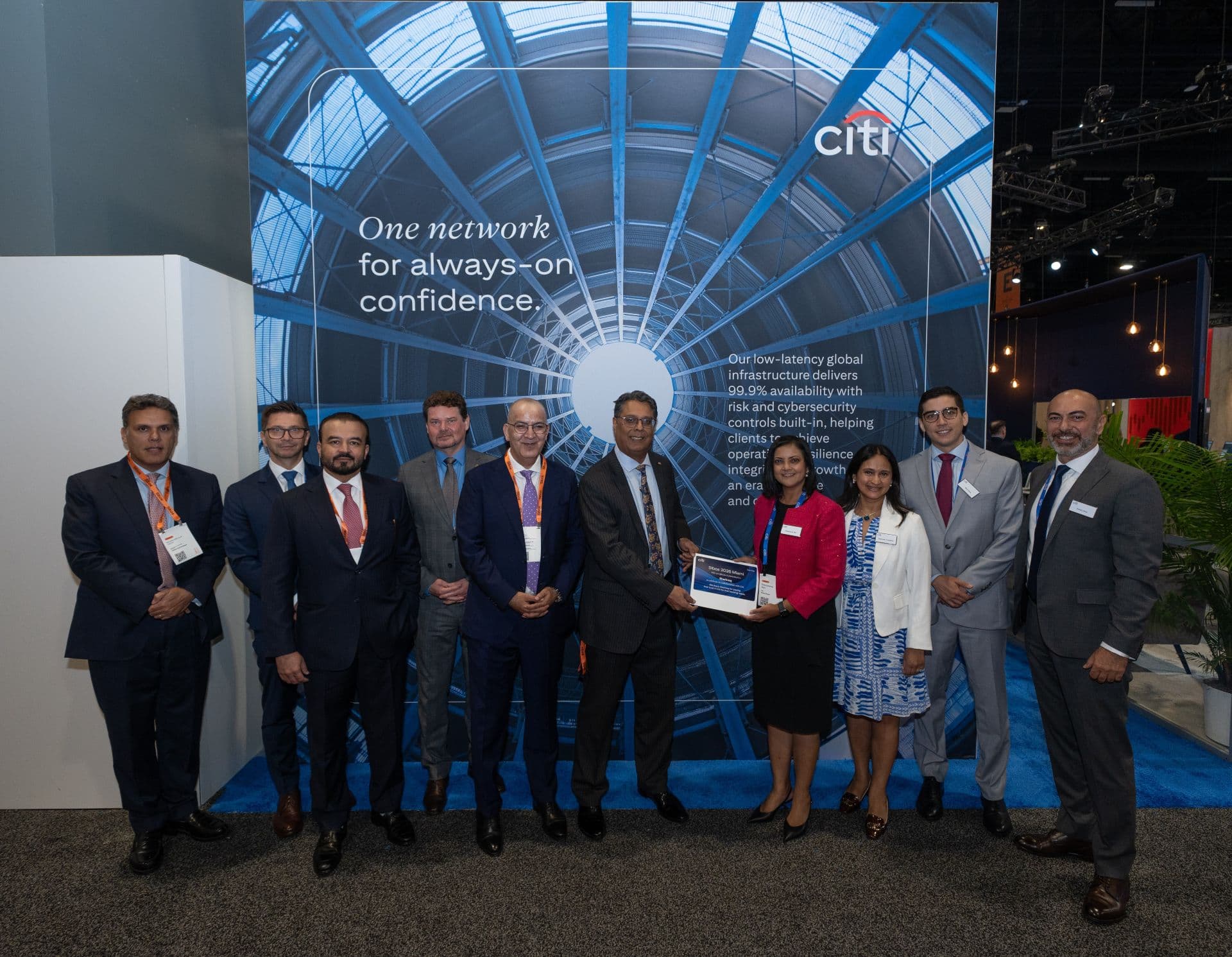
Mashreq and Citi Complete Live Tokenized Payment on Swift’s Blockchain Ledger
News Desk
Sep 30, 2026
3 min

FTX’s ‘Reckless’ Bitcoin-Mining Assets Find a Second Life in the AI Boom
News Desk
Oct 12, 2026
8 min