Advertisement
Stablecoins & Payments
Share

WA
CEO & Editor-in-Chief


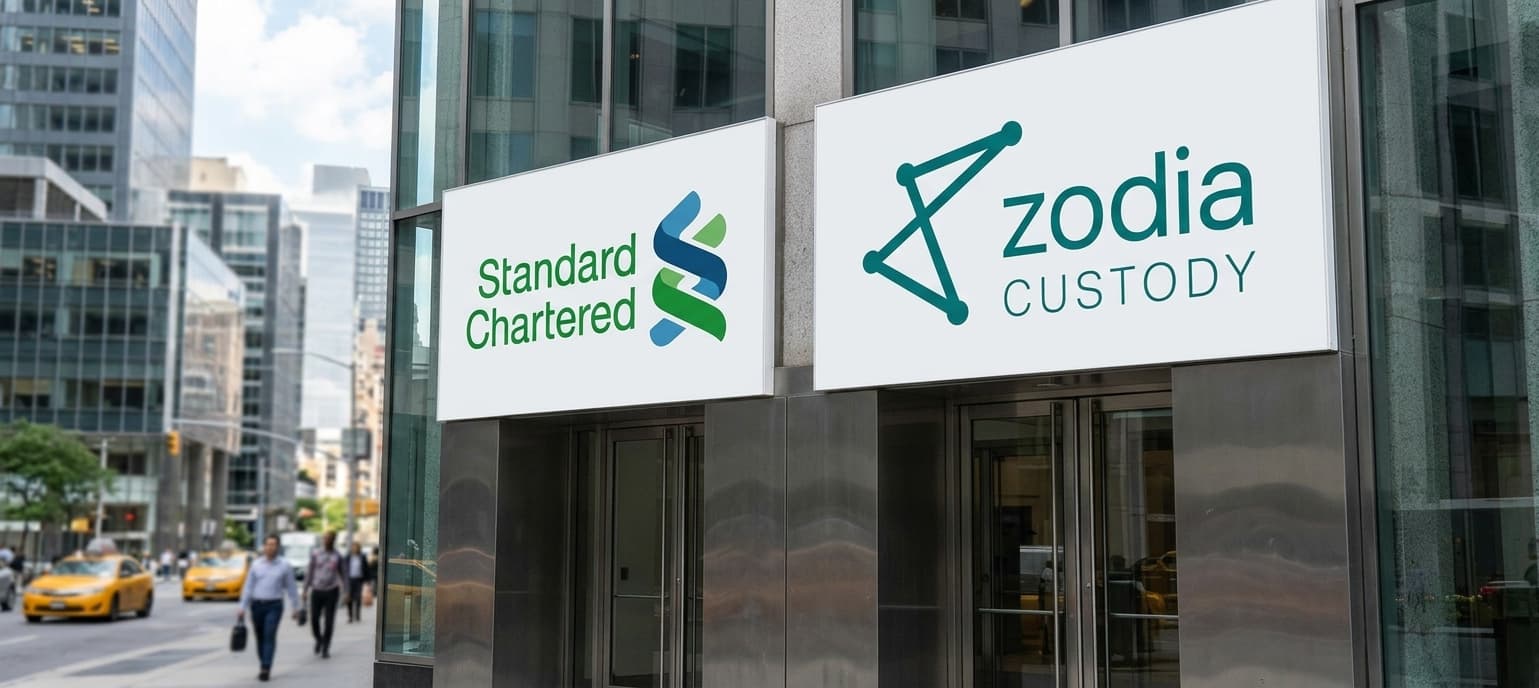
USDU has integrated Zodia Custody to provide eligible institutional clients with segregated cold-wallet custody and transfer capabilities, coinciding with Standard Chartered's pending acquisition of Zodia's regulated custody business.
USDU has added Zodia Custody to its growing institutional infrastructure, giving eligible clients another route to hold and transfer the UAE-regulated USD stablecoin. But the timing of the USDU Zodia Custody integration adds another dimension: Standard Chartered is in the process of acquiring Zodia’s regulated custody business, bringing the latest USDU development into a much broader institutional banking story.
Universal Digital Intl Limited announced on July 24 that USDU is now supported by Zodia Custody Limited in the UK. Through the platform, eligible institutional clients can custody and transfer USDU through segregated cold-wallet infrastructure while incorporating the stablecoin into treasury management and digital asset settlement workflows.
On its own, the announcement represents another infrastructure integration for USDU. Seen alongside Zodia’s changing ownership and Standard Chartered’s growing stablecoin strategy, however, it points to something larger: regulated stablecoins are increasingly being connected to the same custody, banking and settlement infrastructure used by institutional finance.
USDU was launched in January by Universal, an Abu Dhabi Global Market company regulated by the Financial Services Regulatory Authority to issue a Fiat-Referenced Token to Professional Clients. Universal is also registered with the Central Bank of the UAE as a Foreign Payment Token Issuer under the Payment Token Services Regulation.
The stablecoin is designed for USD settlement connected to virtual asset and virtual asset derivative activity rather than as a general-purpose domestic payment instrument in the UAE.
That distinction has shaped USDU’s development.
Rather than focusing mainly on retail circulation or exchange volume, Universal has gradually assembled infrastructure around institutional access, conversion, settlement and custody.
In May, Unlock Blockchain reportedthat USDU became available through FSRA-regulated Changer.ae, creating another regulated access point within the ADGM ecosystem. Earlier that month, USDU and AE Coin announced plans for a regulated AED–USD digital conversion framework powered by Al Maryah Community Bank, potentially linking UAE dirham and U.S. dollar-denominated stablecoin infrastructure.
Universal subsequently announced an integration with AI Financial Corporation in June aimed at expanding regulated digital asset settlement capabilities, followed in July by an initiative involving HKGX-backed GoldZip to explore a digital gold and stablecoin corridor. Its latest Zodia integration adds institutional custody to that sequence.
The progression is becoming increasingly clear: USDU is attempting to build utility through institutional rails rather than simply through token distribution.
What makes the latest development particularly notable is what is happening at Zodia itself.
On May 18, Standard Chartered announcedthat its offer to acquire Zodia Custody had been accepted by the custodian’s shareholders and noteholders. Completion remains subject to regulatory approvals and customary closing conditions.
Under the proposed transaction, Zodia’s regulated custody activities will be integrated into Standard Chartered’s existing digital asset custody business within Financing and Securities Services.
Its institutional digital asset infrastructure technology, meanwhile, is expected to be separated into a new entity called Zodia Solutions under SC Ventures.
Unlock Blockchain covered the planned acquisition in May as part of Standard Chartered’s broader push into tokenization and institutional digital asset infrastructure.
This distinction is important. The USDU announcement should not be interpreted as Standard Chartered directly adopting or integrating USDU. The Zodia acquisition has not yet completed, and Universal specifically states that USDU is currently available through Zodia Custody Limited in the UK.
Nevertheless, USDU is entering a custody platform whose regulated custody activities are expected to become part of one of the world’s major international banking groups.
That changes the context of what would otherwise be a straightforward custody announcement.
There is another connection.
Standard Chartered itself has recently moved deeper into stablecoin infrastructure.
On July 2, Unlock Blockchain reportedthat the bank introduced institutional access to USDC minting and redemption in partnership with Circle, initially through its operations in the Dubai International Financial Centre. The service integrates fiat banking and digital asset infrastructure within Standard Chartered’s institutional framework.
The two developments should not be conflated. Standard Chartered's USDC relationship is a direct banking initiative, while USDU has been integrated by Zodia before completion of the bank’s proposed acquisition.
But together they illustrate how institutional stablecoin infrastructure is becoming increasingly interconnected.
A global bank can provide direct access to one stablecoin while custody infrastructure moving into the same banking group supports additional regulated digital settlement assets.
For stablecoins, the competition may therefore become less about which token dominates individual exchanges and more about which assets become usable across banks, custodians, trading venues, treasury systems and tokenized markets.
Unlock Blockchain first highlighted USDU’s institutional direction before its official launch, questioning whether Universal was deliberately prioritizing regulators and financial institutions over the traditional crypto-market playbook.
The developments since launch increasingly support that thesis.
USDU now sits within an expanding network that includes regulated distribution, an intended AED–USD conversion framework, institutional settlement integrations and custody infrastructure. Zodia adds another layer without fundamentally changing the strategy.
The real measure of success, however, will not be the number of partnerships surrounding USDU.
It will be whether those connections translate into actual institutional settlement activity.
The stablecoin market is rapidly moving beyond simple issuance. Visa is expanding enterprise stablecoin infrastructure, global banks are providing direct stablecoin access, and new institutional networks are competing to connect tokenized money with existing financial rails.
USDU is now positioning itself inside that transition.
The more significant question is what happens after Standard Chartered completes its Zodia transaction: whether USDU remains supported within the custody infrastructure being absorbed into the bank, and whether that relationship ultimately brings the UAE-regulated dollar stablecoin closer to mainstream institutional settlement.

Disclaimer of Warranty
The information provided in this article is for general informational purposes only. We make no warranties about the completeness, reliability, and accuracy of this information. Read full disclaimer

Editor's Picks
In the Same Space
SoFi Bridges Bank Deposits and Onchain Finance With New Tokenized Dollar

News Desk

Oct 23, 2026

4 min

Qivalis Secures Dutch Approval for Euro Stablecoin
News Desk
Oct 15, 2026
3 min

Robinhood Plans Dubai Launch in 2027 After DFSA Authorization
Walid Abou Zaki
Oct 22, 2026
4 min

SpaceX and Tesla Eye a Merger: Could 30,221 BTC Reshape Corporate Bitcoin Holdings?
Chantal Assi
Oct 22, 2026
9 min