Advertisement
Tokenization & RWA
Share
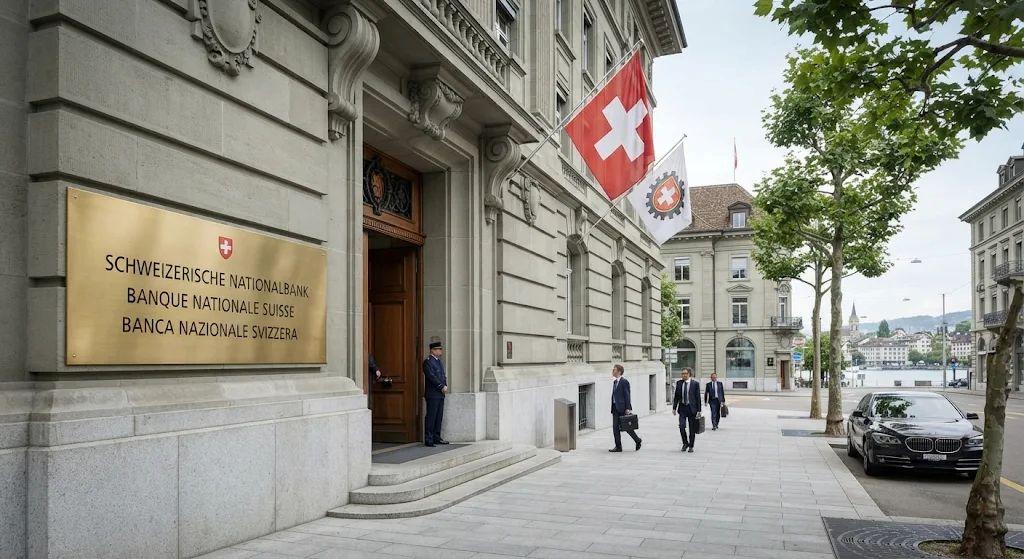
The Swiss National Bank, UBS, SIX and six other institutions have launched the Swiss Financial Ledger initiative to assess whether a shared distributed ledger can unify wholesale central bank money, commercial bank deposits and tokenized securities on a single platform. The project extends Project Helvetia and Project Agorá but carries no commitment to issue a digital franc or launch a production system.
The Swiss National Bank (SNB), UBS, SIX and six other financial institutions have launched an exploratory initiative to assess whether a shared distributed ledger could bring central bank money, commercial bank deposits and tokenized securities onto a single financial platform.
Announced on November 24, the initiative, called the Swiss Financial Ledger, aims to examine how digital financial assets and different forms of money could interact across domestic and cross-border markets. It forms part of the SNB's ongoing Project Helvetia and builds on the work conducted under Project Agorá, a cross-border tokenization initiative led by the Bank for International Settlements (BIS) and the Institute of International Finance (IIF).
The initiative brings together the SNB, UBS, SIX, Zürcher Kantonalbank, PostFinance, Banque Cantonale Vaudoise, Basler Kantonalbank, Sygnum Bank and Seturion, a settlement platform.
The institutions will assess the technical feasibility, potential benefits and risks of a shared financial ledger, while examining possible governance arrangements and operational frameworks.
The proposed Swiss Financial Ledger would explore whether three components of the financial system could operate on a common distributed ledger infrastructure:
Central bank money: Funds held by commercial banks at the central bank, potentially represented through wholesale central bank digital currency (wCBDC).
Commercial bank money: Deposits held with commercial banks, which could be represented in tokenized form.
Tokenized securities: Financial instruments issued or represented digitally on distributed ledger technology (DLT) platforms.
Bringing these components together could allow financial institutions to coordinate payments and securities transfers through a shared infrastructure, potentially reducing settlement friction and the need to reconcile transactions across separate systems.
The project will examine whether the ledger could support both domestic financial transactions and cross-border settlement arrangements, extending the work undertaken through Project Agorá.
A Helvetia Strategic Board has been established to coordinate the initiative, with the Swiss Bankers Association participating as an observer.
The Swiss Financial Ledger builds on two existing initiatives exploring the integration of digital assets and central bank money into financial markets.
Under Project Helvetia, the SNB has been testing two approaches to settling tokenized assets using central bank money.
The first involves issuing wholesale central bank digital currency on the regulated SIX Digital Asset Platform, allowing financial institutions to settle tokenized securities and cash simultaneously through a delivery-versus-payment mechanism.
The second approach connects distributed ledger-based trading and settlement platforms with Switzerland's existing Swiss Interbank Clearing (SIC) payment system. This allows tokenized securities to be settled using conventional central bank money held within the existing payment infrastructure.
The SNB has extended Project Helvetia until at least June 2028 to continue testing these approaches.
The initiative also builds on Project Agorá, a BIS and IIF-led public-private collaboration involving seven central banks, including the SNB, to explore how tokenized commercial bank deposits and wholesale central bank money could improve cross-border payments.
Unlock Blockchain previously covered the BIS's Project Agorá and its plans for a unified tokenized financial platform, as well as Singapore and Germany's experiments with cross-border blockchain settlement through Project Simbolon.
Despite the involvement of major Swiss financial institutions, the Swiss National Bank emphasized that the initiative remains exploratory and does not represent a decision to introduce a permanent digital currency for financial institutions.
The central bank said the project is intended to examine potential extensions to Switzerland's existing financial market infrastructure, which it described as highly efficient.
It also clarified that the announcement should not be interpreted as an indication that the Swiss Financial Ledger will eventually be launched or that the SNB will issue tokenized central bank money for financial institutions.
The distinction is important as central banks increasingly explore wholesale CBDCs and tokenized deposits without necessarily committing to replacing existing monetary and settlement arrangements.
The Swiss Financial Ledger will therefore focus on evaluating technical architecture, governance and operational requirements before any decision on a potential production system.
Switzerland's initiative adds to a growing number of central bank and commercial banking projects examining how distributed ledger technology could support institutional payments, securities settlement and tokenized money.
In Singapore, the Monetary Authority of Singapore has been expanding its wholesale CBDC and tokenized securities experiments through its digital financial infrastructure initiatives.
Meanwhile, the European Central Bank is developing its Pontes and Appia initiatives to connect tokenized financial markets with central bank money and explore interoperability between different digital asset networks.
These projects reflect a broader shift in institutional tokenization efforts, moving beyond the digitization of individual assets toward infrastructure that connects money, securities and settlement processes.
For Switzerland, the proposed Swiss Financial Ledger could provide a framework for assessing how its existing financial market infrastructure might accommodate these developments while maintaining the role of central bank money in institutional settlement.

Disclaimer of Warranty
The information provided in this article is for general informational purposes only. We make no warranties about the completeness, reliability, and accuracy of this information. Read full disclaimer

Editor's Picks
In the Same Space

BlackRock Launches Hong Kong Tokenized Fund With Stablecoin Subscriptions

News Desk

Nov 24, 2026

5 min

HSBC Connects Stablecoin Payments With Tokenized Investments Through RedCoin
News Desk
Nov 19, 2026
4 min

OKX and ICE Bring 24/7 Tokenized Stock Trading to US Market
News Desk
Nov 24, 2026
6 min

European Central Bank Approves DLT Securities for Collateral Use in 2027
News Desk
Nov 23, 2026
6 min