Advertisement
Opinion
Share
RC
Chief Executive Officer • Deus X Pay
The stablecoin sandwich has surged in popularity for a simple reason: it makes cross-border money movement faster, cheaper, and safer. In June 2026 alone, adjusted stablecoin transaction volume reached $1.79 trillion, according to Visa’s dashboard, powered by Allium.
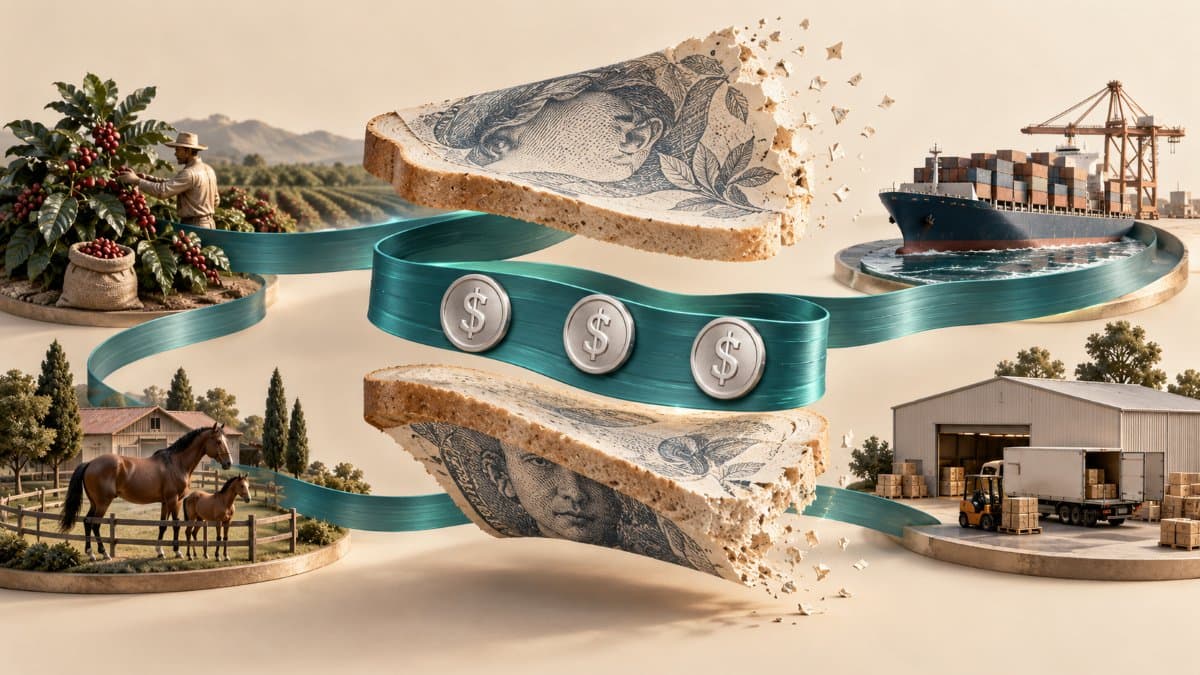
The sandwich lets you bypass the cumbersome correspondent banking network to move funds between two end banks. Here is how the recipe works:
1. The Top Slice: the sender deposits local currency at a gateway, such as Deus X Pay.
2. The Filling: that currency is swapped for a stablecoin, such as USDT or USDC, and sent across a supported blockchain, such as Ethereum or Solana, in seconds.
3. The Bottom Slice: the stablecoins are swapped back into the receiver's local currency and deposited into their bank account.
The valuations in this space reflect that shift. It is no surprise that Mastercard has acquired BVNK for up to $1.8 billion, nor that Stripe acquired Bridge for $1.1 billion.
When I am back in the UK, or talking to friends in traditional finance, the stablecoin sandwich is treated as the ultimate use case: funds move into stablecoins only temporarily, and always return to a bank in the end. That assumption is wrong.
Stablecoin supply is growing rapidly and is about to pass $300 billion. That is proof that funds are not simply passing through; they are staying put. People and businesses are choosing to hold their money in stablecoins. For them, it is simply a different format of money.
Consider two of our clients: an Argentine stud farm exporting horses to France, and a Brazilian coffee farm exporting to Turkey. Both invoice their customers in US dollars, and both are happy to accept USDT, or a similar stablecoin, as settlement.
Their French and Turkish buyers send US dollars to Deus X Pay, and the Argentine and Brazilian merchants receive USDT in return. These merchants recognise stablecoins as money: they no longer wait days or weeks for a wire transfer to clear, but receive the USDT the instant their buyer's dollars land.
It does not stop there. They may hold those stablecoins for days, weeks, or months as corporate treasury, and some swap them for a yielding stablecoin, such as Solstice USX, earning significantly more interest than a traditional bank account would offer.
The bottom slice of bread, the conversion back into local currency, has quietly disappeared from the sandwich.
Eventually, the bills arrive: guar, or horse feed, from India, or phosphorus, a fertiliser, from Morocco. These can now be settled in stablecoins instantly, 24 hours a day, regardless of bank holidays or weekends.
The top slice of bread is disappearing from the sandwich too. Our Argentine and Brazilian farms pay their Indian and Moroccan suppliers without ever touching a bank. Those suppliers, in turn, hold the stablecoins to pay their own suppliers, and the chain continues all the way down the supply line. No banks, no holiday delays, no weekends, and no arbitrary cut-off times: just instant settlement, around the clock, at the speed of the internet.
This is the part of the story that deserves more attention than it usually gets. The stablecoin sandwich, as a model, assumes fiat currency sits at both ends of the transaction, with the stablecoin as the fast, cheap filling in the middle. Take both slices away, and you no longer have a payment rail wrapped in fiat. You have something else: businesses along a supply chain paying and being paid entirely in stablecoins, holding working capital in stablecoins, earning yield on stablecoins, and converting to local currency only when they need to cover wages, rent, or tax.
This is what a genuinely stablecoin-native supply chain looks like: not a business dipping into stablecoins for a single cross-border leg, but one where stablecoins are the default medium for settlement and a working capital asset. Many exporters already invoice in dollars rather than their home currency. What is changing is that dollar value can circulate between businesses in stablecoin form without returning to a bank account at each step.
Follow the chain through. The Argentine stud farm receives USDT, holds it in a yielding position, and pays its Indian feed supplier directly in USDT. That supplier may, in turn, pay its own logistics providers or raw material sources in the same stablecoin, rather than converting to rupees at every hop. Every link that stays in the same dollar stablecoin can avoid a correspondent banking transfer, another currency conversion, and the associated banking delays. Network and service fees can still apply. This is not a chain quietly fading at the edges; it compounds, because every participant who chooses to hold rather than off-ramp makes it more likely the next one will too.
That raises practical questions most businesses have not yet had to answer. How do you manage currency risk when receivables and payables sit in dollar stablecoins but wages, rent, and tax remain in local currency? How does treasury policy change when idle cash can earn yield in a stablecoin money-market product instead of a low-interest current account? What does trade credit look like once settlement is instant and available around the clock, rather than bound by banking hours and cut-off times? These are the operational questions that arise the moment a business stops treating stablecoins as a bridge and starts treating them as a working asset on its balance sheet.
None of this means banks will disappear; businesses will still need fiat to pay staff, rent, and tax. But the point at which fiat becomes necessary is moving to the edges of the commercial relationship, rather than sitting at its centre. Banks also remain part of the reserve and redemption infrastructure behind major fiat-backed stablecoins.
The stablecoin sandwich was built on the belief that businesses would always bring their money back to a bank in the end. But when banks offer lower interest rates and add friction to moving your own money, it is little surprise that stablecoins are becoming the preferred format for international money movement: not a stop on the way to fiat, but a destination in their own right.
This contribution is part of UNLOCK Leadership. The views expressed are those of the author and do not necessarily reflect the editorial position of Unlock Blockchain.

Disclaimer of Warranty
The information provided in this article is for general informational purposes only. We make no warranties about the completeness, reliability, and accuracy of this information. Read full disclaimer

Editor's Picks
In the Same Space

South Korea’s Digital Asset Bill Nears Final Talks as 2027 Crypto Tax Looms

News Desk

Oct 22, 2026

3 min

Bitcoin ETFs Reverse Outflows With $1B in Three-Day Inflows
News Desk
Oct 22, 2026
7 min

Robinhood Plans Dubai Launch in 2027 After DFSA Authorization
Walid Abou Zaki
Oct 22, 2026
4 min
Qafila 2026: Binance Looks Beyond the First Crypto Trade
Salma Naueihed
Oct 22, 2026
6 min