Advertisement
Regulation & Policy
Share
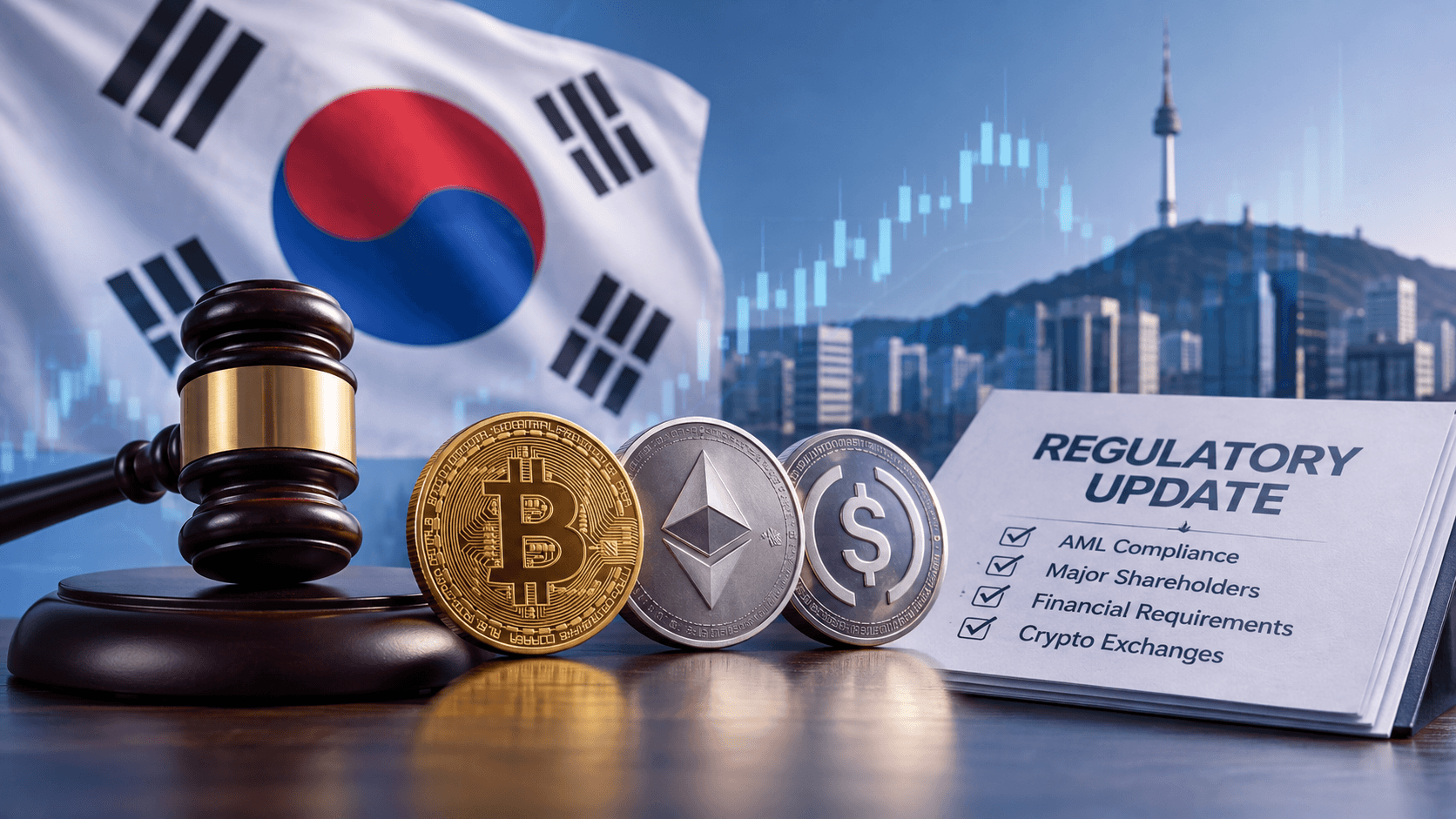
South Korea's Financial Services Commission presented a draft Digital Asset Basic Act on Nov. 24 that would lift the nine-year ICO ban under disclosure rules, restrict won-pegged stablecoin issuance to bank-majority consortiums, and cap crypto exchange ownership at 20%.
South Korea is preparing to reopen its domestic initial coin offering (ICO) market after a nine-year ban while placing banks at the center of its proposed stablecoin issuance framework, as regulators seek to expand the digital asset sector under stricter oversight.
The Financial Services Commission (FSC) presented a draft of the Act on Innovation in the Digital Asset Industry and Protection of Users, known as the Digital Asset Basic Act, on November 24. The proposal would establish rules for digital asset issuance, trading, custody and management, alongside new restrictions on cryptocurrency exchange ownership.
The draft would allow domestic ICOs subject to disclosure requirements, while limiting the initial issuance of Korean won-pegged stablecoins to consortiums in which banks collectively hold a majority stake. The legislation would also introduce a 20% ownership cap for major shareholders of crypto exchanges, with exceptions subject to regulatory approval.
The proposal marks a significant step in South Korea's effort to establish a broader digital asset regulatory framework following the implementation of its Virtual Asset User Protection Act in 2024.
South Korea's draft legislation would reverse its blanket prohibition on domestic ICOs, which regulators introduced in 2017 amid concerns over fraud, speculative fundraising and investor losses.
Under the proposed framework, token issuers would be required to submit white papers to the FSC outlining their business plans, intended use of proceeds, offering size and associated risks. The disclosure requirements are intended to establish greater transparency around token offerings and provide investors with information before participating.
The proposal would bring domestic token fundraising under a formal regulatory framework rather than maintaining the outright prohibition that has prevented Korean businesses from conducting ICOs locally for nearly a decade.
The draft also seeks to establish clearer regulatory categories for digital asset businesses, including trading, brokerage and custody services, with firms required to obtain licenses corresponding to their activities. Digital asset management businesses would also fall under a defined regulatory framework.
The proposed reforms build on South Korea's broader effort to consolidate digital asset rules. Earlier this year, the country moved closer to advancing the second phase of its digital asset regulations, with lawmakers and regulators debating how to regulate token issuance, stablecoins and crypto exchange ownership.
The draft would initially restrict Korean won-pegged stablecoin issuance to consortiums in which banks collectively hold more than 50% of the ownership.
The structure would still allow fintech and technology companies to participate in issuance ventures and potentially hold the largest individual stake, provided banks maintain a collective majority.
Stablecoin issuers would need approval from the FSC and would be subject to requirements including a minimum capital threshold of 5 billion won ($3.4 million), full reserve backing and redemption at face value upon request. Reserve assets would need to be held with custodians or placed in trust, while issuers would be prohibited from paying interest to token holders.
The proposal would also allow foreign stablecoin issuers to enter the Korean market subject to regulatory requirements, including establishing a local branch and securing approval. Stablecoins that fail to meet the applicable approval or reporting requirements would be restricted from domestic exchange listings and trading.
The bank-majority requirement represents a resolution to a prolonged debate between financial authorities and industry participants over who should control won-denominated stablecoin issuance.
The Bank of Korea has advocated for bank-led issuance structures, citing monetary stability and financial risks, while fintech companies and industry participants have pushed for broader participation in the market.
Unlock Blockchain previously reported on South Korea's stablecoin legislation delays as regulators clashed over issuer rules, highlighting the disagreement between the central bank and financial regulator over whether banks should hold a majority stake in stablecoin issuers.
The latest draft establishes a bank-majority model while allowing technology firms to participate in consortiums, potentially opening the door for partnerships between traditional financial institutions and digital asset companies.
The draft would also introduce restrictions on major shareholders of digital asset trading platforms, capping ownership stakes at 20%. The limit could be extended to 34% with FSC approval, while existing operators would reportedly receive a three-year transition period to comply.
The legislation would introduce additional licensing, governance and internal control requirements for digital asset businesses, including measures designed to strengthen customer asset protection and operational security.
Under the proposed framework, crypto service providers would face stricter obligations around asset segregation, monitoring and IT security. The draft also includes liability provisions requiring businesses to compensate users for losses arising from hacks or system failures, even where negligence has not been established.
The ownership restrictions have drawn concerns from industry participants, who argue that the proposed limits could force existing exchange operators to restructure their ownership arrangements and potentially weaken domestic companies' competitiveness.
South Korea has already begun tightening oversight of crypto businesses. On November 24, authorities extended licensing reviews to major shareholders of registered crypto businesses, expanding regulatory scrutiny beyond executives and companies to include ownership structures, financial soundness and compliance infrastructure.
The proposed Digital Asset Basic Act would extend that regulatory approach further, establishing broader requirements governing digital asset businesses and their market operations.
The draft legislation still requires approval by South Korea's National Assembly, where lawmakers are expected to debate its provisions and potentially combine it with competing legislative proposals.
If enacted, the law would establish a broader framework for digital asset issuance, stablecoins, trading platforms and investment services, moving South Korea beyond its existing user-protection-focused regulatory approach.
The proposed bank-led stablecoin model and conditional reopening of ICOs could also influence how financial institutions, fintech companies and digital asset businesses approach the Korean market, particularly as the country seeks to develop domestic digital financial infrastructure.
The legislation reflects South Korea's attempt to expand digital asset activity while maintaining tighter oversight of issuance, market operators and financial institutions participating in the sector.

Disclaimer of Warranty
The information provided in this article is for general informational purposes only. We make no warranties about the completeness, reliability, and accuracy of this information. Read full disclaimer

Editor's Picks
In the Same Space
Binance Eyes Five Asian Markets as $6.3B Hack Tests Recovery

News Desk

Nov 18, 2026

5 min
Toss Brings Crypto to 30 Million Users as Its Bank Tests Stablecoin Transfers
News Desk
Nov 16, 2026
4 min
US Seeks Court Order to Recover $1.1 Billion in USDC Linked to Binance Hack
News Desk
Nov 24, 2026
6 min

Dubai Finance and VARA Partner to Advance Dubai’s Cashless Economy
News Desk
Nov 23, 2026
3 min