Advertisement
Regulation & Policy
Share
The SEC and CFTC have jointly launched a public consultation to update definitions of swaps and security-based swaps under Dodd-Frank, directly addressing regulatory uncertainty around perpetual futures and prediction market contracts at a moment when CME Group is suing the CFTC over its approval of Kalshi's perpetual futures products.
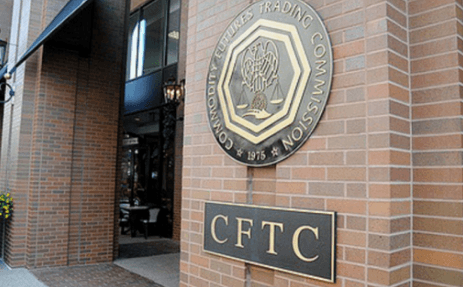
The U.S. Commodity Futures Trading Commission (CFTC) and the Securities and Exchange Commission (SEC) have jointly launched a public consultation aimed at updating and clarifying key definitions governing derivatives markets, a move that could have significant implications for emerging products such as perpetual futures and prediction market contracts.
The request for public comment seeks feedback on a broad range of issues, including the definitions of “swaps” and “security-based swaps,” as well as the scope of exclusions that determine how various derivatives products are regulated under U.S. law.
The agencies are also inviting industry participants to comment on the regulatory treatment of novel financial instruments, including event-based contracts traded on prediction market platforms and perpetual futures contracts, which have become a focal point of debate within the digital asset sector.
CFTC Chairman Michael S. Selig said the consultation presents an opportunity to address longstanding ambiguities within Title VII of the Dodd-Frank Act that have hindered competition and innovation in derivatives markets.
SEC Chairman Paul Atkins described the clarification effort as “long overdue,” specifically highlighting uncertainty surrounding event-based products.
The initiative comes just one day after CME Group filed a lawsuit against the CFTC challenging the agency’s approval of perpetual futures products offered by Kalshi in the United States.
In its complaint, CME argues that perpetual futures should be classified and regulated as swaps rather than futures contracts. The exchange alleges that the CFTC bypassed established regulatory requirements by allowing Kalshi’s products to be listed under the futures framework.
CME Group CEO Terrence Duffy has publicly maintained that perpetual futures fall within the definition of swaps and therefore should be subject to the regulatory regime established for swap products.
According to the lawsuit, the CFTC’s decision could allow new market participants to compete directly with traditional futures exchanges by offering similar cryptocurrency-linked perpetual products under a different regulatory structure.
The CFTC has responded by seeking dismissal of the lawsuit, arguing that the challenge conflicts with the current U.S. administration’s efforts to encourage financial innovation and market competition.
The SEC-CFTC consultation could ultimately play a pivotal role in determining how perpetual futures, prediction markets, and other emerging digital asset products are regulated in the United States.

Disclaimer of Warranty
The information provided in this article is for general informational purposes only. We make no warranties about the completeness, reliability, and accuracy of this information. Read full disclaimer

Editor's Picks

As U.S. Crypto Legislation Stalls, Circle Launches Its Own Financial Network

Walid Abou Zaki

Sep 16, 2026

9 min

Stablecoin Yield Fight Helps Derail CLARITY Act in Senate
Walid Abou Zaki
Sep 15, 2026
8 min

Why Zondacrypto’s Collapse Would Unfold Differently in the UAE
Walid Abou Zaki
Aug 28, 2026
8 min
Read More Articles

In the Same Space
Stablecoin Yield Fight Helps Derail CLARITY Act in Senate
Walid Abou Zaki
Sep 15, 2026
8 min

Kalshi's Bid for Non-Stop Stock Perpetuals Reignites CFTC-SEC Turf War
News Desk
Sep 11, 2026
8 min

Iran Turns to Crypto as Sanctions Bite, But USDT Has a Control Problem
Salma Naueihed
Sep 9, 2026
5 min

US and UK Launch Joint Effort to Tackle Crypto Investment Fraud
News Desk
Sep 4, 2026
5 min