Advertisement
Policy & Industry
Share
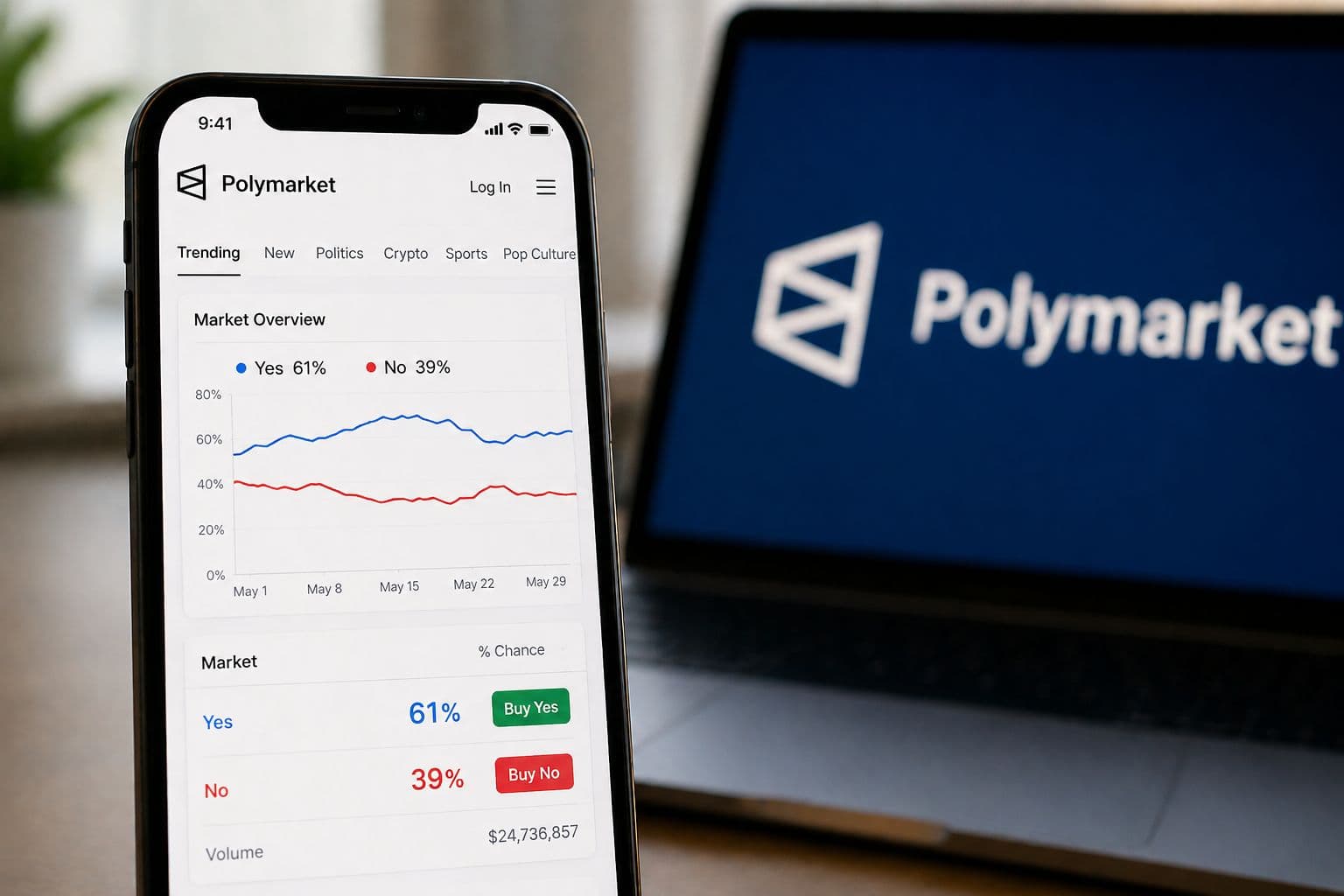
Polymarket has reportedly asked the U.S. Commodity Futures Trading Commission (CFTC) for approval to reopen its main crypto-native prediction exchange in the United States, according to Bloomberg. If approved, the move would significantly expand the company’s domestic presence beyond the brokerage-based access currently available through QCX LLC.
The company has formally restricted U.S. customers from using its international platform since reaching a regulatory settlement in 2022. While a separate U.S.-focused platform was later introduced, it has yet to achieve a full commercial rollout. In recent weeks, Polymarket has held discussions with officials at the U.S. Commodity Futures Trading Commission (CFTC) about potentially removing the ban on U.S.-based users.
The request marks a potentially important test case for whether U.S. regulators are prepared to accommodate on-chain prediction market infrastructure within federally supervised markets.
Polymarket currently operates two separate platforms. Its primary global exchange settles trades on Polygon using USD Coin (USDC) and offers the broadest selection of event-based contracts. In parallel, Polymarket US provides intermediated access through brokerage channels designed to comply with current regulatory requirements.
Approval for the main exchange to operate domestically would allow eligible U.S. users to participate directly through on-chain rails rather than through intermediaries, potentially reshaping how regulated prediction markets interact with decentralized finance infrastructure.
The reported filing follows a series of regulatory developments that strengthened Polymarket’s U.S. position over the past year. In 2025, the company completed its reported $112 million acquisition of QCEX, broadening its licensed market access strategy.
Later that year, the CFTC issued an Amended Order of Designation that enabled Polymarket’s regulated U.S. arm to become fully operational through intermediated access.
In March 2026, the company also extended anti-manipulation and insider trading protections across both of its platforms, signaling a stronger compliance posture as it pursues broader regulatory acceptance.
Any approval process is likely to focus on several structural questions, including whether the CFTC is prepared to permit on-chain settlement mechanisms, stablecoin-based collateral in the form of USDC, and a wider universe of event contracts under an approved framework.
The outcome could influence how other decentralized market operators approach U.S. licensing strategies.
The move also comes as competition intensifies. Kalshi already operates as a regulated U.S. event contracts marketplace, giving it a first-mover advantage in the domestic market.
Meanwhile, Polymarket appears to be strengthening its balance sheet. Intercontinental Exchange, parent company of the New York Stock Exchange, reportedly completed a $2 billion strategic investment in March, while separate reports this month indicated discussions around a potential $400 million fundraising round at a $15 billion valuation.
If approved, Polymarket’s onshore expansion could become one of the clearest examples yet of decentralized market infrastructure entering the U.S. regulated financial system. It would also signal how far regulators are willing to integrate blockchain-native trading models into mainstream capital markets.

Disclaimer of Warranty
The information provided in this article is for general informational purposes only. We make no warranties about the completeness, reliability, and accuracy of this information. Read full disclaimer

Editor's Picks
In the Same Space
Crypto Perpetual Futures at Risk? CFTC and CME Clash in High-Stakes Legal Battle

News Desk

Oct 20, 2026

5 min

OKX Extends Account-Hacking Protection to US Users
News Desk
Oct 21, 2026
3 min

UK FCA Seeks Feedback on DeFi Rules and Crypto Regulatory Scope
News Desk
Oct 22, 2026
5 min

Trump to Address Overseas Crypto Fraud as US Targets Scam Networks
News Desk
Oct 22, 2026
6 min