Advertisement
Exchanges & Trading
Share
Moscow Exchange will launch spot trading in Bitcoin, Ethereum, and USDT on December 1, integrating cryptocurrency into Russia's regulated financial market infrastructure for the first time via its existing securities platform.
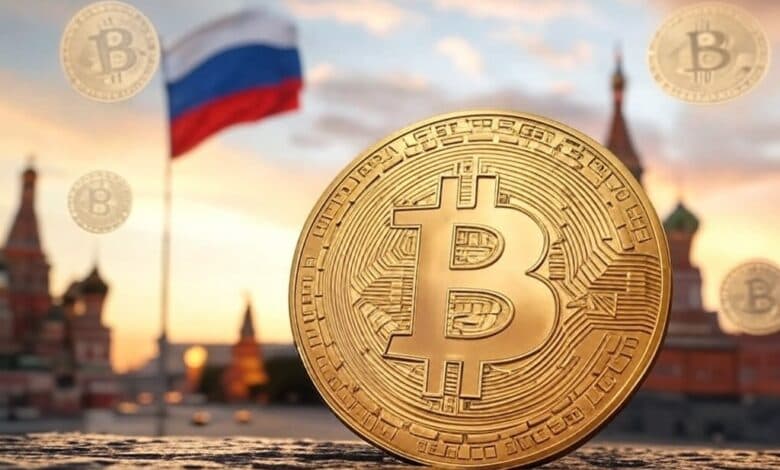
Moscow Exchange is preparing to launch trading in Bitcoin, Ethereum, and Tether's USDT on December 1, marking another step in Russia's efforts to bring cryptocurrency activity into its regulated financial markets.
Boris Blokhin, the exchange's senior managing director for sales and business development, announced the planned launch at the Smartlab investment conference in Moscow, The exchange intends to use its existing securities-market infrastructure to facilitate cryptocurrency transactions, allowing brokers to connect clients to the new service without building an entirely separate trading system.
Testing with professional market participants is already underway. Blokhin said additional firms would be brought into the process as their systems become ready, adding that the exchange expects to proceed with the December launch following the trials.
The move comes as Russia implements a new regulatory framework for digital assets, which took effect on September 1 and establishes conditions for cryptocurrency trading, custody, and investor participation.
The exchange plans to begin with three digital assets: Bitcoin, Ethereum, and USDT. Their selection reflects the Bank of Russia's criteria for cryptocurrencies that can be made available to nonqualified investors.
Trading will take place through an electronic order book, where buyers and sellers submit competing orders and transactions are executed according to available market prices.
Moscow Exchange also intends to introduce swap transactions, giving market participants additional tools for managing liquidity. Blokhin compared the planned functionality with repurchase transactions in securities markets and swaps commonly used in foreign exchange trading.
The service is expected to operate from 6:50 a.m. to 11:50 p.m. Moscow time, following the exchange's extended securities-market schedule.
Using existing infrastructure is also intended to limit the additional costs associated with connecting brokers and other professional participants to the cryptocurrency market.
The planned launch follows Russia's new rules governing access to digital assets through authorized financial intermediaries.
Under the framework, non-qualified investors must pass a knowledge assessment before purchasing eligible cryptocurrencies. Their annual purchases are capped at 300,000 rubles through each intermediary.
Qualified investors, meanwhile, can access a broader range of digital assets without the same purchase ceiling, although applicable testing requirements remain in place.
The distinction creates two levels of market access, with retail participation subject to additional safeguards and investment limits.
Importantly, Russia's decision to permit regulated cryptocurrency trading does not extend to ordinary domestic payments. The use of cryptocurrencies to pay for goods and services within the country remains prohibited, while qualifying cross-border transactions involving digital currencies are permitted under separate provisions.
For Moscow Exchange, the new service represents an expansion of regulated investment access rather than a change to the legal status of cryptocurrency as a domestic payment method.
The exchange will provide the marketplace, but cryptocurrency custody will be handled by partner digital depositories.
Under the planned structure, brokers will give customers access to buy and sell digital assets, while the depositories will maintain custody and records of their cryptocurrency holdings.
This division reflects the broader infrastructure being developed under Russia's new regulatory framework, which separates trading services from the safeguarding and administration of digital assets.
Several financial institutions connected to Sberbank, VTB, and T-Technologies have been preparing digital asset services under the new rules. The registration of early exchange operators and digital custodians in October has also helped establish the institutional infrastructure needed for the market's expansion.
Blokhin said professional participants were developing their depository systems and integrating them with Moscow Exchange's platform. The exchange has been testing transactions since early October, with participating firms already completing trades in the trial environment.
He indicated that the number of participants was sufficient to support the planned pilot launch.
The planned spot trading service adds another layer to Moscow Exchange's growing cryptocurrency offering.
In September, the exchange introduced five perpetual futures contracts linked to Bitcoin, Ethereum, Solana, XRP, and Tron indexes. Unlike spot transactions, these derivatives provide exposure to cryptocurrency price movements without transferring ownership of the underlying assets. Access is restricted to qualified investors.
Moscow Exchange previously reported that more than 72,000 qualified investors had traded its cryptocurrency futures, generating cumulative turnover of over 600 billion rubles.
The expansion into spot trading would therefore broaden the exchange's product range, moving beyond derivatives to transactions involving the underlying cryptocurrencies.
Moscow Exchange is not alone in preparing new services. Sberbank is also targeting December 1 for its own cryptocurrency offering, with plans covering trading, custody, and settlement for eligible customers.
Blokhin attributed the anticipated demand partly to the withdrawal of foreign cryptocurrency platforms from the Russian market. He also pointed to activity in crypto-linked futures as an indication of existing investor interest, saying the exchange would continue gathering feedback from brokers during the testing period.
The significance of Moscow Exchange's planned launch extends beyond adding three cryptocurrencies to its product lineup. It illustrates how Russia is seeking to organize digital asset trading through established financial market institutions rather than relying exclusively on offshore platforms and crypto-native intermediaries.
The structure being developed separates several functions that are often combined on cryptocurrency platforms: the exchange provides the trading venue, brokers connect investors to the market, and digital depositories handle custody and asset records. This gives traditional financial institutions a defined role in the cryptocurrency ecosystem.
The investor restrictions are equally important. By differentiating between qualified and nonqualified investors, Russia is opening access to cryptocurrency markets while maintaining limits on how much retail participants can purchase. The framework therefore expands participation without giving all investors identical access.
There is also a distinction between investment and payment use. Allowing cryptocurrencies to be traded through regulated intermediaries does not mean Russia is embracing them as a domestic means of payment. The continued restriction on domestic crypto payments, alongside provisions for cross-border transactions, reflects a more selective approach to the asset class.
Moscow Exchange's move also places it in a developing competitive landscape. With Sberbank preparing its own offering and other financial institutions building custody and trading capabilities, the next stage will involve attracting participants and establishing liquidity across regulated venues.
The December 1 launch remains dependent on the exchange's ongoing preparations and integration with participating firms. If implemented as planned, it will mark a significant expansion of the channels through which Russian investors can access cryptocurrency markets, this time through the country's established exchange infrastructure.

Disclaimer of Warranty
The information provided in this article is for general informational purposes only. We make no warranties about the completeness, reliability, and accuracy of this information. Read full disclaimer

Editor's Picks
In the Same Space
Robinhood Crypto Revenue Falls 55% as Trading Shifts

News Desk

Oct 28, 2026

4 min
Qafila 2026: Binance Looks Beyond the First Crypto Trade
Salma Naueihed
Oct 22, 2026
6 min

Binance's $6.3B Hack: How Could One Laptop Open the Door?
Walid Abou Zaki
Oct 30, 2026
15 min
Google Cloud Previews Crypto Custody Service for Institutions
News Desk
Oct 29, 2026
4 min