Advertisement
Research & Analysis
Share
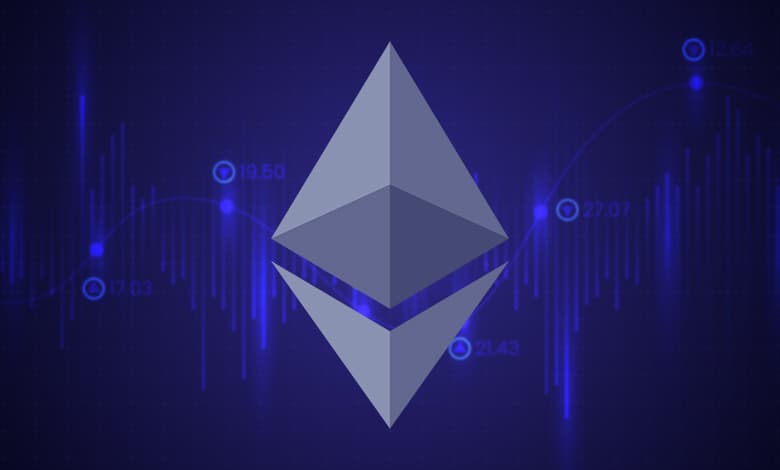
In an exclusive report for The Block, Ether continues to underperform Bitcoin during the latest crypto market recovery, as institutional positioning remains heavily tilted toward Bitcoin. Analysts at JPMorgan argue that weaker network activity on Ethereum, combined with fading confidence across the altcoin market, has kept institutional demand firmly biased in favor of Bitcoin over Ethereum.
According to research led by managing director Nikolaos Panigirtzoglou, Bitcoin has recovered at a significantly faster pace than Ether following recent market turbulence linked to geopolitical tensions involving Iran. JPMorgan noted that institutional investors have been rebuilding exposure to Bitcoin through both spot ETF products and CME futures at a much stronger rate than they have for Ether.
JPMorgan’s data shows a clear divergence in recovery strength between the two assets. Spot Bitcoin ETF products have already regained nearly two-thirds of the capital that was withdrawn during the selloff triggered by the conflict, signaling a relatively strong return of institutional confidence.
By contrast, spot Ethereum ETF products have recovered only around one-third of their earlier outflows, highlighting a noticeably weaker rebound in investor demand for Ether even as broader market conditions stabilize.
This gap reinforces the idea that institutions continue to treat Bitcoin as the primary vehicle for crypto exposure during periods of macro uncertainty.
The same pattern is evident in derivatives markets. JPMorgan observed that institutional positioning in CME Bitcoin futures has almost fully recovered to pre-selloff levels, indicating a rapid normalization of exposure.
However, Ethereum futures positioning on CME remains significantly below earlier highs, suggesting that institutional conviction in Ether has not returned with the same strength.
The bank also pointed out that momentum-driven participants, including commodity trading advisors (CTAs) and quantitative crypto funds, are still slightly underweight both Bitcoin and Ether following the major deleveraging event seen in October.
Beyond market positioning, JPMorgan highlighted concerns around Ethereum’s underlying network activity. Despite multiple major upgrades over the past three years, Ethereum has not seen a meaningful increase in base-layer usage.
Instead, most technical improvements have reduced transaction costs on Layer 2 networks, shifting activity away from Ethereum’s main chain and limiting direct fee generation at the protocol level.
Another structural issue identified in the report is the weakening of Ethereum’s token burn mechanism. Lower transaction fees have led to reduced ETH burn activity, which has contributed to faster net supply growth.
This shift reduces one of the key deflationary drivers that previously supported Ether’s long-term valuation narrative, making price momentum more dependent on external demand rather than internal supply compression.
Ethereum’s upcoming upgrades, including Glamsterdam and Hegota, aim to improve scalability by increasing throughput and lowering base-layer costs.
However, JPMorgan questioned whether lower transaction fees alone would be sufficient to generate sustained growth in network activity or restore stronger demand for Ether.
The key uncertainty is whether these upgrades can meaningfully reverse declining base-layer usage and offset the continued reduction in token burns.
Beyond Ethereum, JPMorgan noted that altcoins have struggled to keep pace with Bitcoin since 2023, as liquidity conditions across the crypto sector have weakened.
The bank cited thinner market depth, slowing decentralized finance (DeFi) activity, and recurring security breaches as key factors behind reduced investor appetite for altcoins.
Frequent hacks and operational failures across various crypto platforms have further discouraged new capital inflows, leaving Bitcoin in a comparatively stronger position as institutional investors continue to favor more established digital assets.
The widening gap between Bitcoin and Ether highlights a broader shift in how institutional capital evaluates crypto exposure. Bitcoin is increasingly viewed as the primary macro asset within digital markets, supported by ETF inflows and deep liquidity, while Ethereum is being assessed through a more complex lens tied to network activity, fee generation, and protocol upgrades.
As highlighted in this exclusive The Block report, institutions are not simply rotating between assets, they are assigning fundamentally different roles to Bitcoin and Ethereum within portfolio construction.
This divergence suggests that Ethereum’s future performance will depend less on market cycles alone and more on its ability to demonstrate tangible improvements in on-chain demand and value capture. Without that, Bitcoin is likely to continue consolidating its dominance as the preferred institutional crypto asset, especially in environments where liquidity and risk appetite remain uncertain.

Disclaimer of Warranty
The information provided in this article is for general informational purposes only. We make no warranties about the completeness, reliability, and accuracy of this information. Read full disclaimer

Editor's Picks
In the Same Space

JPMorgan Predicts Bitcoin Rally Against Gold Amid Shifting ETF Strategies

News Desk

Sep 18, 2026

3 min
Deutsche Bank Moves Into Institutional Crypto Custody With Bitcoin, Ether and Stablecoins
News Desk
Sep 17, 2026
4 min

Ethiopia Slashes Bitcoin Mining Power by 77%, Why?
News Desk
Sep 16, 2026
6 min

KelpDAO Files Suit Against LayerZero Over 2026’s Largest Exploit
News Desk
Sep 25, 2026
6 min