Advertisement
Regulation & Policy
Share
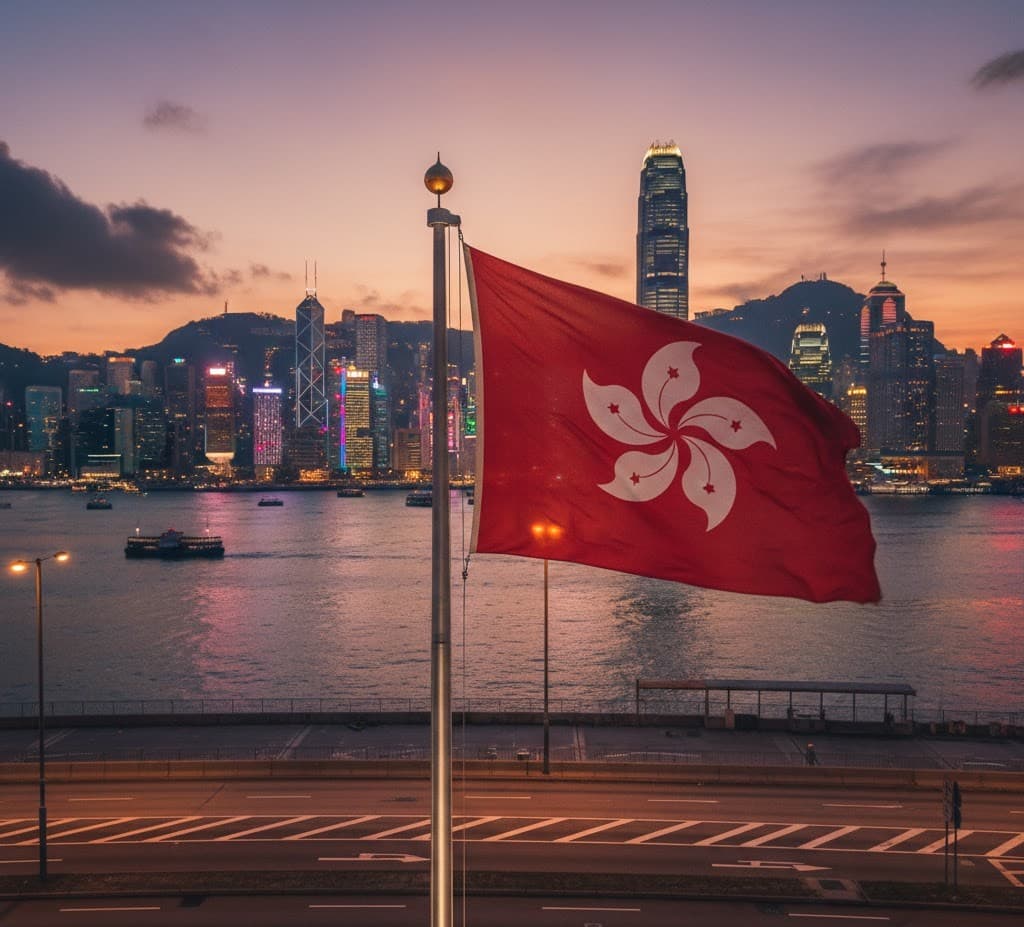
Hong Kong’s first batch of stablecoin issuer licenses was not announced by the end of March as previously signaled by senior officials, highlighting the city’s cautious approach as it rolls out one of the world’s most closely watched regulated stablecoin frameworks.
The delay has drawn attention across the digital asset industry after Hong Kong officials indicated earlier this year that the initial approvals could arrive in March. While the timeline has slipped, market participants and analysts say the pause is more likely tied to regulatory scrutiny than any loss of momentum in the city’s broader digital asset strategy.
A spokesperson for the Hong Kong Monetary Authority (HKMA) said the regulator was “actively taking forward the licensing matter” and would announce further details in due course.
Industry figures close to Hong Kong’s Web3 ecosystem say the absence of a March announcement likely reflects a slower review process rather than a shift in policy direction.
Jack Poon, a member of the task force on promoting Hong Kong Web3 development and a professor of fintech at Hong Kong Polytechnic University, said the delay was unlikely to be market-driven.
“I don’t think the delay is caused by the market,” Poon said, adding that the process was likely administrative, with authorities ensuring that all requirements are met and that the positioning of the first approved issuers is aligned with the long-term objectives of the framework.
That interpretation aligns with Hong Kong’s broader regulatory posture in digital assets. The city has consistently positioned itself as a regulated gateway for Web3 activity, favoring structured rollout over rapid experimentation. In practice, that means the first stablecoin licenses are expected to carry signaling value well beyond the issuers themselves, serving as a benchmark for how Hong Kong wants regulated digital money to develop under its supervision.
Market expectations for a March launch were shaped by remarks made during Consensus Hong Kong on February 11, when two senior officials publicly pointed to that timeline.
Hong Kong Chief Executive John Lee Ka-chiu said stablecoin licenses would be issued “within the next month,” while Financial Secretary Paul Chan Mo-po said the government planned to issue only a “small number” of licenses in the first batch.
Those comments heightened anticipation around which institutions would secure the first approvals and how the licensed stablecoins would be deployed in payments, settlement, or tokenized finance use cases.
Among the entities most widely expected to be in the initial cohort are a joint venture involving Standard Chartered Bank, Animoca Brands, and Hong Kong Telecommunications, as well as HSBC, according to market focus around likely applicants.
The limited size of the first batch is itself consistent with Hong Kong’s approach: the city appears to be prioritizing controlled market entry, institutional-grade oversight, and reputational credibility as it seeks to establish itself as a leading digital asset hub in Asia.
The HKMA has adopted stringent requirements for stablecoin issuers, including standards around capital adequacy, reserve backing, and redemption rights designed to ensure that licensed stablecoins remain fully backed and redeemable at all times.
These safeguards are particularly important because stablecoins, while often positioned as payment infrastructure, can create systemic vulnerabilities if confidence in their reserves weakens. Unlike speculative crypto assets, fiat-referenced stablecoins are increasingly being evaluated as components of broader financial infrastructure, which raises the stakes for regulators overseeing their launch.
Richard Portes, professor of economics at London Business School, said Hong Kong was right not to rush the process.
“The basic risk with a stablecoin is the risk of a run, like a bank run,” Portes said. “If holders start doubting whether the reserves backing the stablecoin are really there or really liquid, they will start to redeem – and you get the same kind of dynamics as in a bank run.”
He added that contagion into the wider financial system would be a serious risk, noting that Hong Kong’s cautious and detailed regulatory implementation was a sound approach if it intends to participate meaningfully in the stablecoin sector.
That assessment reflects a growing consensus among policymakers globally: stablecoin regulation is no longer just about crypto market conduct, but about ensuring that tokenized forms of money do not introduce banking-like risks without equivalent safeguards.
Analysts and market participants say the missed March target is unlikely to materially affect Hong Kong’s long-term stablecoin strategy or its ambition to build a regulated digital finance hub.
Livio Weng, CEO of Bitfire, a Hong Kong-licensed virtual asset manager, said a short delay would reinforce confidence in the quality of the regime rather than undermine it.
“Any minor delay in issuing the first licenses signals regulators’ priority on quality over speed,” Weng said. “Hong Kong’s approach to digital finance leadership has consistently been ‘strict first, flexible later’. This careful compliance review ensures Hong Kong’s stablecoin ecosystem is built on a secure foundation from the start.”
That framing is significant for institutional observers. In Hong Kong’s model, stablecoin licensing is not being treated as a race for first-mover headlines, but as foundational financial market infrastructure. The city’s ability to attract banks, telecom operators, fintechs, and tokenization firms depends less on speed and more on whether its framework is viewed as durable, credible, and interoperable with traditional finance.
Kenny Tang Sing-hing, chairman of the Hong Kong Institute of Financial Analysts and Professional Commentators, also said the stablecoin initiative remains aligned with Beijing’s broader support for Hong Kong’s role in Web3 and digital assets.
“The launch of stablecoin licenses is in line with that direction, with a robust regulatory framework being put in place,” Tang said. “Even if it is not announced in March, I believe the overall plan will not be affected.”

Disclaimer of Warranty
The information provided in this article is for general informational purposes only. We make no warranties about the completeness, reliability, and accuracy of this information. Read full disclaimer

Editor's Picks
In the Same Space

Hong Kong Targets $2.6B Multi-Currency Digital Bond Sale

News Desk

Sep 24, 2026

3 min

Hong Kong Prepares 24/7 CBDC Settlement System for Tokenized Deposits
News Desk
Sep 18, 2026
3 min
CFTC Updates Tokenized Asset and Blockchain Rules as Crypto Bill Stalls
News Desk
Sep 25, 2026
5 min

EBA Urges EU to Regulate Crypto Lending and DeFi Under MiCA
News Desk
Sep 25, 2026
4 min