Advertisement
Regulation & Policy
Share
SN
Senior English Editor


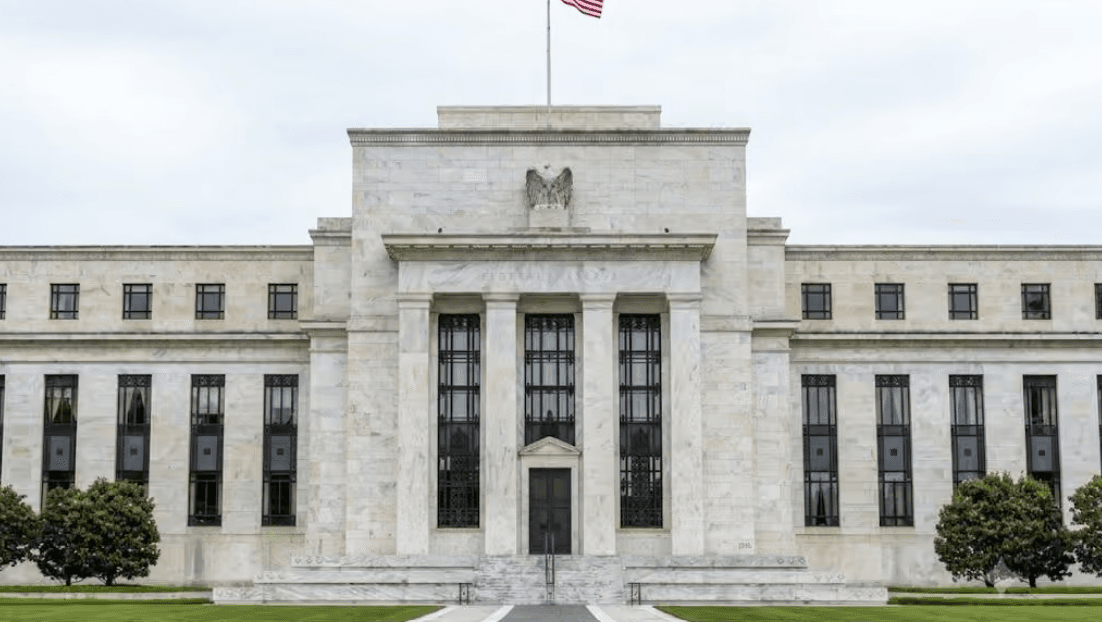
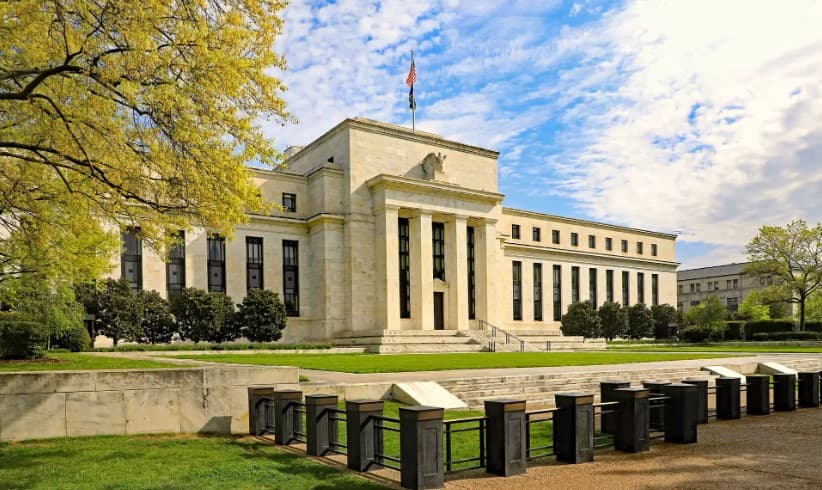
Federal Reserve Governor Michael Barr signaled on March 31 that U.S. regulators intend to enforce the GENIUS Act’s stablecoin framework with limited room for flexibility, sharpening expectations ahead of final rulemaking due by July 2026. His remarks indicate that reserve quality, anti-money-laundering controls in secondary markets, and issuer incentives are likely to define the next phase of U.S. stablecoin oversight.
For issuers, banks, and institutional investors, the message is clear: regulatory clarity is now shifting into regulatory discipline. That transition could raise compliance costs, favor transparent and well-capitalized issuers, and accelerate consolidation in the U.S. stablecoin market.
Congress passed the GENIUS Act in 2024, creating a clearer federal framework for stablecoin issuers. But Barr’s latest remarks suggest the Federal Reserve will apply that framework conservatively rather than expansively.
He pointed to several areas likely to receive close scrutiny during implementation, including reserve asset composition, capital and liquidity requirements, issuer business incentives, consumer protection, and anti-money-laundering controls. Together, these comments narrow expectations that the upcoming rulemaking phase will become a venue for broad industry concessions.
That matters because the Office of the Comptroller of the Currency has already opened a public comment period on its proposed implementation framework, while federal agencies work toward the Act’s July 2026 deadline. Barr’s intervention effectively sets a stricter tone before those final rules are completed.
A key issue in Barr’s remarks was the quality of reserve assets backing stablecoins.
The GENIUS Act is designed to reduce run risk by limiting reserves to high-quality, highly liquid instruments. That framework broadly aligns with how major issuers such as Circle and Tether already rely on short-term U.S. Treasuries as core reserve holdings.
However, the law also permits certain uninsured bank deposits and credit union shares as reserve assets. Barr highlighted the risks embedded in that flexibility, warning that issuers may be incentivized to seek higher returns by moving further along the risk curve. In practice, that creates a tension between profitability and stability—particularly during periods of market stress.
The policy signal is significant. If regulators interpret the law narrowly, issuers may face tighter limits on how much balance-sheet discretion they can exercise, reducing room for reserve optimization strategies that could weaken confidence in redemptions.
Barr also focused on a more difficult problem: stablecoin activity beyond primary issuance.
While the GENIUS Act gives regulators clearer oversight over issuance and redemption, stablecoins continue to circulate across decentralized exchanges, peer-to-peer transfers, and unhosted wallets where compliance controls can be inconsistent or absent. Barr explicitly flagged this secondary-market gap in his speech as a money-laundering and illicit finance risk.
That shifts the regulatory conversation. U.S. policy may no longer stop at supervising the issuer alone. It could increasingly extend toward the broader transaction environment in which stablecoins move.
If that happens, the practical consequences could include stronger blockchain monitoring expectations, tighter scrutiny of wallet exposure, and additional pressure on platforms that facilitate stablecoin trading outside traditional compliance perimeters.
The GENIUS Act requires final regulations by July 2026, giving federal agencies a compressed implementation window.
That timeline matters because it reduces the likelihood of prolonged negotiation. Barr’s remarks suggest regulators are using the months ahead not to reopen the law’s core assumptions, but to translate them into operational requirements.
There is still room for debate at the margins. Recent discussions involving the White House, major banks, and crypto industry participants — particularly around stablecoin rewards and yield-like features — show that the political and commercial contest is not over. But Barr’s comments narrow the field of plausible outcomes.
The result is a more disciplined rulemaking environment: innovation may still be accommodated, but not at the expense of reserve integrity, liquidity, or anti-money-laundering safeguards.
Barr’s enforcement posture is likely to create uneven outcomes across the market.
Issuers with transparent reserves, stronger disclosure standards, and established compliance infrastructure are better positioned to absorb stricter oversight. That gives an advantage to firms that have already invested in auditability, governance, and regulatory engagement.
It also changes the outlook for new entrants. Major U.S. banks and corporations that have recently explored stablecoin issuance now face a more demanding regulatory path than early offshore issuers encountered in previous cycles. Meta’s renewed stablecoin payment exploration reinforces that interest, but Barr’s signal suggests the economics will increasingly depend on whether compliance costs can be absorbed at scale.
For institutional users such as payment processors, corporate treasury teams, and asset managers, the likely outcome is a clearer market hierarchy. U.S.-regulated issuers with transparent reserves and stronger controls may increasingly become the preferred counterparties, while smaller or less transparent players face growing exclusion risk.
The U.S. is not only writing domestic rules — it is helping set an international benchmark.
Barr’s remarks will be watched closely by regulators in Europe, the UK, Asia, and the Middle East, especially as jurisdictions continue to converge around familiar pillars: reserve backing, redemption rights, custody safeguards, and anti-money-laundering controls.
But convergence at the principle level does not mean uniformity in execution. As U.S. rules become more exacting on reserve composition and ecosystem controls, other jurisdictions may remain comparatively more permissive in how stablecoin activity is structured operationally.
That creates the possibility of regulatory fragmentation. For issuers and service providers, it may also create incentives to structure activities across multiple jurisdictions depending on reserve constraints, licensing burdens, and market access.
The UAE offers a useful regional contrast.
In Dubai, stablecoins fall under VARA’s framework for fiat-referenced virtual assets, while at the federal level the Central Bank of the UAE has advanced payment token rules that define reserve and licensing requirements more explicitly. The region has also moved quickly to approve early regulated products, including the dirham-backed AE Coin.
The UAE’s model is strict in some areas but structured differently from the U.S. approach. Bank-owned issuers may hold a portion of reserves in cash and a portion in eligible local sovereign instruments, while non-bank issuers face stricter cash requirements. Compared with the U.S., that can mean tighter cash discipline in some cases but more operational flexibility in how regional stablecoin activity is developed and deployed.
This matters strategically. If the U.S. becomes the high-compliance benchmark for dollar stablecoins, jurisdictions like the UAE could emerge as alternative hubs for regionally oriented issuance, experimentation, and infrastructure buildout. As previously explored in Unlock’s UAE stablecoin roundtable coverage, regional participants continue to view early regulated launches as infrastructure testing grounds rather than final market verdicts.
Michael Barr’s March 31 remarks do more than restate the GENIUS Act. They signal how the Federal Reserve is likely to interpret it: conservatively, operationally, and with limited tolerance for reserve risk or compliance gaps.
That has two consequences.
First, the U.S. stablecoin market is likely to consolidate around issuers that can prove reserve quality, absorb compliance costs, and meet institutional expectations. In that environment, compliance stops being a burden alone and becomes a competitive moat.
Second, global divergence is becoming more meaningful. While the U.S. may set the benchmark for rigor, it may not define the only viable model. Jurisdictions such as the UAE are building alternative frameworks that are strict in different ways, potentially giving issuers and investors more than one path to regulated participation.
The next phase of stablecoin competition may therefore be shaped less by token design and more by regulatory architecture.

Disclaimer of Warranty
The information provided in this article is for general informational purposes only. We make no warranties about the completeness, reliability, and accuracy of this information. Read full disclaimer

Editor's Picks

When Assets Move—or Stop—Without Consent: The Limits of Crypto Wallet Control

Walid Abou Zaki

Sep 29, 2026

6 min

Where Do the Dollars Behind the UAE’s Crypto Economy Sit?
Anna K.
Sep 21, 2026
9 min

As U.S. Crypto Legislation Stalls, Circle Launches Its Own Financial Network
Walid Abou Zaki
Sep 16, 2026
9 min
Read More Articles

In the Same Space

ESMA Proposes New DeFi Gateway Rules Under MiCA Review
News Desk
Oct 1, 2026
4 min

Swiss National Bank Warns of Stablecoin Risks to Monetary Policy and Interest Rates
News Desk
Oct 1, 2026
3 min
When Assets Move—or Stop—Without Consent: The Limits of Crypto Wallet Control
Walid Abou Zaki
Sep 29, 2026
6 min

Tether Takes Self-Custody to Africa and the GCC With Shiga
News Desk
Sep 29, 2026
4 min