Advertisement
Regulation & Policy
Share
The U.S. Federal Reserve has proposed new requirements that would compel certain stablecoin issuers to implement formal customer identification programs, marking a significant step toward integrating stablecoins into traditional banking compliance frameworks under the GENIUS Act structure.
The proposal, issued jointly with the Federal Deposit Insurance Corporation, Office of the Comptroller of the Currency, Financial Crimes Enforcement Network, and National Credit Union Administration, seeks to align stablecoin issuers with customer identification standards similar to those applied to banks and credit unions.
The Federal Reserve Board has opened a 60-day public comment period following publication in the Federal Register.
Under the proposal, payment stablecoin issuers would be required to maintain effective customer identification programs designed to verify account holders and reduce illicit financial activity.
The Federal Reserve stated that the objective is to ensure that regulated stablecoin issuers are fully integrated into the broader anti-money laundering and financial surveillance framework.
NCUA Chairman Kyle Hauptman described the initiative as a necessary step to ensure compliance with Bank Secrecy Act obligations, emphasizing stronger safeguards against money laundering and terrorist financing risks.
The proposal reflects coordinated action across multiple U.S. financial regulators as the country moves toward a unified stablecoin regulatory framework.
Alongside the Federal Reserve, agencies including FinCEN, FDIC, OCC, and NCUA are jointly shaping compliance expectations for stablecoin issuers under emerging federal legislation.
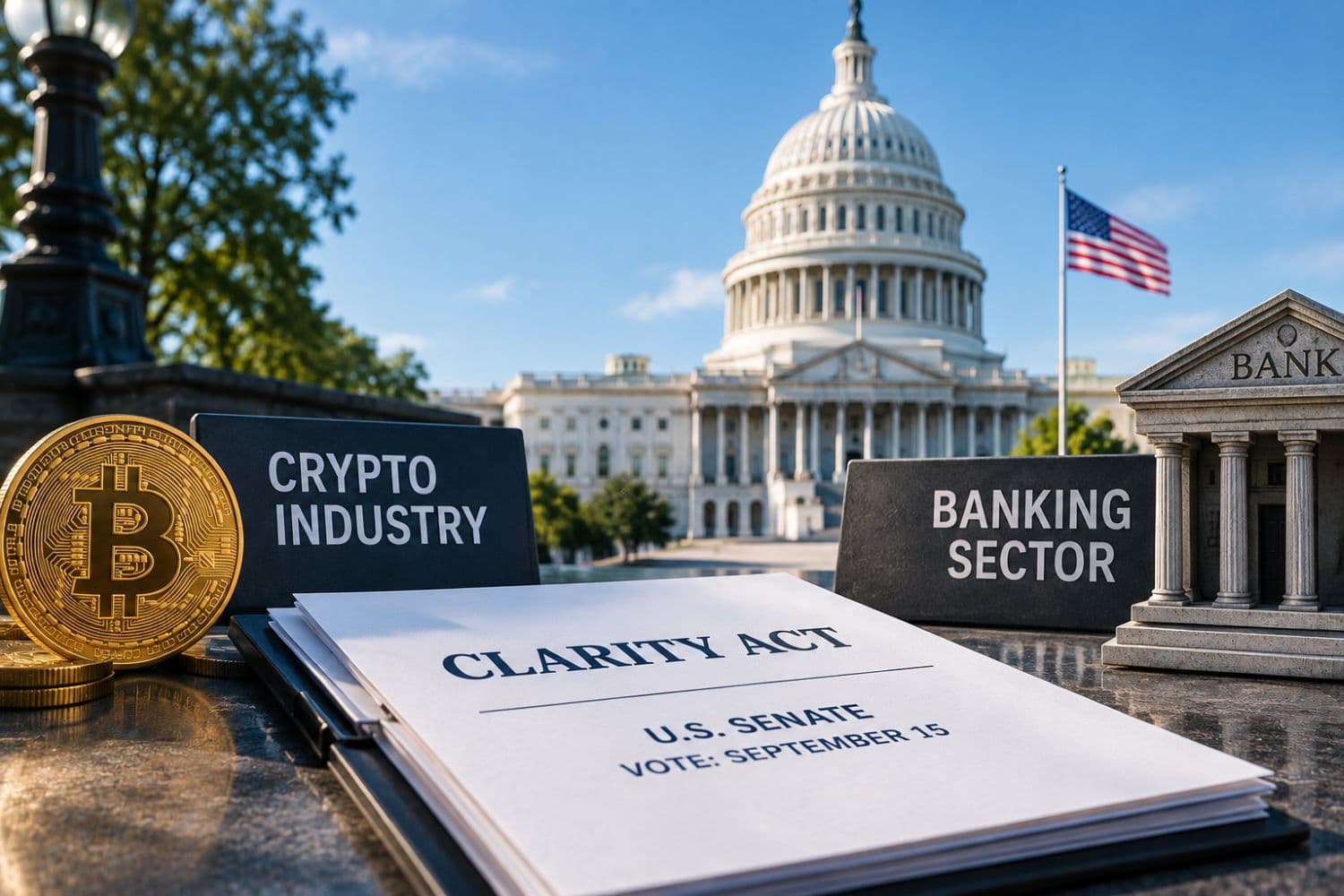
The move comes as U.S. lawmakers continue refining broader crypto market structure legislation, including the CLARITY Act, which is still under debate in Congress.
The stablecoin proposal forms part of a wider regulatory push in the United States to address illicit finance risks in digital assets while establishing clearer legal frameworks for the industry.
Law enforcement groups have raised concerns over certain provisions in the CLARITY Act, arguing they could weaken enforcement capabilities in crypto-related financial crime cases.
According to congressional discussions, further meetings between U.S. officials and enforcement groups are expected as lawmakers attempt to secure bipartisan support for the legislation.
If passed, the CLARITY Act would become one of the most significant pieces of crypto market structure legislation following the GENIUS Act.

Disclaimer of Warranty
The information provided in this article is for general informational purposes only. We make no warranties about the completeness, reliability, and accuracy of this information. Read full disclaimer

Editor's Picks

As U.S. Crypto Legislation Stalls, Circle Launches Its Own Financial Network

Walid Abou Zaki

Sep 16, 2026

9 min

Stablecoin Yield Fight Helps Derail CLARITY Act in Senate
Walid Abou Zaki
Sep 15, 2026
8 min

Why Zondacrypto’s Collapse Would Unfold Differently in the UAE
Walid Abou Zaki
Aug 28, 2026
8 min
Read More Articles

In the Same Space

Bitcoin ETFs Lose $288.7M in Fresh Wave of Investor Selling
News Desk
Sep 16, 2026
2 min

Bitcoin Takes Hit as Iran Rising Tensions Send Oil Above $100
News Desk
Sep 14, 2026
6 min

Kalshi's Bid for Non-Stop Stock Perpetuals Reignites CFTC-SEC Turf War
News Desk
Sep 11, 2026
8 min

Iran Turns to Crypto as Sanctions Bite, But USDT Has a Control Problem
Salma Naueihed
Sep 9, 2026
5 min