Advertisement
Markets
Share
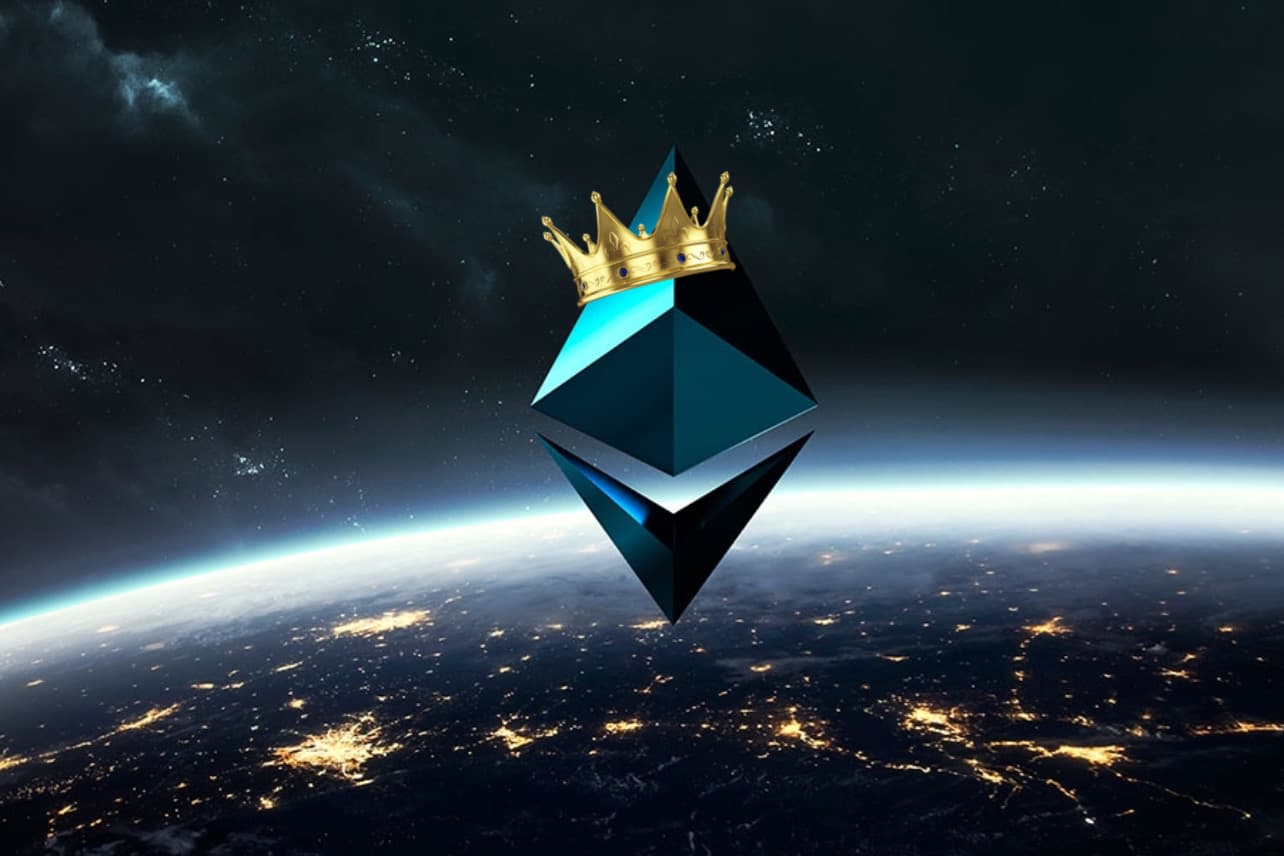
Ethereum has recorded its busiest quarter in history, even as its market price remains under pressure. In Q1 2026, the blockchain processed 200.4 million transactions on its base layer, according to Artemis data, marking the first time activity has surpassed the 200 million threshold in a single quarter. This comes after a prolonged recovery in usage, following a low point of roughly 90 million quarterly transactions in 2023 and a relatively stagnant range between 100 million and 120 million throughout much of 2024.
Ethereum is a decentralized smart contract platform that enables agreements and applications to execute automatically without intermediaries such as banks or legal institutions. Transactions on the network represent a wide range of actions, including transfers of its native token ether (ETH), interactions with smart contracts, and token movements between users. All of these operations are securely recorded and validated on the blockchain, forming the backbone of Ethereum’s ecosystem and utility.
Activity on Ethereum began to recover noticeably in mid-2025, with each subsequent quarter showing stronger usage than the last. This momentum culminated in Q1 2026, which saw a 43% jump compared to Q4 2025’s 145 million transactions, forming a clear U-shaped recovery from the 2023 lows. Despite this strong rebound in network usage, the price of ether has not reflected the same strength, highlighting a growing divergence between fundamentals and market valuation.
At the time of writing, ether trades near $2,328, down more than 50% from its peak of nearly $5,000 recorded in August 2025. This disconnect has led some market participants to view current levels as potentially attractive from a valuation perspective, especially when compared to the steady improvement in network activity.
A significant portion of Ethereum’s usage today occurs on Layer 2 networks, which are secondary systems built on top of the main blockchain to handle transactions more efficiently and at lower cost. These networks process transactions off-chain and then periodically settle batches back to the Ethereum base layer, improving scalability while reducing congestion.
Major Layer 2 solutions such as Base and Arbitrum account for a large share of this activity, as users increasingly prefer lower fees and faster execution. Although users may not directly interact with the base layer, their activity is ultimately recorded through settlement and bridging processes, which still contribute to Ethereum’s overall transaction count.
Another key driver of Ethereum’s growing usage is the rise of stablecoins, which are digital assets pegged to traditional currencies like the U.S. dollar. According to data from Token Terminal, the total supply of stablecoins on Ethereum has reached a record $180 billion, representing roughly 60% of the global stablecoin market.
This expansion has significantly contributed to network activity, as stablecoin transfers and settlements frequently rely on Ethereum’s infrastructure, either directly on the base layer or through Layer 2 networks that later settle back to it. As a result, transaction volumes continue to rise even when end-user interactions increasingly occur outside the main chain itself.
Despite the surge in usage, some analysts caution that much of the growth in Layer 2 activity may be masking weaker economics for Ethereum’s base layer. Following the Dencun upgrade, data costs for Layer 2 networks were significantly reduced, which improved scalability but also lowered the revenue captured per transaction on the main chain.
As a result, higher transaction volumes do not necessarily translate into proportionally higher fees or value accrual for ETH holders, raising questions about the long-term impact of the current structure on network economics.
The gap between Ethereum’s growing network activity and its relatively subdued price action has brought back an old debate in crypto circles: could Ethereum ever compete with Bitcoin at the top of the market?
Bitcoin still holds its position as the main macro asset in crypto, often seen as digital gold, while Ethereum is steadily strengthening its role as the infrastructure behind decentralized apps and stablecoin activity. Even so, the two are still frequently compared, even if they clearly serve different roles in today’s market.
The broader interpretation among analysts is that Ethereum may have already completed a multi-year recovery in network usage that typically precedes major price movements. However, whether this recent surge represents a lasting structural shift or a temporary peak will depend on upcoming data, particularly whether the 200 million transaction level is sustained into Q2 2026.
A key additional factor will be the quality of this growth, specifically whether it reflects genuine user adoption and onboarding, or whether a growing share of activity is driven by automated bot behavior, which has increasingly influenced stablecoin transaction patterns across the ecosystem.

Disclaimer of Warranty
The information provided in this article is for general informational purposes only. We make no warranties about the completeness, reliability, and accuracy of this information. Read full disclaimer

Editor's Picks
In the Same Space

Sberbank Wins Russia Approval to Trade Bitcoin and Crypto

News Desk

Oct 15, 2026

4 min

EBA Names USDC EU’s First Significant E-Money Token
Salma Naueihed
Oct 15, 2026
3 min
Qivalis Secures Dutch Approval for Euro Stablecoin
News Desk
Oct 15, 2026
3 min

Perpetuals Targets Tokenized US Stocks Under SEC’s New Trading Framework
News Desk
Oct 15, 2026
3 min