Advertisement
Markets
Share
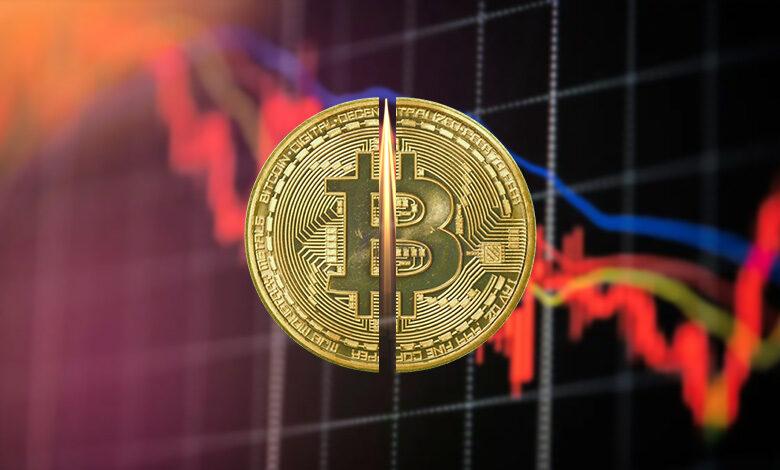
Bitcoin fell 7% to $68,408, its lowest since August 20, as Nvidia-related turmoil and Fed rate-hike fears triggered $1.47 billion in crypto liquidations.
Bitcoin and other leading cryptocurrencies extended their losses during Asian trading hours on Friday, as concerns surrounding Nvidia's leadership turmoil and expectations of a potential Federal Reserve rate increase intensified pressure on digital asset markets.
Bitcoin plunged 7% in the 24 hours leading up to 12:10 a.m. ET on Friday, reaching $68,408, its lowest price since Aug. 20, according to The Block's Bitcoin price data.
Other major cryptocurrencies also recorded significant declines. Ether fell 6% to $1,921, BNB dropped 6.3%, and XRP declined 3.5%.
The sell-off triggered widespread liquidations across the crypto market. Data from CoinGlass showed that approximately 175,299 traders were liquidated over the previous 24 hours, with total losses reaching $1.47 billion. Long positions represented $1.31 billion of that amount.
Selling pressure accelerated over the four-hour period, during which liquidations reached $798 million, including $718.5 million in long positions.
Rick Maeda, head of markets at Laevitas, attributed the sharp decline largely to leveraged positions being forced out after Bitcoin breached key price levels. He noted that BTC had already fallen below $72,000 during the US trading session before slipping under $70,000 in the late Asian morning. This triggered a rapid wave of liquidations among traders holding long positions around that level, exceeding $600 million in four hours and $1.3 billion over the day.
The broader downturn unfolded as investors continued to evaluate the potential market impact of Nvidia's leadership developments, alongside growing concerns about the Federal Reserve's next policy decision.
On Thursday morning, Nvidia co-founder Jensen Huang stepped down as CEO after the company reportedly began investigating his alleged connections to a suspected Chinese spy. Earlier reports also alleged that Huang had relationships with two Nvidia employees, including an executive who reports directly to him.
According to Maeda, some traders had positioned themselves for a market rebound following the Nvidia-related risk-off sentiment. However, limited buying demand after this week's consumer price index release added to the pressure, leaving leveraged positions more vulnerable to liquidation.
Monetary policy concerns have also contributed to the market's weakness. Jeff Mei, COO of BTSE, told The Block that Bitcoin came under additional pressure as traders considered the possibility of a Federal Reserve rate increase in December to contain inflation.
Market participants are particularly focused on whether policymakers could opt for a 50-basis-point increase rather than the widely anticipated 25-basis-point move. Mei explained that the Fed's decision will depend on incoming inflation and employment figures, as well as developments in oil markets and geopolitical tensions in the Middle East.
He warned that a larger-than-expected rate hike could expose Bitcoin and other cryptocurrencies to further downside.
Despite the immediate pressure, not all market observers view persistent inflation as entirely negative for Bitcoin. Jeff Ko, chief analyst at ViaBTC, suggested that prolonged inflation could reinforce the cryptocurrency's role as a potential hedge against declining purchasing power and support the broader currency debasement narrative over the longer term.
Ko pointed to two upcoming events that could shape market expectations: the personal consumption expenditures inflation report expected in late November and the Federal Reserve's December 9 FOMC dot plot. He also noted that easing tensions involving Iran could help reduce inflationary pressure, potentially by supporting lower energy prices.
Bitcoin's latest decline reflects the combined impact of macroeconomic uncertainty, weakening risk appetite and excessive leverage across the market. While Nvidia-related developments added to investor concerns, the scale of liquidations suggests that forced selling played a significant role in accelerating the downturn.
The key question now is whether Bitcoin can stabilize after the removal of heavily leveraged positions or whether further pressure from monetary policy expectations will push prices lower. A more aggressive Fed stance could continue to weigh on risk assets in the short term. However, if inflation remains persistent, the longer-term investment case for Bitcoin as a store of value may regain attention. For now, market direction is likely to depend less on any single headline and more on how economic data, central bank signals and geopolitical developments interact.

Disclaimer of Warranty
The information provided in this article is for general informational purposes only. We make no warranties about the completeness, reliability, and accuracy of this information. Read full disclaimer

Editor's Picks
In the Same Space
Deutsche Bank Activates Crypto Custody

News Desk

Nov 12, 2026

4 min

Is ETH the Next Bitcoin? Vitalik Reopens the Store-of-Value Debate
News Desk
Nov 9, 2026
7 min

Bitcoin's New Quantum Defense Could Penalize Attackers With BTC Collateral
News Desk
Nov 6, 2026
8 min

US Nominates Four Officials to SEC and CFTC With Crypto Policy Experience
News Desk
Nov 13, 2026
4 min