
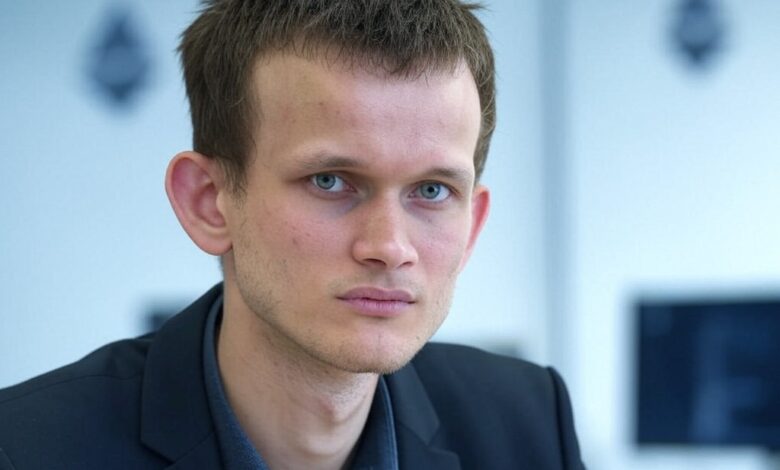
Ethereum co-founder Vitalik Buterin has raised fresh concerns about the long-term viability of today’s stablecoins, arguing that the sector needs more resilient, decentralized designs that are less dependent on the U.S. dollar and less vulnerable to institutional capture.
In comments shared on X, Buterin warned that even so-called decentralized stablecoins inherit structural weaknesses from the financial systems they track. Chief among them, he said, is an overreliance on a single fiat reference, the U.S. dollar, alongside oracle mechanisms and incentive structures that can be distorted by large concentrations of capital.
Stablecoins, which are designed to maintain a steady value and are typically pegged to fiat currencies, have become one of crypto’s fastest-growing categories. Their total market capitalization surpassed $300 billion in 2025, fueled by clearer regulation and growing adoption by banks, fintech firms, and institutional investors. Major crypto platforms increasingly use stablecoins as settlement rails, while traditional financial players have begun exploring or launching their own tokens.
That rapid institutional embrace, however, has revived a longstanding debate within the crypto community: whether stablecoins should serve as decentralized alternatives to traditional money, or function as regulated extensions of it.
Buterin argues that current designs tilt too heavily toward the latter. Over long time horizons, he said, fiat-linked stablecoins inevitably absorb inflationary pressures, political influence, and governance risks from the monetary systems they mirror. While tracking the dollar may work in the short term, he cautioned that long-term resilience requires independence from any single state-backed currency.
One of his core criticisms centers on oracle systems, the mechanisms that feed external price data into blockchains. According to Buterin, many decentralized stablecoins rely on oracle models that can be influenced or captured if enough capital is deployed against them. Defending against such attacks often requires extracting significant value from users, which undermines fairness and accessibility.
Industry voices echoed those concerns. Georgii Verbitskii, founder of crypto investment app TYMIO, said that dependence on a single fiat currency represents a structural weakness if stablecoins are meant to operate at the scale of global financial infrastructure. In his view, a truly durable stablecoin would likely need to draw value from a diversified basket of assets or commodities, paired with security mechanisms that are difficult to dominate financially.
Another issue highlighted by Buterin is the growing imbalance between stablecoins and staking-based returns. As staking yields on major blockchains often exceed the modest returns available to stablecoin holders, stablecoins can become structurally less attractive as collateral. Addressing that mismatch, he suggested, could involve lowering staking rewards, designing safer staking models, or developing ways to integrate staking mechanisms without undermining stablecoin stability.
Buterin also criticized what he described as “financialized governance,” systems where influence is determined largely by capital rather than design. Such models, he argued, lack effective defenses against capture and tend to rely on continuous value extraction to remain stable.
Boris Bohrer-Bilowitzki, CEO of layer-one blockchain firm Concordium, said the problem runs deeper than governance frameworks alone. He argued that oracle decentralization and system resilience require substantial infrastructure work, not just policy adjustments or partnerships. While collaboration with traditional finance can accelerate adoption, he said, it should not come at the expense of security, compliance, and long-term robustness.
To sum up, the question is no longer whether stablecoins will be widely used, but whether they can remain aligned with the original goals of decentralization and censorship resistance as they scale.
For Buterin, the answer lies not in abandoning stablecoins, but in rethinking their foundations before today’s design choices become tomorrow’s systemic constraints.