Russia Reconsiders and Acknowledges Crypto Mining as a Strategic Economic Asset

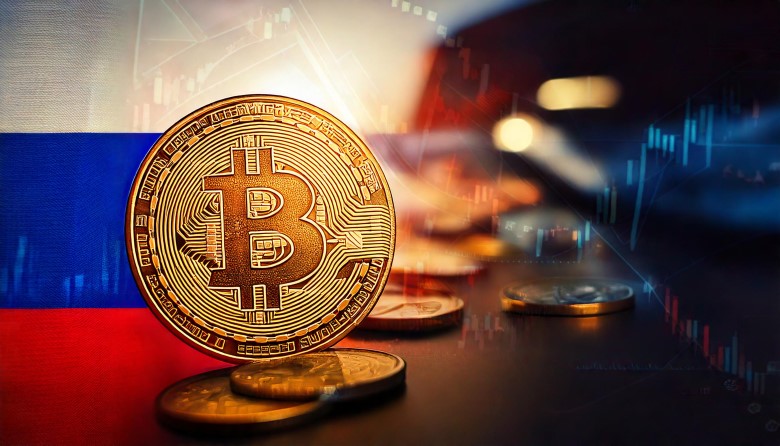
Russia’s central bank has acknowledged that cryptocurrency mining contributes to strengthening the ruble, while cautioning that its precise impact remains difficult to quantify due to the sector’s partially opaque nature.
Speaking in response to questions about foreign exchange markets, Central Bank Governor Elvira Nabiullina said that mining activity does influence currency dynamics, but stressed that much of the industry still operates in gray areas, limiting accurate measurement of its effect, according to local media reports.
Her remarks come as senior Kremlin officials push to formally recognize crypto mining as an export activity within Russia’s trade accounts, underscoring the sector’s growing economic relevance despite ongoing regulatory uncertainty.
Maxim Oreshkin, deputy chief of staff of the presidential administration, argued at the VTB-hosted “Russia Calling!” forum that crypto mining should be treated as an export industry, as mined digital assets effectively flow abroad even without crossing physical borders.
Oreshkin described mining as a “new export commodity” that Russia has yet to fully account for, warning that underestimating mining-related capital flows can distort forecasts for the ruble’s exchange rate.
Industry estimates suggest Russia produces tens of thousands of bitcoins annually, with daily mining revenues reaching approximately 1 billion rubles. According to the Industrial Mining Association, Russia ranks second globally in crypto mining, accounting for more than 16% of global hash rate during summer months. However, Bitcoin’s halving event reduced output from roughly 55,000 BTC in 2023 to around 35,000 BTC in 2024.
While acknowledging mining’s influence, Nabiullina emphasized that broader market forces must be considered. “Mining has not been a dominant factor this year, which means currency appreciation cannot be attributed to mining alone,” she said. Russia formally legalized cryptocurrency mining on November 1, 2024, requiring companies and entrepreneurs to register with the Federal Tax Service. Individual miners consuming less than 6,000 kilowatt-hours per month are exempt from registration.
Corporate mining operations are subject to a 25% tax rate, while individuals face progressive taxation ranging from 13% to 22%, with non-residents taxed at 30%. Despite this framework, illegal and semi-legal mining continues to cost Russia millions of dollars annually through electricity theft and unpaid taxes.
Investigations by Russian media have uncovered large-scale abuses, including miners bypassing electricity meters and bribing utility employees. In one case, an operator in Saint Petersburg allegedly manipulated meters for years, costing the power grid roughly half a billion rubles. Another illegal mining farm was discovered hidden inside refrigerated containers in Dagestan. Authorities have also arrested energy-sector employees accused of accepting bribes to facilitate power theft.
At the same time, Russia’s largest bank, Sberbank, is actively experimenting with decentralized finance tools and offering structured crypto-linked investments. The bank has launched products totaling around 1.5 billion rubles tied to Bitcoin, Ethereum, and diversified digital asset portfolios. Anatoly Popov, deputy chairman of the State Duma, confirmed ongoing discussions with the central bank and financial watchdog Rosfinmonitoring on integrating crypto services into regulated frameworks alongside the development of domestic blockchain infrastructure.
Despite expanding activity across mining and financial experimentation, Russian officials continue to draw a firm line on payments. Anatoly Aksakov, head of the Duma’s financial markets committee, recently reaffirmed the country’s strict ban on crypto payments, stating that digital assets will never function as legal tender domestically and may only be used for investment purposes. “If payment is required, it must be in rubles,” he said.
Nabiullina has repeatedly called for restrictions on cryptocurrency exchanges, even as Russia recorded inbound crypto transactions worth $376.3 billion between July 2024 and June 2025. First Deputy Central Bank Governor Vladimir Chistyukhin has urged swift legislative action, warning that laws governing crypto transactions must be adopted “as quickly as possible.”
Nevertheless, the central bank has expressed support for tokenization initiatives that would allow foreign investors to gain exposure to Russian equities through blockchain-based instruments, potentially offering an alternative pathway amid ongoing international sanctions.