Yi He, Co-CEO of Binance, and the Culture Shaping Its Next Chapter

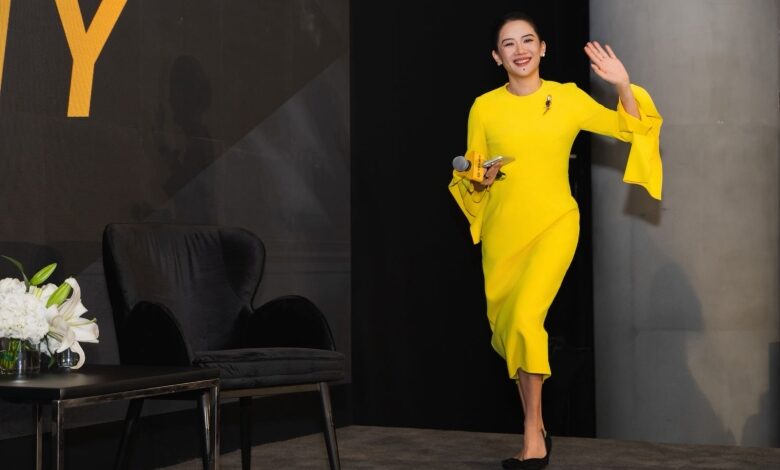
As Binance enters a new chapter, much of the attention has turned to Yi He, recently formalized as Co-CEO of Binance. International media have framed her as a “crypto queen,” a “machine of war,” the “mysterious” or the figure “pulling the strings” behind the world’s largest crypto exchange. The language is vivid, but it risks obscuring a more grounded and far more important reality.
Yi He is not a newly empowered executive. She is a co-founder who has been central to Binance since day one. Her influence did not suddenly emerge with a title. It has always been embedded in the company’s structure. What has changed is not her role, but the phase Binance has entered — and how the outside world is now trying to interpret it.
A Co-Founder Who Never Left the Center
From the outside, Yi He may appear to be “rising.” Inside Binance, she never moved.
She built the company alongside Changpeng Zhao (CZ), sharing both the professional and personal risks of scaling a startup into one of the most complex financial platforms in the world. Their partnership was not transactional. It was long-term, deeply rooted in trust, and forged under sustained pressure. Together, they built a family — three children — while Binance evolved into a life-defining project that demanded years of total commitment.
That founding dynamic matters. It explains why authority inside Binance has historically been personal rather than purely contractual, and why loyalty, endurance, and internal cohesion became defining characteristics of the organization.
A Doer, Not a Media Construct
Yi He, who also uses the Western name Sarah in international settings, has never shown much interest in media visibility, and that appears intentional. She rarely gives interviews and avoids public self-positioning. Those who have interacted with her directly describe something far more concrete than the metaphors dominating headlines.
Someone who met her earlier this month summarized her in two simple traits: she is a tough negotiator, and she is highly attentive to detail.
At Binance’s scale, these are not stylistic preferences. Negotiation is about protecting long-term leverage and institutional positioning, not winning short-term visibility. Attention to detail is not micromanagement; it is essential in an industry where regulatory, operational, or technical gaps can escalate quickly.
This is the profile of a founder still operating close to the machinery of the company — not a symbolic figure elevated by circumstance.
Culture Is Not a Concept — It Is Yi He’s Operating System
To understand Yi He as Co-CEO of Binance, one must understand Chinese founder culture, because she does not separate leadership from culture. She embodies it.
Western leadership models often prioritize visibility, personal branding, and explicit accountability frameworks. Chinese founder culture operates differently. Authority is built through continuity, shared history, and long-term trust. Loyalty is not renegotiated each quarter; it is established over time. Discipline and internal cohesion matter more than public signaling.
Yi He leads within this logic. She does not govern through constant communication or performative reassurance. She governs through presence, memory, and execution. Once direction is set, it is enforced internally rather than debated publicly.
This cultural framework is frequently misunderstood in Western commentary and helps explain why Chinese founders are often framed as opaque or confrontational. China itself has long worked to preserve its operating logic — from building its own internet ecosystem to maintaining parallel platforms and rules of engagement. The same instinct to protect internal coherence shaped how Binance was built and how it endured its most turbulent years.
Why Richard Teng — and Why That Choice Makes Sense
This cultural lens is also key to understanding why Binance appointed Richard Teng as CEO — and later formalized a co-CEO structure alongside Yi He.
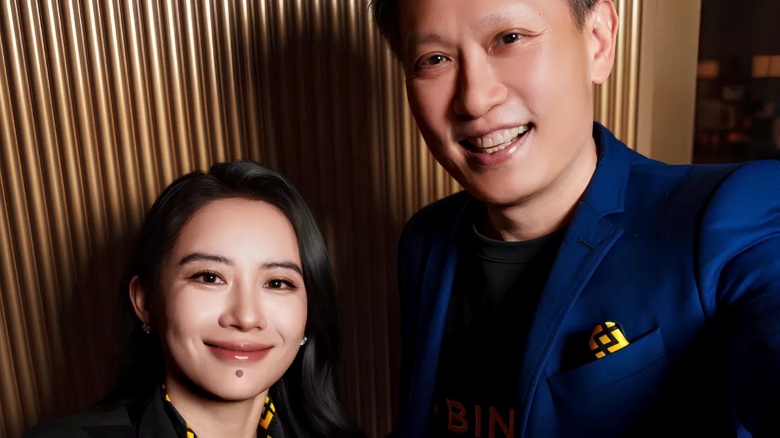
If Binance were ever to pursue a public listing, Richard Teng would be the right person to take that forward. His regulatory background, institutional credibility, and fluency in governance align precisely with what public markets expect. An IPO is less about growth and more about disclosure, predictability, and regulator confidence — areas where Teng’s experience is highly relevant.
But an IPO is a strategic option, not a default outcome.
Absent that objective, Binance does not need to reshape itself into a public-market company. And that distinction explains both why Richard was chosen and how his role should be understood.
He was not brought in to overwrite founder culture or replace internal authority. He was brought in to absorb external pressure, stabilize regulatory relationships, and preserve optionality during a sensitive phase. In other words, he was chosen as a complement to the founders — not a break from them.
The co-CEO structure reflects this logic: the internal engine remained intact, while a credible external interface was added.
A Transitional Structure, Not a Final One
Founder-led organizations tend to consolidate once periods of instability pass. Yi He carries institutional authority that cannot be imported or replicated. When the current transition phase concludes, it is difficult to imagine Binance remaining indefinitely in a dual-leadership structure.
This is not a critique of Richard Teng. It is recognition that his role is phase-specific, while Yi He’s role is structural.
Do They Even Need a Stablecoin?
The same logic applies to stablecoins.
With more than 300 million users, Binance already sits at the center of global stablecoin flows. Enormous volumes of USDT, FDUSD, USD1 and other stablecoins move through the platform daily. Binance captures trading fees, liquidity dominance, and market-structure advantages — without bearing issuance risk.
The BUSD episode clarified that lesson decisively. Issuing a stablecoin without full control exposes the exchange to regulatory and reputational risk while offering limited upside. More importantly, Binance learned that distribution power matters more than issuance power.
As an exchange, Binance already extracts most of the economic value from stablecoins circulating within its ecosystem. Issuing another one would add complexity, not necessity, and would reduce optionality rather than increase it.
A stablecoin would only make sense if it were purely infrastructural — bank-linked, institution-focused, and designed for settlement rather than speculation. Even then, it would be a strategic choice, not a requirement.
What Comes Next for Binance
Binance today is larger than most banks, operating across more than 100 countries in a sector that evolves faster than any traditional financial industry. At this scale, technology and capital are no longer differentiators.
Culture is.
Yi He represents the cultural continuity that allowed Binance to endure its most volatile years and now positions it for consolidation. She is not a media invention or a symbolic figure. She is a custodian of an operating system built on discipline, loyalty, and execution.
If Binance ever chooses to go public, Richard Teng is the right leader for that chapter. If it chooses not to, the company will continue to operate as it has learned to do — extracting value from infrastructure rather than becoming one.
Either way, the decision will not be driven by market fashion. It will be driven by culture.
Binance’s Global Business and the ADGM Shift
That broader strategic context also matters because Binance’s global business is now anchored in Abu Dhabi’s ADGM.
This is not a cosmetic move. ADGM is a jurisdiction designed to host institutional financial infrastructure rather than experimental platforms. For Binance, placing its global operations within such a framework reflects a deliberate shift toward consolidation, regulatory alignment, and long-term system-building — rather than short-term expansion.
An Open Question, Not a Conclusion
We reached out to Binance to request an interview with Yi He, Co-CEO of Binance. The response was clear: this is not the right time. That, in itself, is consistent with how she operates. Yi He has never appeared interested in narrating her role while the work is still unfolding.
This article, then, is not an attempt to define her. It is an attempt to frame the questions that matter — about culture, control, leadership, and the direction Binance is taking as it moves into its next phase.
When Yi He chooses to speak, the conversation will be less about titles or metaphors, and more about choices: whether Binance remains private or moves toward public markets, how it balances control with institutional access, and what kind of financial infrastructure it ultimately wants to become.
Until then, this piece stands not as a conclusion, but as an open invitation to that conversation.