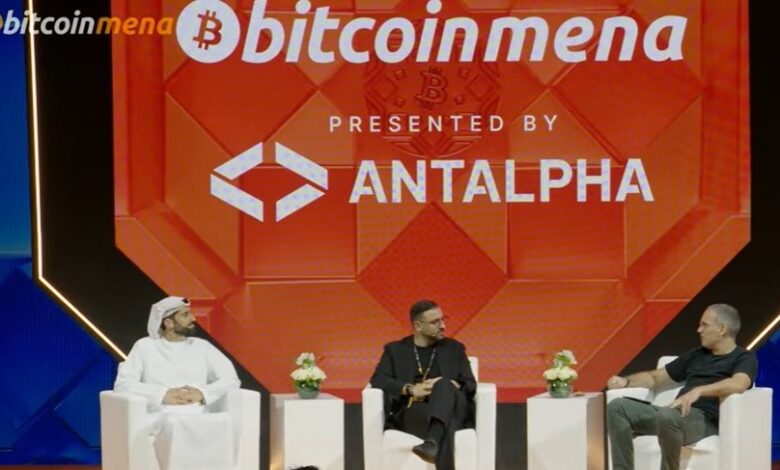
The Bitcoin MENA 2025 conference, held in the UAE, brought together policymakers, institutional investors, and infrastructure leaders to discuss the region’s expanding role in the global Bitcoin ecosystem. The event underscored how the Middle East — particularly the UAE — has moved from being perceived as an unlikely mining destination to becoming an increasingly strategic hub for digital asset infrastructure, driven by regulatory clarity, energy partnerships, and government-backed investment models.
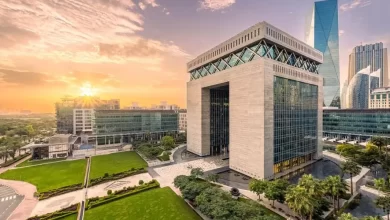
The UAE’s digital asset framework has matured rapidly over the past decade, with regulatory bodies including Abu Dhabi Global Market (ADGM), VARA, and the Central Bank of the UAE establishing consistent rules for licensing, custody, treasury management, and mining operations. Combined with the country’s pro-business environment and global connectivity, these policies have attracted international crypto firms, infrastructure providers, and capital partners to set up regional headquarters and operational bases in Abu Dhabi and Dubai.
Against this backdrop, one of the conference’s most anticipated sessions — “Why MENA Is Primed for Bitcoin Mining” — examined how regulatory stability, energy capacity management, and institutional partnerships are reshaping mining economics in the region.
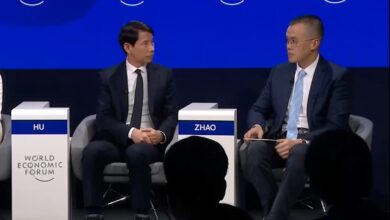
The panel was moderated by Walid Abou Zaki, CEO of Unlock Blockchain, featuring Faisal Al Hammadi, Managing Partner at Further, and Hicham Chahine, Founder & Co-CEO of NIP Group Inc.
Regulatory Clarity and Energy Strategy Drive Mining Growth
Opening the discussion, Al Hammadi emphasized the importance of policy consistency as a critical differentiator for the UAE compared with other global jurisdictions.
For nearly a decade, the UAE has adopted a stable, welcoming stance toward digital assets — giving long-term investors confidence to deploy capital without fear of abrupt regulatory reversals. This stability enables miners and infrastructure operators to build multi-year investment strategies across hardware deployment, grid integration, and treasury management.
Energy optimization has also played a decisive role. Al Hammadi noted that the UAE consumes nearly three times more electricity in summer than winter, leaving significant excess capacity during cooler months. Bitcoin mining has emerged as a flexible demand-response solution — monetizing surplus energy while supporting grid efficiency.
“The relationship between miners and power companies is increasingly complementary — a win-win dynamic that benefits both state utilities and blockchain infrastructure operators,” he said.
From Games to Mining: NIP Group’s Regional Expansion
Chahine outlined NIP Group’s evolution from global gaming operations into computational infrastructure and Bitcoin mining. The company’s journey into mining stemmed from its need to secure large-scale compute capacity for future AI applications.
The UAE’s overall business efficiency, logistics connectivity, and regulatory depth were, according to Chahine, decisive factors in selecting Abu Dhabi as a base of expansion. NIP now operates under ADGM licensing frameworks, which provide clear pathways not only for mining but also for crypto treasury management, custody, and operational compliance.
“Once we began navigating the mining and digital asset ecosystem here, we realized this was one of the most structured and reliable jurisdictions globally to operate,” he said.
Government and Institutional Backing Accelerate Scale
Al Hammadi highlighted how public-private cooperation has accelerated industrial-scale mining growth in the UAE. Government entities do not simply offer licenses — they actively support market development through investment backing, infrastructure partnerships, and sector-wide coordination.
This model enabled Abu Dhabi to develop some of the largest mining operations in the region within months. Collaboration with global partners — including U.S.-listed miner Marathon Digital, which operates as an equity and technical partner on Abu Dhabi sites — has further strengthened operational performance and international credibility.
Technology adaptation has been crucial to overcoming the region’s climate challenges. Al Hammadi explained that extensive testing across cooling systems led to the adoption of immersion liquid cooling, now considered the optimal solution for maintaining performance under dust and high-temperature conditions.
Bitcoin Mining as a Gateway to AI Compute
For NIP Group, Bitcoin mining represents more than coin generation — it is a strategic pathway toward AI compute infrastructure. Chahine described mining as a business that converts electricity into an asset while simultaneously securing access to scalable power capacity that can later be repurposed for broader high-performance computing use cases.
“As we sit on expanding energy access, that power can support either Bitcoin mining operations or shift toward other compute-driven applications, including AI,” he explained.
The dual-track model allows flexibility — generating cash flow through mining during certain cycles while building toward longer-term AI deployment strategies.
The Emergence of ‘Virgin Bitcoin’ and Treasury Models
Discussion turned to “Virgin Bitcoin” — newly mined coins with no historical transaction footprint — which the panelists suggested could develop premium value over time as institutional players seek fully traceable, clean assets for regulated balance sheets.
Al Hammadi also confirmed that Further maintains a Bitcoin allocation within its own treasury, using holdings not only for asset appreciation but also as a working capital tool to support portfolio companies requiring payment settlement and liquidity services.
He predicted the eventual rise of corporate treasury models in the UAE similar to large public Bitcoin treasury firms internationally, stating that while adoption remains early-stage, momentum is building among both private and public companies.
Could Governments Hold Bitcoin Directly?
When asked about sovereign Bitcoin reserves, both panelists acknowledged growing global momentum toward government-level exposure — directly or indirectly.
Chahine noted that UAE sovereign wealth entities already hold Bitcoin exposure via ETFs and mining-backed investments, accumulating BTC through operational activity rather than direct on-balance-sheet purchases.
Al Hammadi added that direct sovereign acquisition is a matter of developing institutional-grade counterparties and custody infrastructure — a process he expects to mature within the next two years as major global banks expand their UAE-based digital asset services.
What’s Needed for the Next Phase
The panel concluded that the UAE’s leadership will depend not only on mining growth but on the expansion of surrounding professional services infrastructure — including auditors, banks, custodians, and fund administrators capable of servicing large-scale digital asset treasuries.
As these service layers mature, institutional confidence is expected to rise, fueling further capital inflows into both mining and digital asset investment platforms.
Al Hammadi concluded that Bitcoin mining in the UAE is increasingly becoming part of a broader, diversified financial ecosystem rather than a standalone activity.
UAE Cementing Its Role in the Global Bitcoin Landscape
Bitcoin MENA 2025 showcased how the UAE has moved beyond regulatory ambition into operational execution — combining regulatory clarity, power-sector innovation, government partnerships, and cross-industry collaboration to position the region at the forefront of mining and digital asset infrastructure development.
As both speakers emphasized, mining now represents only one element of a broader ecosystem — one that includes treasury management, AI computing, global banking partnerships, and sovereign-level experimentation — with the UAE increasingly acting as the epicenter of this convergence.