
Advertisement
Companies & Deals
Share
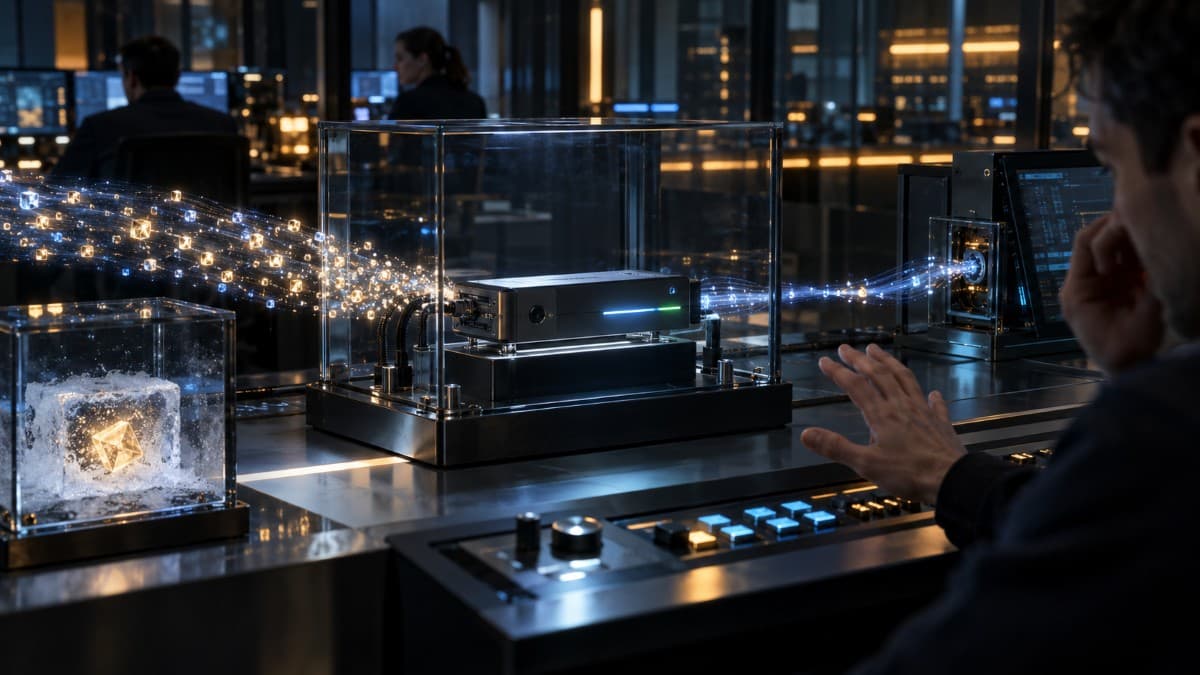
SpaceChain which is part of UAE Hub71 cohort, has launched a mission of its blockchain-enabled payload, integrated with the space node created for Velas Network AG, into space onboard a SpaceX Falcon 9 rocket. The payload was installed onto a satellite designed and manufactured by Spire Global, which also managed the launch mission. The mission marks SpaceChain’s sixth blockchain payload launch into space and the successful integration of Velas, the world’s fastest Ethereum Virtual Machine (EVM) blockchain and open-source platform for decentralized applications, with its payload.
Velas, which has been advertising heavily in Dubai UAE, will leverage the enhanced security and immutability of space-grade infrastructure designed and deployed by SpaceChain for advancing its decentralized projects and applications. Once tested and activated, the space node will enable Velas to further the development and deployment of its blockchain platform, which aims to be one of the most secure and fastest platforms in the industry.

“Blockchain platforms and next-generation fintech applications require a decentralized infrastructure in order to fulfil their fullest potential. We are thrilled to be working in partnership with Spire to help propel Velas into space and uncover new opportunities in the New Space Economy,” said Zee Zheng, SpaceChain co-founder and CEO. “Today’s milestone is testament to the increasing adoption of space-as-a-service as a platform for innovation among modern businesses and those looking to be at the forefront of what the commercial space age has to offer.”
The space node created for Velas will also enable highly secure on-orbit services for Velas transactions sent and received from the ground, and the minting and distribution of VRC-20 (fungible) as well as VRC-721 (non-fungible, NFT) tokens.
“The new epoch in the development of blockchain technology is right upon us, with the space economy opening up new horizons for both the technology and its users,” said Farhad Shagulyamov, co-founder and CEO of Velas. “Velas is one of the first blockchain networks to engage into this space race and aims to put its payload on the International Space Station (ISS) ultimately. Having a node on the ISS is a challenging task as NASA goes through a rigorous evaluation and approval process. We are confident that both Velas and SpaceChain possess the required technical expertise and resources to achieve this vision.”
Today’s mission was made possible by the integration of industry-leading technologies and capabilities through the partnership between SpaceChain and Spire Global, which was first announced in September 2021. Spire is utilizing its space-based AI-embedded supercomputing module “SABERTOOTH” to complement SpaceChain’s decentralized satellite network (DSI) to help Velas sharpen its competitive edge and overcome land-based centralized infrastructure challenges.

Disclaimer of Warranty
The information provided in this article is for general informational purposes only. We make no warranties about the completeness, reliability, and accuracy of this information. Read full disclaimer

Editor's Picks
When Assets Move—or Stop—Without Consent: The Limits of Crypto Wallet Control

Walid Abou Zaki

Sep 29, 2026

6 min

Where Do the Dollars Behind the UAE’s Crypto Economy Sit?
Anna K.
Sep 21, 2026
9 min

As U.S. Crypto Legislation Stalls, Circle Launches Its Own Financial Network
Walid Abou Zaki
Sep 16, 2026
9 min
Read More Articles

In the Same Space

Russia’s Digital Ruble Reaches the Payroll for the First Time Ever
News Desk
Oct 5, 2026
2 min

Institutional Demand Drives $2.7B in September Inflows for Spot Bitcoin ETFs
News Desk
Oct 2, 2026
3 min

ECB Considers Three Models for Tokenizing Central Bank Money Onchain
News Desk
Oct 2, 2026
4 min

Circle Urges EU to Revise MiCA as Only 3 of Top 30 Stablecoins Comply
News Desk
Oct 2, 2026
3 min