OKX’s DeFi Strategy: Why Uniswap on X Layer Changes the Narrative

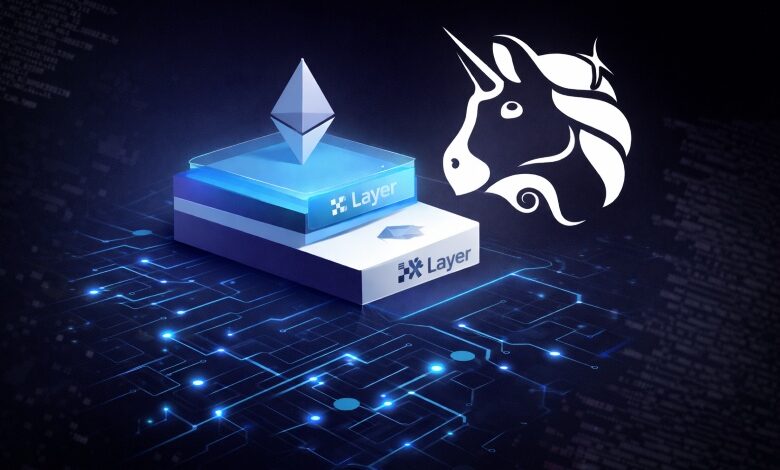
When Uniswap launched on X Layer with zero interface fees, the announcement looked, at first glance, like another routine multi-chain expansion. In reality, it revealed something more structural: how OKX is positioning itself for a future where decentralized finance is no longer peripheral, but central to how crypto markets operate.
This move was not simply about cheaper swaps or faster execution. It was a continuation of a broader strategy in which OKX is gradually reshaping its role — from a traditional centralized exchange into an infrastructure layer for DeFi.
From CeDeFi to On-Chain Execution
OKX, a global trusted exchange, has spent the past year laying the foundations for what it previously described as CeDeFi — an approach that blends centralized efficiency with decentralized liquidity and execution. Rather than forcing users to choose between CeFi and DeFi, the idea was to abstract that complexity and allow both models to coexist within a unified trading experience.
This philosophy was articulated earlier in OKX’s push toward unified trading, where centralized and decentralized liquidity could be accessed through a single interface without ideological friction or technical burden. That positioning matters, because X Layer appears to be the natural extension of this thinking — not a departure from it.
(See related: OKX’s approach to CeDeFi unified trading on Unlock Blockchain.)
X Layer takes that concept further by moving execution closer to the blockchain itself. Built as an Ethereum Layer 2 using zero-knowledge technology, X Layer does not attempt to replace Ethereum or compete with it. Instead, it optimizes access to Ethereum-based DeFi — lowering costs, accelerating settlement, and improving usability — while remaining anchored to Ethereum’s security and neutrality.
Why Uniswap Is the Right Signal
Uniswap’s presence on X Layer is not incidental. As one of the most widely used decentralized exchanges globally, Uniswap represents a core primitive of on-chain finance. Its deployment on X Layer, combined with zero interface fees, reduces both the economic and psychological barriers that have traditionally separated exchange users from DeFi.
More importantly, it highlights a shift in OKX’s posture. Rather than positioning itself as a competitor to decentralized exchanges, OKX is increasingly acting as an enabler — providing infrastructure, distribution, and user experience while allowing DeFi protocols to remain permissionless and autonomous.
That distinction is subtle, but significant. It suggests OKX is preparing for a world where value does not come from owning liquidity or controlling protocols, but from shaping how users access decentralized markets.
CeDeFi as a Transition, Not an Endpoint
In this context, CeDeFi is not an end state. It is a transition layer.
Centralized exchanges still play an essential role in onboarding users, managing compliance, and abstracting complexity. DeFi, meanwhile, excels at transparency, composability, and global settlement. X Layer sits between the two, allowing OKX to gradually move users on-chain without forcing abrupt behavioral or regulatory shifts.
This reflects a broader industry realization:
DeFi isn’t replacing CeFi.
DeFi is absorbing it.
And OKX appears to be acting on that assumption.
How OKX’s Approach Differs From Others
This strategy stands in contrast to earlier exchange-led blockchain models.
Binance, for example, pursued a sovereign-chain approach with BNB Chain, tightly coupling its exchange, token, validators, and network into a single ecosystem. That model delivered scale quickly, but also concentrated regulatory and systemic risk.
Other exchanges have drawn different lessons.
Coinbase has consistently framed DeFi as the end state of crypto finance, but has moved cautiously in execution, particularly in the US regulatory context. Its underlying posture can be summarized simply:
Coinbase believes in DeFi as the end state, but behaves as if:
“We must arrive there without scaring regulators.”
OKX’s posture is different:
OKX believes in DeFi as an inevitability, and behaves as if:
“We must arrive there before competitors do.”
Different cultures. Same direction.
Infrastructure Over Platforms
What Uniswap on X Layer ultimately highlights is a shift in priorities. Trading platforms are transient. Liquidity migrates. Fees compress. What endures is infrastructure — the rails that users, applications, and capital move across.
By building X Layer and integrating DeFi primitives directly into it, OKX is positioning itself less as a destination and more as an execution layer for decentralized finance. Control is exercised not through ownership of protocols, but through wallets, bridges, defaults, and user experience.
This approach is quieter than launching a sovereign chain. It is also more adaptable.
A Long-Term Bet on DeFi
Uniswap’s launch on X Layer did not come with bold declarations about the future of finance. It did not need to. The strategy is already visible in the architecture.
OKX is not betting against centralized finance. It is preparing for a world where centralized exchanges fade into the background, while decentralized systems take the foreground — with exchanges surviving not as gatekeepers, but as infrastructure providers.
In that sense, X Layer is less about competing with DeFi, and more about accepting its gravity.
And among major exchanges, OKX seems to understand that better than most.
As Ethereum-based Layer 2s continue to absorb liquidity, users, and applications, the real question is no longer whether DeFi will dominate — but which exchanges will still matter once it does.