
Advertisement
Markets
Share
Digital asset markets entered 2026 on a more stable footing, with inflows into spot exchange-traded funds (ETFs) turning positive, even as on-chain metrics continued to show signs of weakness.
Bitcoin ended 2025 trading below a key resistance level near $92,000, with institutional inflows providing price support amid low liquidity during the holiday season, according to analysts cited by The Block. This marked a notable contrast to early December, when persistent outflows from spot ETFs weighed heavily on market sentiment.
Timothy Messer, Head of Research at BRN, said, “The market is supported by external inflows, but internal fatigue remains. Optimism has returned, yet confidence is still conditional.” His observation highlights the delicate balance digital markets face between institutional support and underlying market pressures.
Between December 29 and January 2, spot Bitcoin ETFs recorded net inflows of $459 million alongside roughly $14 billion in trading volume. Spot Ethereum ETFs added $161 million, while Ripple ETFs attracted $43 million, according to BRN data. The rebound followed weeks of steady recoveries, suggesting renewed institutional engagement as firms recalibrated their balance sheets for the new year.
Despite the positive inflows, price movements remained confined to narrow ranges. Bitcoin traded between roughly $87,000 and $90,000, reaching around $93,000 on Monday, while Ethereum hovered near $3,200. Performance among altcoins was mixed, reflecting investors’ preference for selective positioning over broad risk-taking.
Meanwhile, on-chain indicators continued to weaken. The 30-day realized market capitalization change for Bitcoin turned negative in late December, ending one of the longest consecutive periods of positive capital flows in the network’s history.
Long-term holders began experiencing losses even as prices remained relatively stable, a dynamic Messer described as typical at the tail end of a market cycle: “Prices decline, volatility fades, and time becomes the main source of pressure. Investors exit not from fear, but from fatigue.”
This structure signals a shift from a flow-driven market to one testing investor patience. Analysts note that spot ETF inflows may help prevent deeper declines, but sustainable gains will require renewed capital accumulation on-chain, rather than relying solely on secondary market demand.
QCP Capital echoed this cautious outlook, noting that early January strength in digital assets coincided with a broader rise in risk-on assets, despite continued post-holiday liquidity fragility.
In a January 5 update, the firm highlighted increased positivity in options markets, including lower put skew and growing interest in long-term upside exposure. However, it cautioned that U.S. trading sessions remained subdued, with liquidity expected to normalize only gradually after the holiday slowdown.

Disclaimer of Warranty
The information provided in this article is for general informational purposes only. We make no warranties about the completeness, reliability, and accuracy of this information. Read full disclaimer

Editor's Picks

As U.S. Crypto Legislation Stalls, Circle Launches Its Own Financial Network

Walid Abou Zaki

Sep 16, 2026

9 min

Stablecoin Yield Fight Helps Derail CLARITY Act in Senate
Walid Abou Zaki
Sep 15, 2026
8 min

Why Zondacrypto’s Collapse Would Unfold Differently in the UAE
Walid Abou Zaki
Aug 28, 2026
8 min
Read More Articles

In the Same Space
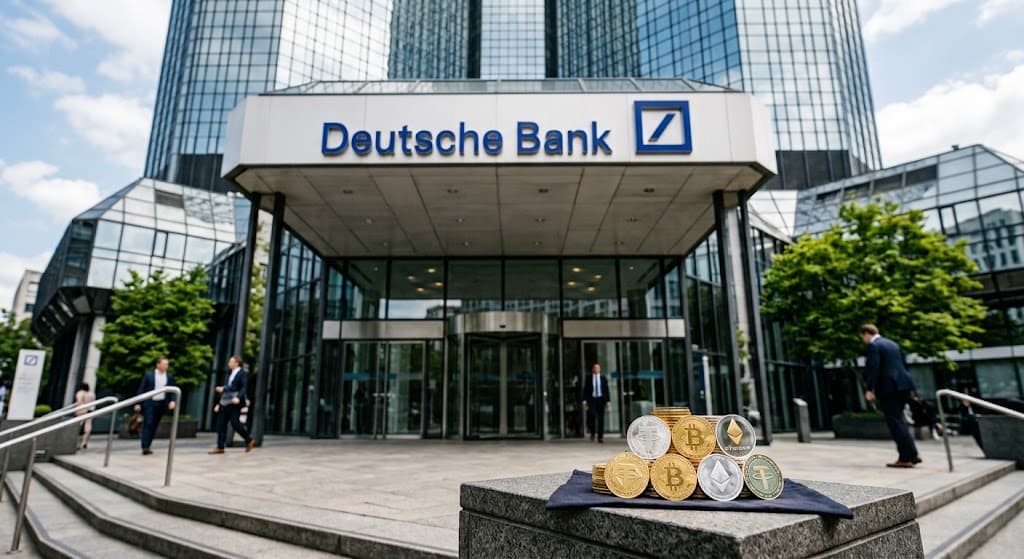
Deutsche Bank Moves Into Institutional Crypto Custody With Bitcoin, Ether and Stablecoins
News Desk
Sep 17, 2026
4 min

Ethiopia Slashes Bitcoin Mining Power by 77%, Why?
News Desk
Sep 16, 2026
6 min

Bitcoin Takes Hit as Iran Rising Tensions Send Oil Above $100
News Desk
Sep 14, 2026
6 min

Iran Turns to Crypto as Sanctions Bite, But USDT Has a Control Problem
Salma Naueihed
Sep 9, 2026
5 min