Interviews
Share
WA
CEO & Editor-in-Chief


DMCC has long reflected the momentum and character of Dubai — fast, ambitious, and relentlessly pragmatic. Over two decades, it has evolved from a commodities-focused free zone into one of the world’s most influential trade ecosystems, home to more than 26,000 companies and the global leader in rough diamond trading. Few economic stories in the region are as tightly interwoven with Dubai’s rise as DMCC’s.
To understand this transformation — and more importantly, where DMCC is heading next — you must understand the man behind it: Ahmed Bin Sulayem, Executive Chairman and CEO.
This interview was long anticipated. I walked into Uptown Tower expecting a structured Q&A. Instead, I found myself navigating a conversation that was anything but linear. Ahmed speaks the way he operates: rapid-fire, multi-layered, constantly weaving stories from trade, policy, Africa, Latin America, banking, blockchain, and geopolitics into a single stream of thought.
Behind the camera, he put his phone aside and focused. The moment recording ended, I entered a different world: a spontaneous tour of the Tower, unexpected drop-ins into companies’ offices as if they were extensions of his own, and finally a hot chocolate he prepared himself — using cocoa he personally sources from some of Africa’s finest producers.
Inside those few hours, one thing became unmistakably clear: there is something in him that feels inhabited by Dubai’s mission. A force that pushes him beyond traditional leadership frameworks. A man driven by national purpose, not personal accolades.
One of the major themes of our conversation was the unveiling of FinX, DMCC’s new financial centre. The name alone distinguishes it from regional peers like DIFC or ADGM — because it is not meant to replicate them. FinX is strategically positioned to solve a gap in global finance: the efficient financing of commodities at rest.
DMCC already hosts more than 1,800 finance-related companies and nearly 800 in blockchain, Web3 and crypto. FinX formalizes what the market has already built organically.
Ahmed captured his philosophy in one sentence that stays with you: “I don’t predict the future. I only bet on what people won’t do — and I do it.”
FinX reflects that philosophy entirely. It is not designed to compete. It is designed to fill a void the global financial system has overlooked.
When I asked why DMCC began exploring blockchain back in 2017 — long before there was regulatory clarity — the answer wasn’t about technology. It was about necessity.
Traditional banks resisted diversification.
Trade finance was slow.
Risk frameworks were outdated.
Market demand was growing faster than infrastructure.
Blockchain offered a way to reduce friction, increase transparency, and enable financing models that conventional institutions weren’t ready to support.
Ahmed also views digital assets through a humanitarian lens. For him, crypto is not merely speculative. It is a tool of sovereignty — especially in regions where financial systems are unreliable.
His admiration for crypto is grounded in practicality, not hype.
The MoU between DMCC and VARA is perhaps one of the clearest expressions of Ahmed’s pragmatic worldview.
He has no interest in DMCC becoming a regulator. He stated this unequivocally: “Do I want to create a regulatory system in DMCC? No. I’m happy working with VARA.”
Tokenization requires two things:
DMCC brings the physical assets, the warehouses, the companies, and the commodity ecosystem. VARA brings oversight, investor protection, and global credibility.
Partnership

Disclaimer of Warranty
The information provided in this article is for general informational purposes only. We make no warranties about the completeness, reliability, and accuracy of this information. Read full disclaimer
Together, they form a model that finally allows tokenized real-world assets to take root responsibly.
Ahmed stressed that each tokenized product is unique. Some assets will move faster than others. But the combination of ecosystem and regulation is what gives tokenization its first real foundation in Dubai.
Tokenization is simple. Liquidity is not.
When I asked whether DMCC could eventually become the home of secondary markets — where tokenized commodities actually trade, gain depth, and form liquidity — he refused to speculate. Ahmed does not promise markets. He builds ecosystems and lets markets form.
His thinking is clear and grounded: Some assets are natural candidates for tokenization; others are not.
Commodities in warehouses fit. Roasting machines in the Coffee Centre do not.
He refuses to force-fit tokenization, and that realism is critical. DMCC will enable liquidity — but it will never manufacture artificial markets. True liquidity must be demand-driven.
Beyond trade, Ahmed frequently returned to the global role of crypto. He spoke about countries in West Africa and Latin America where inflation, mismanagement, or instability prevent people from preserving value. To him, digital assets provide access, sovereignty, and economic dignity.
He is not driven by Bitcoin’s price movements.
He is driven by the ability of digital assets to empower people.
This worldview explains why DMCC became such an active, credible home for Web3 companies. It isn’t opportunistic — it reflects a deep understanding of how global value flows are changing.
The moments off-camera told as much as the interview itself.
Walking with Ahmed through Uptown Tower is witnessing someone who operates at a relentless pace. He moves between conversations, departments, and issues with speed and instinct. He expects precision from his team and gives direction without delay. Yet, paradoxically, he remains warm, grounded, and remarkably present.
Three qualities kept appearing consistently:
Emirates first.
Pragmatism over predictions.
Speed and convenience as competitive advantages.
These three principles explain not only Ahmed’s leadership — but DMCC’s trajectory.
When asked about the future, he avoided traditional metrics or predictions. Instead, he spoke about what is happening now:
He does not plan in linear, 5-year templates.
He plans through timing, opportunity, and relentless adaptation.
This is the foundation behind FinX.
Behind blockchain exploration.
Behind tokenization.
Behind the VARA partnership.
Behind DMCC’s global rise.
The world evolves.
Ahmed evolves faster. And the real question now is not whether DMCC can lead tokenized trade — but whether global markets can keep up with the pace at which he is already operating.

Editor's Picks
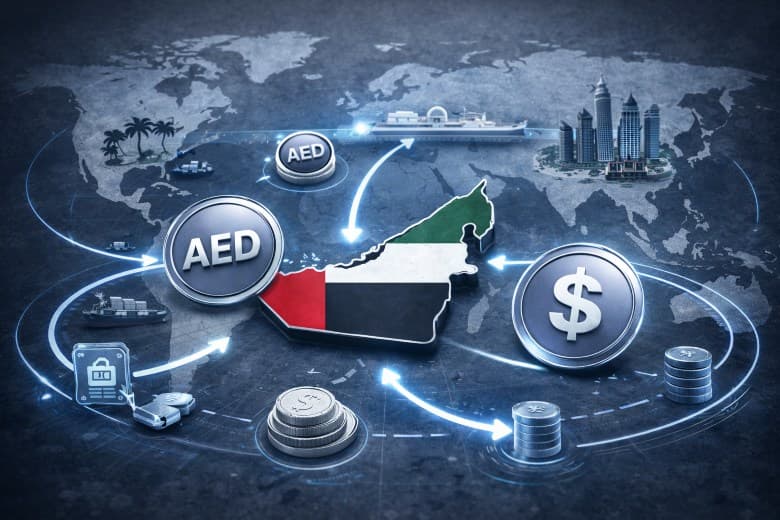
UAE Stablecoins: Why They Are Built to Travel, Not Stay Local

Walid Abou Zaki

Feb 28, 2026

8 min
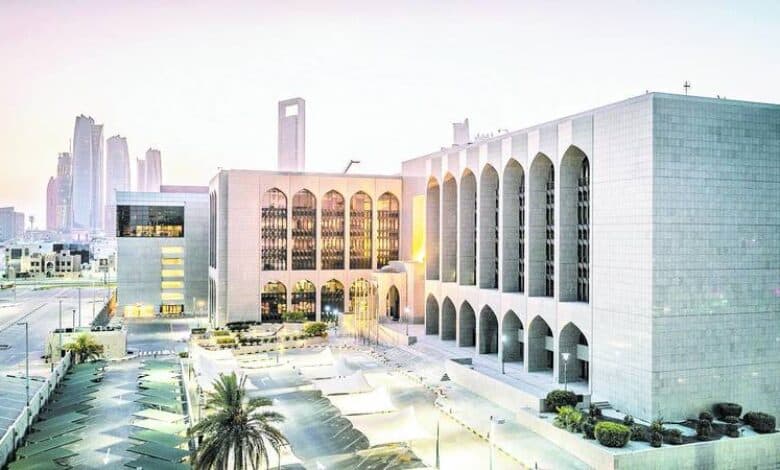
The Central Bank of the UAE Clearing the Noise Around Article 62
Walid Abou Zaki
Feb 25, 2026
5 min
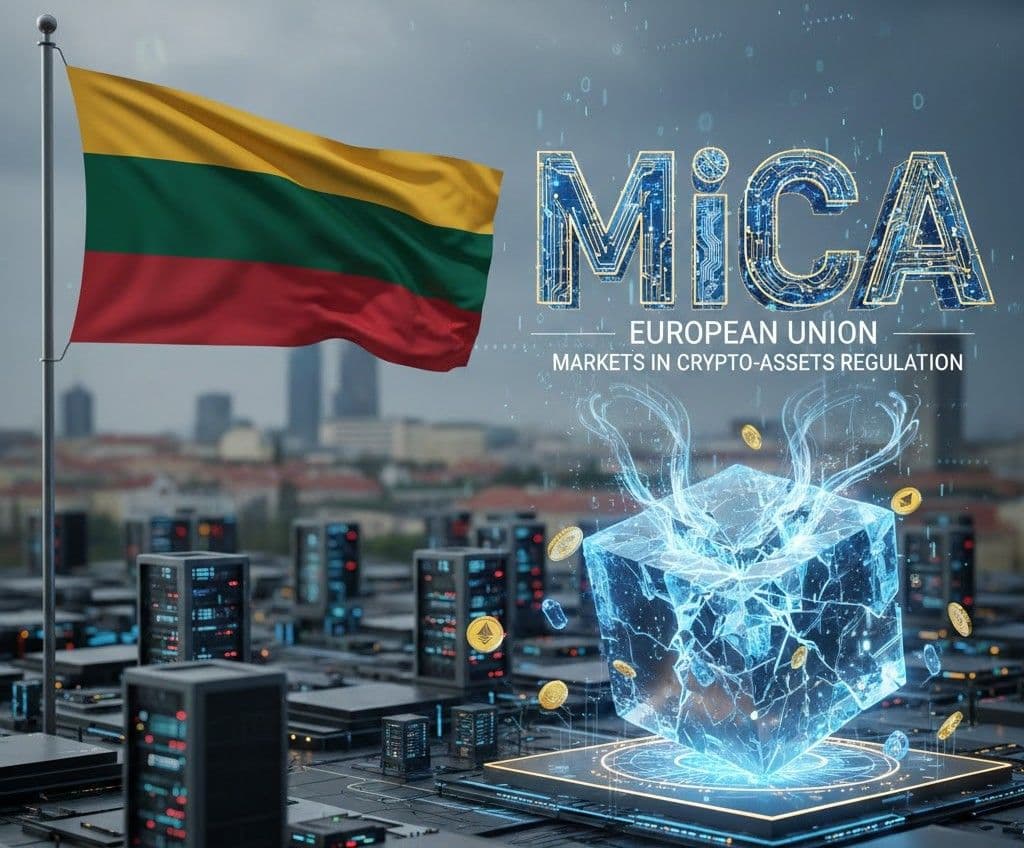
Europe’s Crypto Purge: Did Lithuania Just Kick Out Innovation — and is the UAE the Beneficiary?
Salma Naueihed
Feb 18, 2026
7 min
Read More Articles

In the Same Space
VARA Issues Alert Against MEXC Over Unlicensed Activity
News Desk
Mar 6, 2026
2 min
CBUAE Allows Case-by-Case Offshore Disaster Recovery for Banks
Walid Abou Zaki
Mar 12, 2026
4 min
Zand CEO: Banking Web3 Requires AI, Compliance Muscle and a New Cost Model
Walid Abou Zaki
Mar 4, 2026
4 min
GCEX Expands Institutional Offering with Tokenized Gold Trading
News Desk
Mar 11, 2026
2 min