Advertisement
Tokenization & RWA
Share
Nearly $500 billion in addressable value could be unlocked across the Gulf Cooperation Council (GCC) by 2030 through real-world asset (RWA) tokenization, according to a new analysis by global management consulting firm Kearney, in collaboration with Ctrl Alt, a leading provider of end-to-end tokenization solutions for financial institutions and governments.
The report highlights that tokenization is rapidly moving from concept to execution, with the on-chain RWA market (excluding stablecoins) expanding from approximately $1.1 billion in early 2023 to nearly $20 billion by January 2026.
Kearney’s analysis shows that the GCC’s strongest tokenization potential lies in private markets and public equities, reflecting the region’s robust participation in alternative investments and sizable listed markets. Tokenizing these asset classes can:
Beyond equities and private assets, the report identifies additional tokenization opportunities in bank deposits, funds, real estate, and commodities, each offering distinct benefits:
Collectively, these opportunities underpin the GCC’s projected $500 billion tokenization potential by 2030.
“Tokenization is gaining traction where it addresses clear market frictions,” said Elias Aad, Partner at Kearney Middle East & Africa – Digital & Analytics Practice. “In private markets, real estate, and funds, investors face illiquidity, high minimum thresholds, and complex servicing. Tokenization enables fractional ownership, more efficient structures, and streamlined onboarding and settlement.”
Several live, regulated initiatives already illustrate this impact:
“Institutions are moving beyond pilots because tokenization delivers tangible value in regulated market environments,” Aad added.
The United Arab Emirates has emerged as the GCC’s leader in execution and adoption, thanks to one of the world’s most advanced and clearly segmented digital asset regulatory frameworks. This clarity has enabled institutional-grade tokenization initiatives to scale beyond pilot projects, attracting both global innovators and regional capital.
“Across the GCC, and particularly in the UAE, regulatory openness and institutional engagement are accelerating real adoption of digital assets,” said Robert Farquhar, recently appointed Chief Executive Officer, MENA at Ctrl Alt. “Clear frameworks, proactive regulators, and collaboration with industry are enabling tokenization to operate at scale, positioning the region as a hub for next-generation capital market infrastructure.”
“Tokenization will scale where market infrastructure and regulation evolve together,” said Jeroen Gillekens, Principal at Kearney Middle East & Africa. “Issuance, custody, settlement, and secondary trading must function as an integrated system. Embedding digital asset capabilities into core operating models is key to building durable, institutional-grade markets.”
The report concludes that with regulatory momentum, maturing infrastructure, and early live use cases, the GCC is entering a critical phase in financial market evolution. Tokenization is set to play an increasingly central role in how capital is issued, accessed, and exchanged across the Middle East in the coming years.

Disclaimer of Warranty
The information provided in this article is for general informational purposes only. We make no warranties about the completeness, reliability, and accuracy of this information. Read full disclaimer

Editor's Picks
Why Zondacrypto’s Collapse Would Unfold Differently in the UAE

Walid Abou Zaki

Aug 28, 2026

8 min

The Missing Orchestration Layer Holding Back Institutional Digital Assets
Julian Sawyer
Aug 18, 2026
5 min
Beyond Crypto Access: How ARP Digital Is Building the UAE’s Digital Capital Infrastructure
Anna K.
Aug 17, 2026
8 min
Read More Articles

In the Same Space
Standard Chartered Brings Institutional Bitcoin, Ether Trading to UAE
Salma Naueihed
Sep 3, 2026
4 min
USDU Expands UAE Reach With Crypto.com App Integration
News Desk
Sep 10, 2026
4 min

Crypto Wealth Is Growing, but Traditional Wealth Infrastructure Is Not Ready
News Desk
Sep 10, 2026
4 min
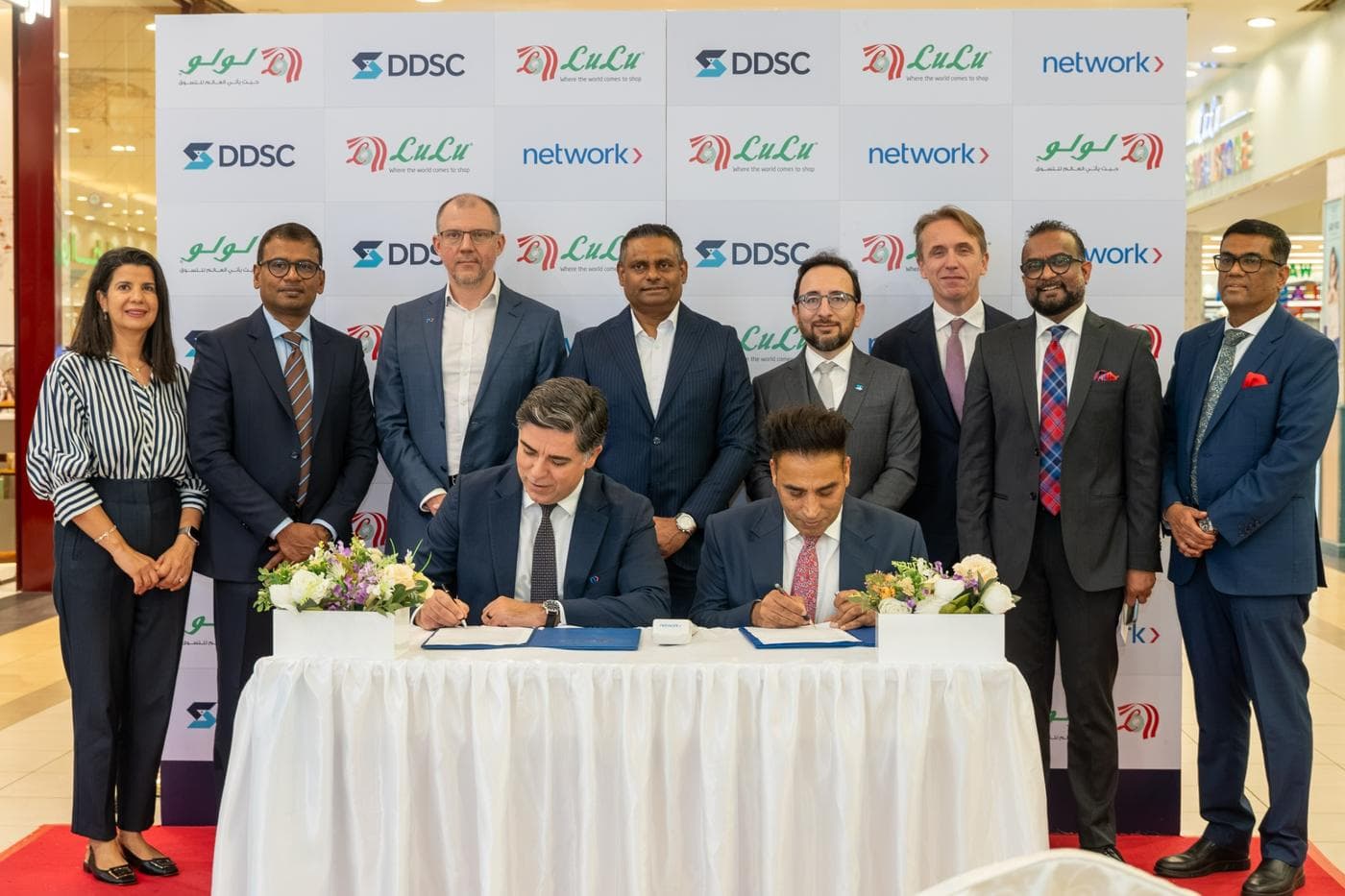
DDSC and Network International Launch UAE’s First In-Store AED Stablecoin Pilot
News Desk
Sep 9, 2026
2 min